
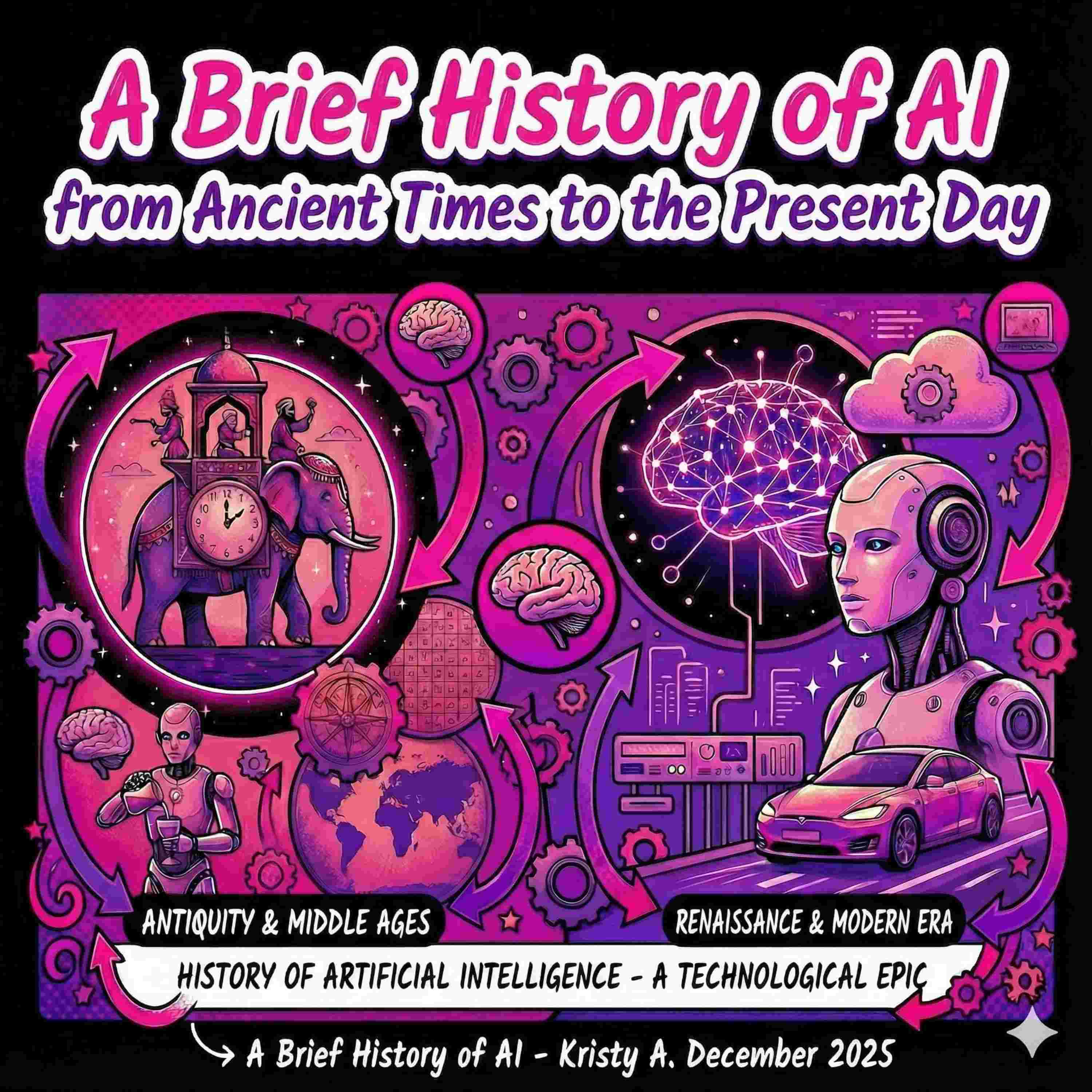
Parallel Paths: How Asia Discovered, Invented, and Dominated the Foundations of AI
In 1937, Claude Shannon defended his legendary thesis at MIT. He demonstrated that Boolean algebra could describe electrical circuits. The same year, in Tokyo, Akira Nakashima published the same discovery. Shannon cited him. Then one became a legend.
The other was forgotten.
Two men. Two continents. The same idea. The history of parallel paths.
In 1930, Prasanta Chandra Mahalanobis invented in Calcutta a statistical measure still used every day in machine learning.
In 1960, India inaugurated TIFRAC, its first locally designed computer.
In 1982, Japan launched the Fifth Generation Computer Project — a dream of revolutionary computing that became "the lost generation."
Then came the leap.
India had COBOL programmers. The West no longer did. The "Y2K bug" became the launchpad for the Indian computer industry. TCS, Infosys, Wipro. Bangalore — the "Silicon Valley of India" — with thirty-eight percent of the country's IT exports.
Morris Chang was "put out to pasture" at Texas Instruments at fifty-two. He left for Taiwan. He invented the "pure-play foundry" model — a company that manufactures chips without designing them. TSMC now enables NVIDIA, AMD, and Apple to exist without owning factories.
You will discover Fei-Fei Li, born in China, creator of ImageNet — the database that launched the deep learning revolution.
Kai-Fu Lee, who developed speech recognition, led Google China, and became one of the most influential AI investors.
The parallel paths are converging. Asia manufactures the chips that run global artificial intelligence.