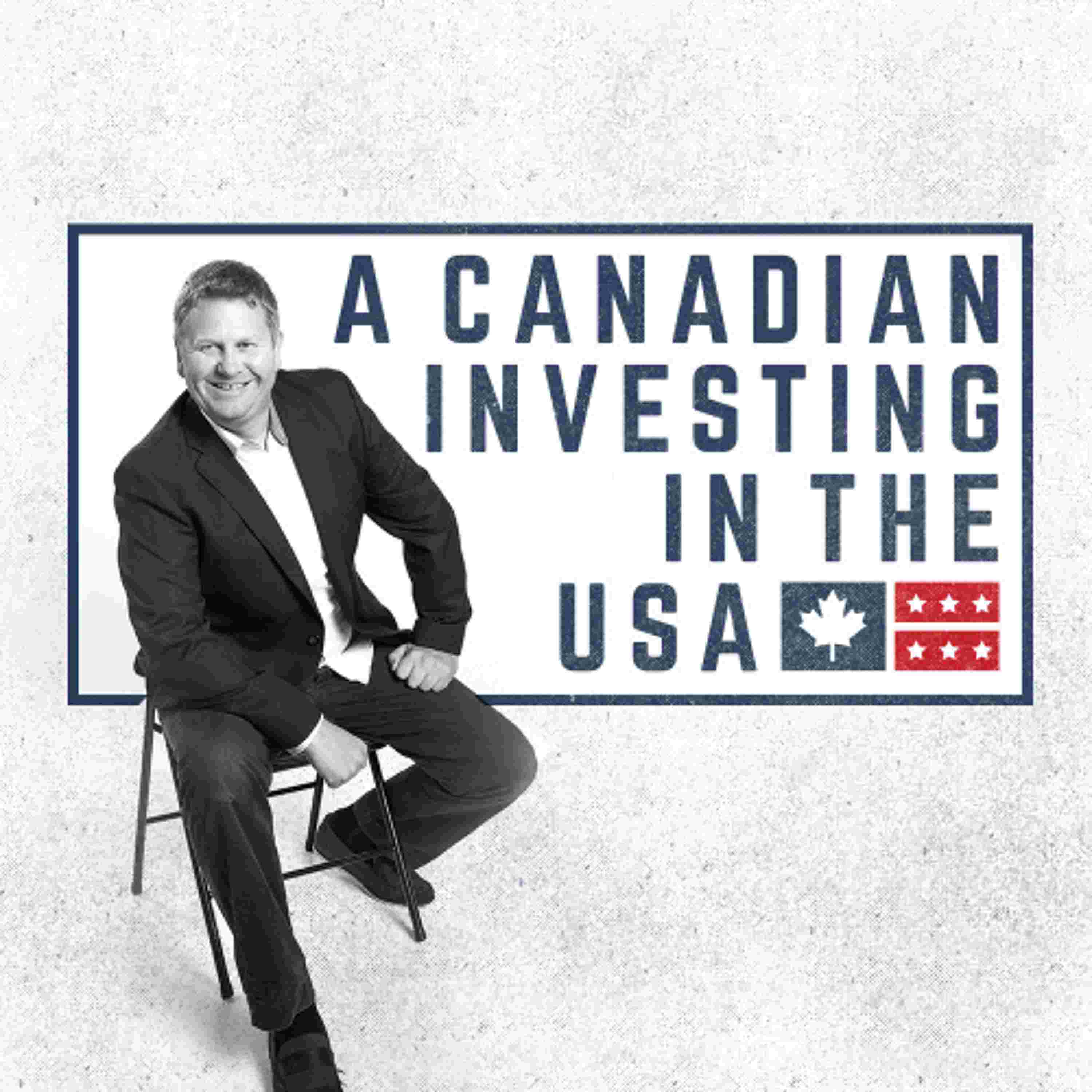
A Canadian Investing in the U.S. with Glen Sutherland
Glen Sutherland
381 episodes
20 hours ago
In this episode of Canadian Investing in the U.S., host Glen Sutherland interviews Priscilla (Pre) Cosentino, a U.S.-based financial advisor, author, and mentor who specializes in helping clients build a true wealth mindset. Priscilla explains that financial planning is about much more than simply accumulating money—it’s about aligning one’s financial goals with personal values and life purpose. She shares examples of clients with vastly different goals, from relocating overseas to buying a first home or going back to school, emphasizing that understanding what matters most to each person drives the right financial and investment strategies.
The conversation then dives into tax planning—a subject many people only think about when faced with a large bill. Priscilla stresses that effective tax planning must be proactive, not reactive, and should begin now, regardless of the time of year. She encourages investors to build an “A-Team” of professionals—financial planner, CPA, and attorney—who collaborate to design forward-looking strategies that balance current actions with future goals. She also offers practical advice on how to prepare for planning meetings, such as bringing an overview of assets, account types, and investment values. The episode closes with a thought-provoking reminder: financial planning should start with your end goal in mind—how you want to be remembered and what legacy you want to leave behind—and then reverse-engineer your path toward that vision.
All content for A Canadian Investing in the U.S. with Glen Sutherland is the property of Glen Sutherland and is served directly from their servers
with no modification, redirects, or rehosting. The podcast is not affiliated with or endorsed by Podjoint in any way.
In this episode of Canadian Investing in the U.S., host Glen Sutherland interviews Priscilla (Pre) Cosentino, a U.S.-based financial advisor, author, and mentor who specializes in helping clients build a true wealth mindset. Priscilla explains that financial planning is about much more than simply accumulating money—it’s about aligning one’s financial goals with personal values and life purpose. She shares examples of clients with vastly different goals, from relocating overseas to buying a first home or going back to school, emphasizing that understanding what matters most to each person drives the right financial and investment strategies.
The conversation then dives into tax planning—a subject many people only think about when faced with a large bill. Priscilla stresses that effective tax planning must be proactive, not reactive, and should begin now, regardless of the time of year. She encourages investors to build an “A-Team” of professionals—financial planner, CPA, and attorney—who collaborate to design forward-looking strategies that balance current actions with future goals. She also offers practical advice on how to prepare for planning meetings, such as bringing an overview of assets, account types, and investment values. The episode closes with a thought-provoking reminder: financial planning should start with your end goal in mind—how you want to be remembered and what legacy you want to leave behind—and then reverse-engineer your path toward that vision.
EP379 How Canadians Should Pay Themselves from a U.S. Company with Kristopher McEvoy
A Canadian Investing in the U.S. with Glen Sutherland
7 minutes 39 seconds
4 months ago
EP379 How Canadians Should Pay Themselves from a U.S. Company with Kristopher McEvoy
In this episode, Glen Sutherland is joined by his personal accountant, Kristopher McEvoy, a Canadian CPA specializing in cross-border taxation. Kristopher works with clients investing in U.S. real estate, as well as those relocating or expanding businesses between Canada and the U.S.
The discussion centers around a frequently asked question: what’s the most efficient way for Canadians to pay themselves from their U.S. real estate or business income?
Kristopher explains that the answer depends on the ownership structure:
If using a U.S. Limited Partnership (LP):
You’re taxed annually on profits—not on withdrawals—so taking money out has no further tax consequences.
If using a U.S. Corporation:
Paying yourself personally via dividends or payroll can be highly tax inefficient, with a potential combined tax burden of up to 50–60%.
A more efficient strategy involves using a Canadian corporation to own the U.S. corporation, enabling:
Management fees
Interest charges
Intercompany dividends (typically subject to only 5% U.S. withholding tax under the current tax treaty)
A Canadian Investing in the U.S. with Glen Sutherland
In this episode of Canadian Investing in the U.S., host Glen Sutherland interviews Priscilla (Pre) Cosentino, a U.S.-based financial advisor, author, and mentor who specializes in helping clients build a true wealth mindset. Priscilla explains that financial planning is about much more than simply accumulating money—it’s about aligning one’s financial goals with personal values and life purpose. She shares examples of clients with vastly different goals, from relocating overseas to buying a first home or going back to school, emphasizing that understanding what matters most to each person drives the right financial and investment strategies.
The conversation then dives into tax planning—a subject many people only think about when faced with a large bill. Priscilla stresses that effective tax planning must be proactive, not reactive, and should begin now, regardless of the time of year. She encourages investors to build an “A-Team” of professionals—financial planner, CPA, and attorney—who collaborate to design forward-looking strategies that balance current actions with future goals. She also offers practical advice on how to prepare for planning meetings, such as bringing an overview of assets, account types, and investment values. The episode closes with a thought-provoking reminder: financial planning should start with your end goal in mind—how you want to be remembered and what legacy you want to leave behind—and then reverse-engineer your path toward that vision.