Harry Kruiter is co-founder at Public Value Institute (IPW). Before that he was doing participatory action research for Leiden university at the crossroads of social and physical urban redevelopment when based in the Hague (2007-2010). And before that that he was a policymaker. We talk about his work and recently published paper which centers around three important parts: 1) action: helping people and projects get unstuck by supporting bureaucracy breakthrough; 2) knowledge: analyzing bureaucratic burdens and opportunities; 3) learning: teaching and co-developing structural solutions with professionals in bureaucracies.
All content for Action Research Yes/And is the property of Action Research Plus and is served directly from their servers
with no modification, redirects, or rehosting. The podcast is not affiliated with or endorsed by Podjoint in any way.
Harry Kruiter is co-founder at Public Value Institute (IPW). Before that he was doing participatory action research for Leiden university at the crossroads of social and physical urban redevelopment when based in the Hague (2007-2010). And before that that he was a policymaker. We talk about his work and recently published paper which centers around three important parts: 1) action: helping people and projects get unstuck by supporting bureaucracy breakthrough; 2) knowledge: analyzing bureaucratic burdens and opportunities; 3) learning: teaching and co-developing structural solutions with professionals in bureaucracies.
Roma Access to Public Services in Hungary. S1 Ep22
Action Research Yes/And
1 hour 38 minutes 49 seconds
7 months ago
Roma Access to Public Services in Hungary. S1 Ep22
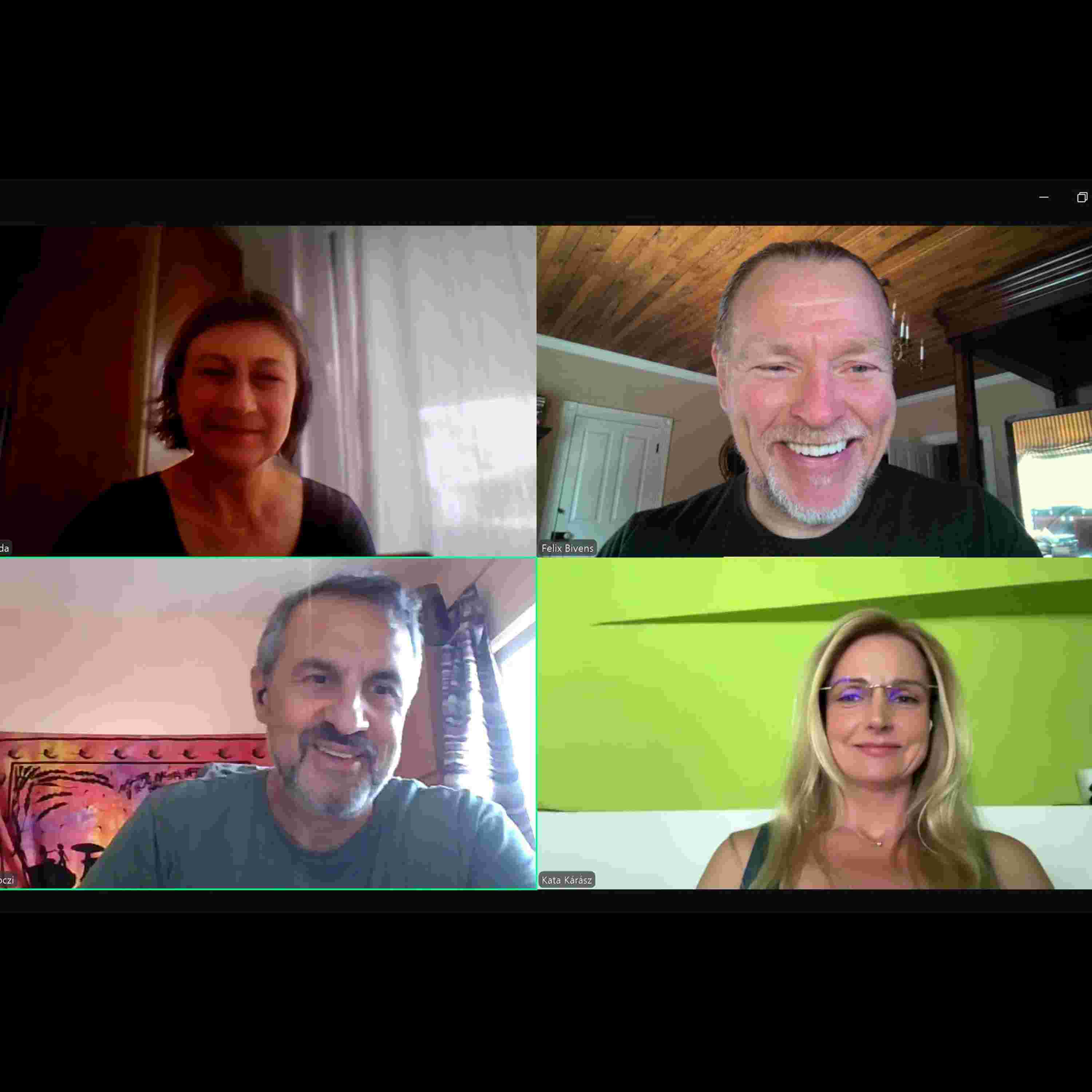
In this episode of Action Research Yes/And, co-host Felix ‘Skip’ Bivens speaks with Hungary-based researchers Dr. Violeta Vajda, Kata Kárász, and Gábor Daróczi. This team has just published a multi-year action research analysis of the accessibility of public services for the large Roma population—around 800,000 citizens—which exists in Hungary. In the post-Soviet era, Roma in Hungary have been actively segregated, crowded into homogenous ethic enclaves within larger cities or independent rural villages with their own schools designated only for Roma children. In this context, many such communities face inadequate or absent public services such as transportation and health care, among others.
Since 2019, the European Union has sought to rectify this imbalance through the funding of the Felzárkózó Települések (FETE) program, which is providing hundreds of millions of Euros in aid to Hungary’s three-hundred most disadvantaged villages. While not explicitly a Roma-focused project, the vast majority of the communities included in FETE programs are Roma-majority localities. Working with young Roma activists trained in action research methods, Violeta, Kata and Gábor engaged multiple communities to determine the current availability and quality of public services and to what degree the ongoing FETE program is making an impact on these issues. They found unevenness in the delivery of the program, while the overall impact of the initative is masked by a lack of transparency about implementation and impact assessment of FETE activities, which are not administered directly by the EU but through a variety of local government and voluntary sector actors.
Given the current Hungarian government’s status as a role model for 21st century authoritarianism, the conversation also delves into the role of action research and community-generated data under regimes that actively work to obscure transparency and analysis of their activities.
Key Themes in this Episode:
Introductions and backgrounds: 2:00-8:30
Context: Hungarian political environment and situation of Roma communities: 9:00-24:00
Research background and description of FETE program: 25:00-46:00
Research methodology: 47:00-55:00
Research findings: 56:00-1:14.00
Knowledge mobilization strategies: 1:16:00-1:24.30
Working with Roma youth as co-researchers: 1:24:30-1:28.30
Wider Lessons from researching in the Hungarian political context: 1:28:30-1:36.30
Show Notes:
Roma Access to Public Service in Hungary Reports:
https://phirenamenca.eu/public-service-access-by-roma-in-hungary-research-reports/
Phiren Amenca
https://phirenamenca.eu/
The Roma Women's Network
https://www.facebook.com/romanoihalozat
Independent Theater Hungary
https://independenttheater.hu/en/
Romaversitas
https://romaversitas.hu/en/
Action Research Yes/And
Harry Kruiter is co-founder at Public Value Institute (IPW). Before that he was doing participatory action research for Leiden university at the crossroads of social and physical urban redevelopment when based in the Hague (2007-2010). And before that that he was a policymaker. We talk about his work and recently published paper which centers around three important parts: 1) action: helping people and projects get unstuck by supporting bureaucracy breakthrough; 2) knowledge: analyzing bureaucratic burdens and opportunities; 3) learning: teaching and co-developing structural solutions with professionals in bureaucracies.