As we age, every tissue in the body undergoes gradual molecular changes. A long-standing question in aging research is whether these changes follow common patterns across tissues or whether each tissue ages on its own. While DNA-based “epigenetic clocks” can estimate age accurately across different tissues, identifying consistent patterns in gene expression has been much more challenging.
One reason for this difficulty is methodology. Most studies focus on whether genes increase or decrease their expression levels with age. However, genes do not function in isolation. They operate within complex networks, coordinating their activity with many others. Changes in these relationships may be important aspects of the aging process.
To understand this, researchers from the University of São Paulo performed a study titled “A combination of differential expression and network connectivity analyses identifies a common set of RNA splicing and processing genes altered with age across human tissues.”
Full blog - https://aging-us.org/2026/01/a-common-aging-pattern-changes-in-rna-splicing-and-processing-across-human-tissues/
Paper DOI - https://doi.org/10.18632/aging.206347
Corresponding author - Nadja C. de Souza-Pinto - nadja@iq.usp.br
Abstract video - https://www.youtube.com/watch?v=A1slKwaSd6g
Sign up for free Altmetric alerts about this article -
https://aging.altmetric.com/details/email_updates?id=10.18632%2Faging.206347
Subscribe for free publication alerts from Aging - https://www.aging-us.com/subscribe-to-toc-alerts
Keywords - aging, gene expression, co-expression network analysis, RNA processing
To learn more about the journal, please visit https://www.Aging-US.com and connect with us on social media at:
Bluesky - https://bsky.app/profile/aging-us.bsky.social
ResearchGate - https://www.researchgate.net/journal/Aging-1945-4589
Facebook - https://www.facebook.com/AgingUS/
X - https://twitter.com/AgingJrnl
Instagram - https://www.instagram.com/agingjrnl/
YouTube - https://www.youtube.com/@Aging-US
LinkedIn - https://www.linkedin.com/company/aging/
Pinterest - https://www.pinterest.com/AgingUS/
Spotify - https://open.spotify.com/show/1X4HQQgegjReaf6Mozn6Mc
MEDIA@IMPACTJOURNALS.COM
All content for Aging-US is the property of Aging-US Podcast and is served directly from their servers
with no modification, redirects, or rehosting. The podcast is not affiliated with or endorsed by Podjoint in any way.
As we age, every tissue in the body undergoes gradual molecular changes. A long-standing question in aging research is whether these changes follow common patterns across tissues or whether each tissue ages on its own. While DNA-based “epigenetic clocks” can estimate age accurately across different tissues, identifying consistent patterns in gene expression has been much more challenging.
One reason for this difficulty is methodology. Most studies focus on whether genes increase or decrease their expression levels with age. However, genes do not function in isolation. They operate within complex networks, coordinating their activity with many others. Changes in these relationships may be important aspects of the aging process.
To understand this, researchers from the University of São Paulo performed a study titled “A combination of differential expression and network connectivity analyses identifies a common set of RNA splicing and processing genes altered with age across human tissues.”
Full blog - https://aging-us.org/2026/01/a-common-aging-pattern-changes-in-rna-splicing-and-processing-across-human-tissues/
Paper DOI - https://doi.org/10.18632/aging.206347
Corresponding author - Nadja C. de Souza-Pinto - nadja@iq.usp.br
Abstract video - https://www.youtube.com/watch?v=A1slKwaSd6g
Sign up for free Altmetric alerts about this article -
https://aging.altmetric.com/details/email_updates?id=10.18632%2Faging.206347
Subscribe for free publication alerts from Aging - https://www.aging-us.com/subscribe-to-toc-alerts
Keywords - aging, gene expression, co-expression network analysis, RNA processing
To learn more about the journal, please visit https://www.Aging-US.com and connect with us on social media at:
Bluesky - https://bsky.app/profile/aging-us.bsky.social
ResearchGate - https://www.researchgate.net/journal/Aging-1945-4589
Facebook - https://www.facebook.com/AgingUS/
X - https://twitter.com/AgingJrnl
Instagram - https://www.instagram.com/agingjrnl/
YouTube - https://www.youtube.com/@Aging-US
LinkedIn - https://www.linkedin.com/company/aging/
Pinterest - https://www.pinterest.com/AgingUS/
Spotify - https://open.spotify.com/show/1X4HQQgegjReaf6Mozn6Mc
MEDIA@IMPACTJOURNALS.COM
Embryo Arrest in IVF Linked to Maternal Age, Not Chromosomal Abnormalities
Aging-US
3 minutes 18 seconds
1 month ago
Embryo Arrest in IVF Linked to Maternal Age, Not Chromosomal Abnormalities
BUFFALO, NY — November 20, 2025 — A new #research paper was #published in Volume 17, Issue 10 of Aging-US on October 10, 2025, titled “Developmental arrest rate of an embryo cohort correlates with advancing reproductive age, but not with the aneuploidy rate of the resulting blastocysts in good prognosis patients: a study of 25,974 embryos.”
In this large-scale study, Andres Reig of the IVIRMA Global Research Alliance and Robert Wood Johnson Medical School, along with Emre Seli of the IVIRMA Global Research Alliance and Yale School of Medicine, investigated how female age and chromosomal abnormalities affect embryo development in patients undergoing in vitro fertilization (IVF). They found that embryo developmental arrest (EDA) becomes more common as women age. However, this arrest is not directly associated with the presence of chromosomal errors in the embryos that continue to develop. These findings could help improve fertility counseling and treatment strategies.
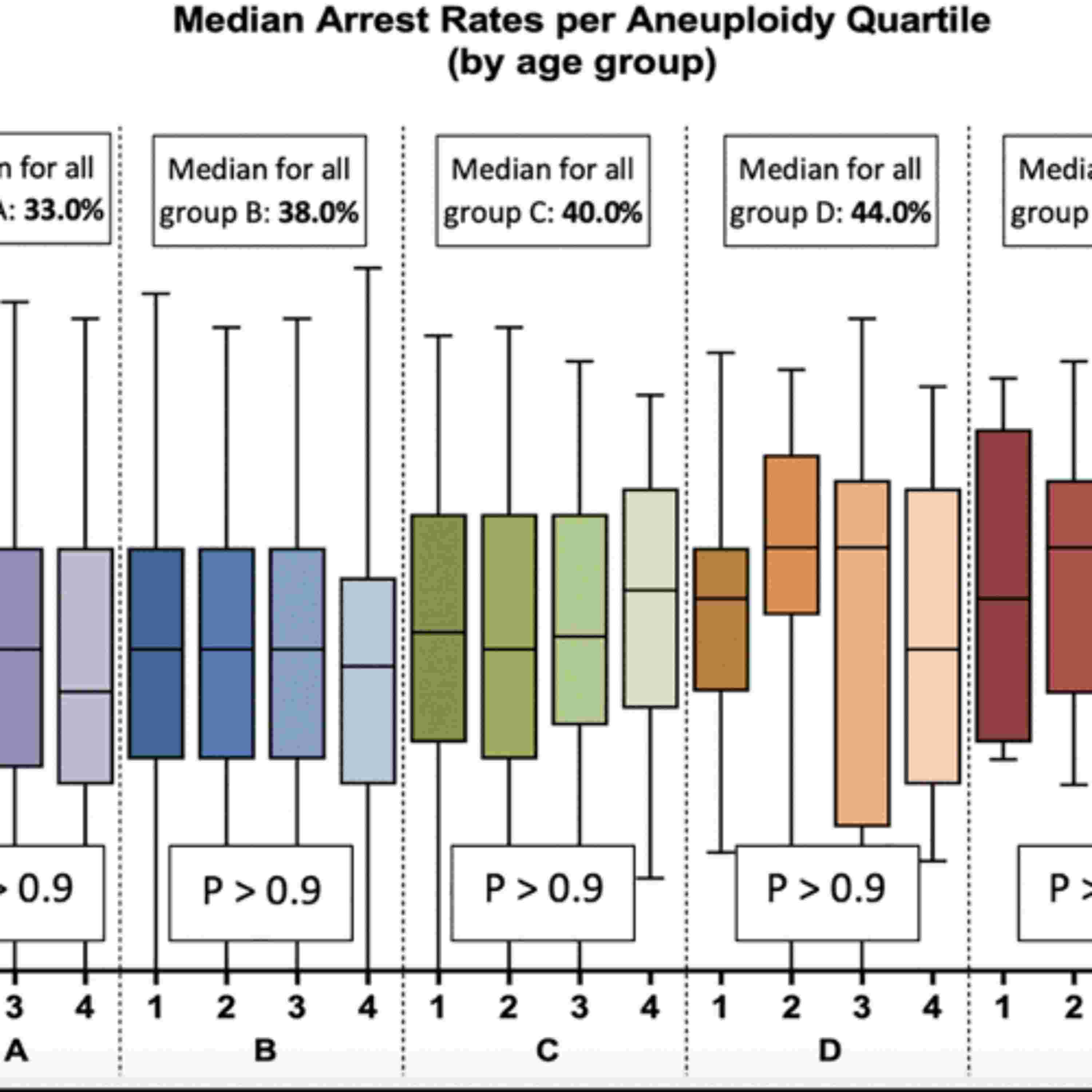
The researchers analyzed 25,974 embryos from 1,928 IVF cycles, all from patients with a good chance of success. The study showed that the percentage of embryos that stopped developing before reaching the blastocyst stage increased with age: from 33% in women under 35 to 44% in those over 42. Despite this rise, the rate of chromosomal abnormalities, known as aneuploidy, in the embryos that did reach the blastocyst stage did not show a strong connection with the rate of arrest after adjusting for age.
This distinction is important because both developmental arrest and aneuploidy reduce the number of embryos suitable for transfer. But this study suggests they are caused by different biological processes. In other words, an embryo may stop developing even if it has the correct number of chromosomes, and some embryos with chromosomal abnormalities may still grow to the blastocyst stage.
“A very weak positive correlation was identified between EDA rate and the rate of aneuploidy (r: 0.07, 95% CI 0.03–0.11; R2: 0.00, p < 0.01) when evaluating all cohorts.”
The authors suggest that other factors, such as the health of the egg’s mitochondria or mutations in maternal-effect genes, may explain why some embryos stop developing. These insights could help researchers identify new ways to improve embryo quality, especially for older women undergoing IVF.
Importantly, the study focused on embryos that developed far enough to be tested, which helped avoid technical problems that come with analyzing arrested embryos directly. This approach allowed for more reliable comparisons across age groups and embryo quality.
Overall, the study highlights the importance of maternal age as a key factor in embryo development, independent of chromosomal results. It also opens new directions for research, aiming to better understand why embryos fail to develop and how this knowledge might lead to improved fertility treatments in the future.
DOI - https://doi.org/10.18632/aging.206328
Corresponding author - Emre Seli - emre.seli@yale.edu
Abstract video - https://www.youtube.com/watch?v=g0oS3HBNmuQ
Sign up for free Altmetric alerts about this article -
https://aging.altmetric.com/details/email_updates?id=10.18632%2Faging.206328
Subscribe for free publication alerts from Aging - https://www.aging-us.com/subscribe-to-toc-alerts
Keywords - aging, ovarian aging, reproductive aging, embryonic arrest, embryonic aneuploidy, developmental arrest
To learn more about the journal, please visit https://www.Aging-US.com and connect with us on social media:
Facebook - https://www.facebook.com/AgingUS/
X - https://twitter.com/AgingJrnl
Instagram - https://www.instagram.com/agingjrnl/
YouTube - https://www.youtube.com/@Aging-US
LinkedIn - https://www.linkedin.com/company/aging/
Bluesky - https://bsky.app/profile/aging-us.bsky.social
Pinterest - https://www.pinterest.com/AgingUS/
Spotify - https://open.spotify.com/show/1X4HQQgegjReaf6Mozn6Mc
MEDIA@IMPACTJOURNALS.COM
Aging-US
As we age, every tissue in the body undergoes gradual molecular changes. A long-standing question in aging research is whether these changes follow common patterns across tissues or whether each tissue ages on its own. While DNA-based “epigenetic clocks” can estimate age accurately across different tissues, identifying consistent patterns in gene expression has been much more challenging.
One reason for this difficulty is methodology. Most studies focus on whether genes increase or decrease their expression levels with age. However, genes do not function in isolation. They operate within complex networks, coordinating their activity with many others. Changes in these relationships may be important aspects of the aging process.
To understand this, researchers from the University of São Paulo performed a study titled “A combination of differential expression and network connectivity analyses identifies a common set of RNA splicing and processing genes altered with age across human tissues.”
Full blog - https://aging-us.org/2026/01/a-common-aging-pattern-changes-in-rna-splicing-and-processing-across-human-tissues/
Paper DOI - https://doi.org/10.18632/aging.206347
Corresponding author - Nadja C. de Souza-Pinto - nadja@iq.usp.br
Abstract video - https://www.youtube.com/watch?v=A1slKwaSd6g
Sign up for free Altmetric alerts about this article -
https://aging.altmetric.com/details/email_updates?id=10.18632%2Faging.206347
Subscribe for free publication alerts from Aging - https://www.aging-us.com/subscribe-to-toc-alerts
Keywords - aging, gene expression, co-expression network analysis, RNA processing
To learn more about the journal, please visit https://www.Aging-US.com and connect with us on social media at:
Bluesky - https://bsky.app/profile/aging-us.bsky.social
ResearchGate - https://www.researchgate.net/journal/Aging-1945-4589
Facebook - https://www.facebook.com/AgingUS/
X - https://twitter.com/AgingJrnl
Instagram - https://www.instagram.com/agingjrnl/
YouTube - https://www.youtube.com/@Aging-US
LinkedIn - https://www.linkedin.com/company/aging/
Pinterest - https://www.pinterest.com/AgingUS/
Spotify - https://open.spotify.com/show/1X4HQQgegjReaf6Mozn6Mc
MEDIA@IMPACTJOURNALS.COM