BUFFALO, NY — January 5, 2026 — A new #research paper featured as the #cover of Volume 17, Issue 12 of Aging-US was #published on December 22, 2025, titled “A combination of differential expression and network connectivity analyses identifies a common set of RNA splicing and processing genes altered with age across human tissues.”
In this study by Caio M.P.F. Batalha from the University of São Paulo, André Fujita from the University of São Paulo and Kyushu University, and Nadja C. de Souza-Pinto also from the University of São Paulo, researchers investigated how gene activity changes with age across multiple human tissues. They found that many tissues share common aging-related alterations in genes involved in RNA splicing and RNA processing. These findings are important because RNA processing is essential for accurate protein production, and disruptions in this process are linked to aging and disease.
Aging affects all tissues, yet identifying molecular changes that are shared across the body has remained challenging. To address this, researchers moved beyond traditional approaches that focus exclusively on changes in gene expression levels. They also analyzed how genes alter their patterns of interaction within regulatory networks, capturing age-related changes that are not evident from expression data alone.
“Gene expression data (in TPM – transcripts per million) were obtained from the Genotype-Tissue Expression (GTEx) project.”
Using RNA sequencing data from nearly one thousand human donors aged 20 to 70, the research team analyzed eight tissues, including blood, brain, heart, skin, and muscle. The results showed that many aging-related changes become evident only when gene network behavior is considered. When gene expression and network connectivity were analyzed together, a consistent group of genes emerged across tissues, most of which were linked to RNA splicing and RNA processing, key steps in the production of functional proteins.
The study also revealed that these RNA-related genes are highly interconnected at the protein level. Many of them form known protein complexes, including components of the spliceosome, which plays a central role in RNA maturation. With age, the interactions among these genes tend to reorganize in similar ways across tissues, pointing to a shared biological response rather than independent, tissue-specific effects.
In addition to RNA processing, the researchers observed age-related changes in pathways involved in managing damaged RNAs and proteins, including protein degradation, autophagy, and DNA damage response mechanisms. These pathways support cellular quality control and help limit the accumulation of molecular errors that increase with age.
Overall, this study identifies RNA splicing and RNA processing as central, conserved features of human aging across tissues. It also demonstrates that network-based approaches provide a more complete view of the aging transcriptome, offering new insights into age-related biological changes and potential directions for aging research.
DOI - https://doi.org/10.18632/aging.206347
Corresponding author - Nadja C. de Souza-Pinto - nadja@iq.usp.br
Abstract video - https://www.youtube.com/watch?v=A1slKwaSd6g
Subscribe for free publication alerts from Aging - https://www.aging-us.com/subscribe-to-toc-alerts
To learn more about the journal, please visit https://www.Aging-US.com and connect with us on social media at:
Bluesky - https://bsky.app/profile/aging-us.bsky.social
ResearchGate - https://www.researchgate.net/journal/Aging-1945-4589
Facebook - https://www.facebook.com/AgingUS/
X - https://twitter.com/AgingJrnl
Instagram - https://www.instagram.com/agingjrnl/
YouTube - https://www.youtube.com/@Aging-US
LinkedIn - https://www.linkedin.com/company/aging/
Pinterest - https://www.pinterest.com/AgingUS/
Spotify - https://open.spotify.com/show/1X4HQQgegjReaf6Mozn6Mc
MEDIA@IMPACTJOURNALS.COM
All content for Aging-US is the property of Aging-US Podcast and is served directly from their servers
with no modification, redirects, or rehosting. The podcast is not affiliated with or endorsed by Podjoint in any way.
BUFFALO, NY — January 5, 2026 — A new #research paper featured as the #cover of Volume 17, Issue 12 of Aging-US was #published on December 22, 2025, titled “A combination of differential expression and network connectivity analyses identifies a common set of RNA splicing and processing genes altered with age across human tissues.”
In this study by Caio M.P.F. Batalha from the University of São Paulo, André Fujita from the University of São Paulo and Kyushu University, and Nadja C. de Souza-Pinto also from the University of São Paulo, researchers investigated how gene activity changes with age across multiple human tissues. They found that many tissues share common aging-related alterations in genes involved in RNA splicing and RNA processing. These findings are important because RNA processing is essential for accurate protein production, and disruptions in this process are linked to aging and disease.
Aging affects all tissues, yet identifying molecular changes that are shared across the body has remained challenging. To address this, researchers moved beyond traditional approaches that focus exclusively on changes in gene expression levels. They also analyzed how genes alter their patterns of interaction within regulatory networks, capturing age-related changes that are not evident from expression data alone.
“Gene expression data (in TPM – transcripts per million) were obtained from the Genotype-Tissue Expression (GTEx) project.”
Using RNA sequencing data from nearly one thousand human donors aged 20 to 70, the research team analyzed eight tissues, including blood, brain, heart, skin, and muscle. The results showed that many aging-related changes become evident only when gene network behavior is considered. When gene expression and network connectivity were analyzed together, a consistent group of genes emerged across tissues, most of which were linked to RNA splicing and RNA processing, key steps in the production of functional proteins.
The study also revealed that these RNA-related genes are highly interconnected at the protein level. Many of them form known protein complexes, including components of the spliceosome, which plays a central role in RNA maturation. With age, the interactions among these genes tend to reorganize in similar ways across tissues, pointing to a shared biological response rather than independent, tissue-specific effects.
In addition to RNA processing, the researchers observed age-related changes in pathways involved in managing damaged RNAs and proteins, including protein degradation, autophagy, and DNA damage response mechanisms. These pathways support cellular quality control and help limit the accumulation of molecular errors that increase with age.
Overall, this study identifies RNA splicing and RNA processing as central, conserved features of human aging across tissues. It also demonstrates that network-based approaches provide a more complete view of the aging transcriptome, offering new insights into age-related biological changes and potential directions for aging research.
DOI - https://doi.org/10.18632/aging.206347
Corresponding author - Nadja C. de Souza-Pinto - nadja@iq.usp.br
Abstract video - https://www.youtube.com/watch?v=A1slKwaSd6g
Subscribe for free publication alerts from Aging - https://www.aging-us.com/subscribe-to-toc-alerts
To learn more about the journal, please visit https://www.Aging-US.com and connect with us on social media at:
Bluesky - https://bsky.app/profile/aging-us.bsky.social
ResearchGate - https://www.researchgate.net/journal/Aging-1945-4589
Facebook - https://www.facebook.com/AgingUS/
X - https://twitter.com/AgingJrnl
Instagram - https://www.instagram.com/agingjrnl/
YouTube - https://www.youtube.com/@Aging-US
LinkedIn - https://www.linkedin.com/company/aging/
Pinterest - https://www.pinterest.com/AgingUS/
Spotify - https://open.spotify.com/show/1X4HQQgegjReaf6Mozn6Mc
MEDIA@IMPACTJOURNALS.COM
Longevity & Aging Series (S3, E7): Amparo Santamaria
Aging-US
38 minutes 47 seconds
1 month ago
Longevity & Aging Series (S3, E7): Amparo Santamaria
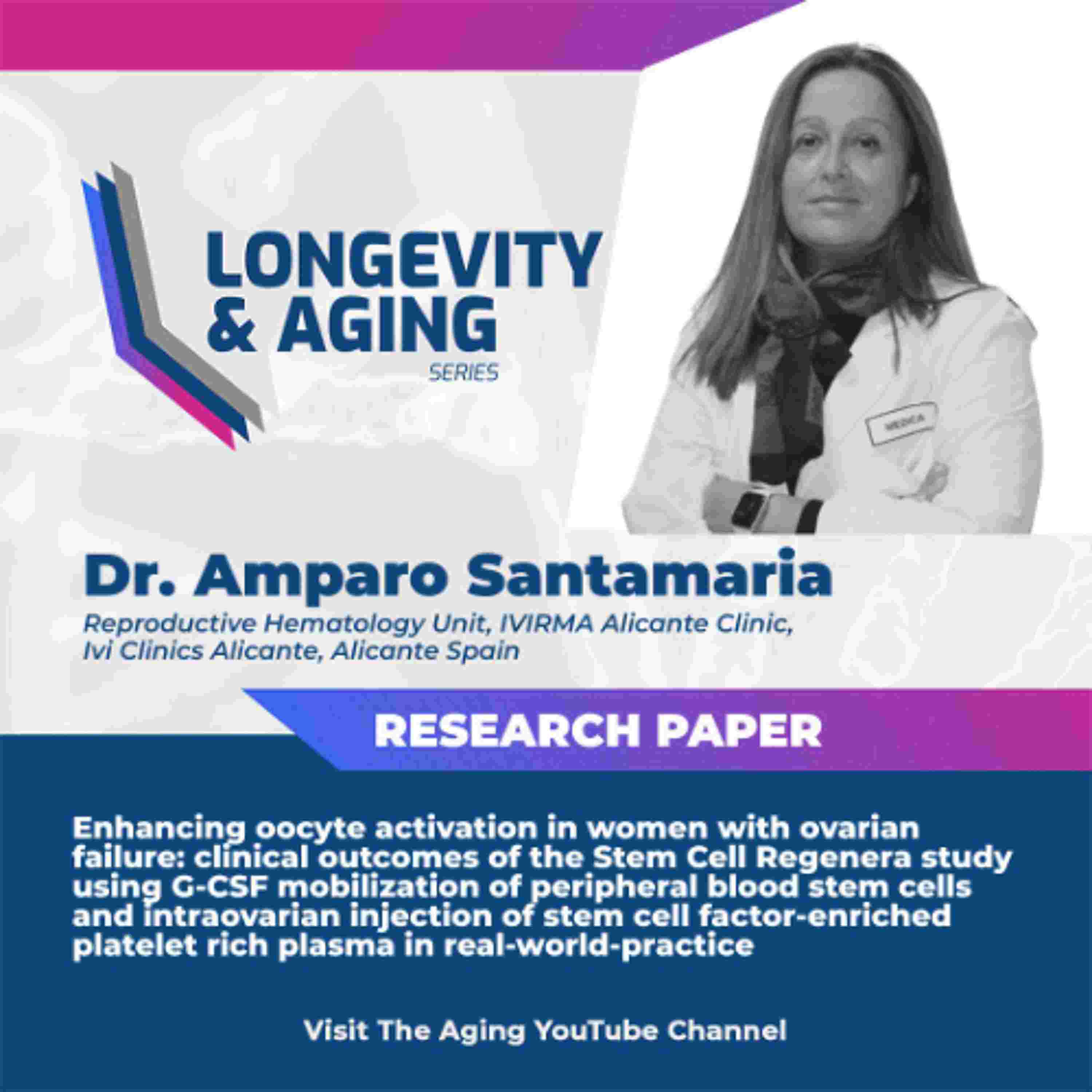
In this episode of the Longevity & Aging Series, Dr. Amparo Santamaria from the Reproductive Hematology Unit at the IVIRMA Alicante Clinic in Spain joins Dr. Evgeniy Galimov to discuss her #research paper #published in Volume 17, Issue 6 of Aging-US, titled “Enhancing oocyte activation in women with ovarian failure: clinical outcomes of the Stem Cell Regenera study using G-CSF mobilization of peripheral blood stem cells and intraovarian injection of stem cell factor-enriched platelet rich plasma in real-world-practice.”
DOI - https://doi.org/10.18632/aging.206274
Corresponding author - Amparo Santamaria - Amparo.santamaria@ivirma.com
Video interview - https://www.youtube.com/watch?v=Zlezd0x_EJQ
Longevity & Aging Series - www.aging-us.com/longevity
Abstract
The study assesses the effectiveness and safety of the Stem Cell Regenera Treatment for oocyte activation in women with ovarian failure, including conditions such as Poor Ovarian Response (POR), Diminished Ovarian Reserve (DOR), and Premature Ovarian Insufficiency (POI). This retrospective observational study was conducted from January 2023 to December 2024 at the IVIRMA Alicante Clinics in Spain.
Women diagnosed with ovarian failure participated in the study, which involved mobilizing Hematopoietic Stem Cells from bone marrow into peripheral blood using granulocyte colony- stimulating factor (G-CSF). This was followed by an intraovarian injection of Stem Cell Factor- enriched Platelet Rich Plasma (SCFE-PRP).
The primary outcome measures were the rate of oocyte activation, leukocytes and stem cell count, and pregnancy rates. Oocyte activation was defined as an increase in total Antral Follicle Count of three or more follicles after treatment and/or at least a 20% rise in Anti-Müllerian Hormone levels. Safety was assessed based on adverse effects. Pregnancy rates were evaluated for both spontaneous gestation and following in vitro fertilization (IVF) treatment.
A total of 145 women participated: the overall activation rate was 68.28%, with 7.07% achieving spontaneous gestation and 14.14% achieving pregnancy following IVF. Mobilization of CD34+ cells was successful in all participants, with an average collection of 32.96 CD34+ cells/μl. No severe adverse effects were observed. The study concluded that the Stem Cell Regenera Treatment is effective and safe for oocyte activation in women with ovarian failure in real-world practice.
Sign up for free Altmetric alerts about this article -
https://aging.altmetric.com/details/email_updates?id=10.18632%2Faging.206274
Subscribe for free publication alerts from Aging - https://www.aging-us.com/subscribe-to-toc-alerts
Keywords - aging, Stem Cell Regenera, oocyte activation, ovarian regeneration, G-CSF, SCFE-PRP, ovarian failure
To learn more about the journal, please visit our website at https://www.Aging-US.com and connect with us on social media at:
Facebook - https://www.facebook.com/AgingUS/
X - https://twitter.com/AgingJrnl
Instagram - https://www.instagram.com/agingjrnl/
YouTube - https://www.youtube.com/@Aging-US
LinkedIn - https://www.linkedin.com/company/aging/
Bluesky - https://bsky.app/profile/aging-us.bsky.social
Pinterest - https://www.pinterest.com/AgingUS/
Spotify - https://open.spotify.com/show/1X4HQQgegjReaf6Mozn6Mc
MEDIA@IMPACTJOURNALS.COM
Aging-US
BUFFALO, NY — January 5, 2026 — A new #research paper featured as the #cover of Volume 17, Issue 12 of Aging-US was #published on December 22, 2025, titled “A combination of differential expression and network connectivity analyses identifies a common set of RNA splicing and processing genes altered with age across human tissues.”
In this study by Caio M.P.F. Batalha from the University of São Paulo, André Fujita from the University of São Paulo and Kyushu University, and Nadja C. de Souza-Pinto also from the University of São Paulo, researchers investigated how gene activity changes with age across multiple human tissues. They found that many tissues share common aging-related alterations in genes involved in RNA splicing and RNA processing. These findings are important because RNA processing is essential for accurate protein production, and disruptions in this process are linked to aging and disease.
Aging affects all tissues, yet identifying molecular changes that are shared across the body has remained challenging. To address this, researchers moved beyond traditional approaches that focus exclusively on changes in gene expression levels. They also analyzed how genes alter their patterns of interaction within regulatory networks, capturing age-related changes that are not evident from expression data alone.
“Gene expression data (in TPM – transcripts per million) were obtained from the Genotype-Tissue Expression (GTEx) project.”
Using RNA sequencing data from nearly one thousand human donors aged 20 to 70, the research team analyzed eight tissues, including blood, brain, heart, skin, and muscle. The results showed that many aging-related changes become evident only when gene network behavior is considered. When gene expression and network connectivity were analyzed together, a consistent group of genes emerged across tissues, most of which were linked to RNA splicing and RNA processing, key steps in the production of functional proteins.
The study also revealed that these RNA-related genes are highly interconnected at the protein level. Many of them form known protein complexes, including components of the spliceosome, which plays a central role in RNA maturation. With age, the interactions among these genes tend to reorganize in similar ways across tissues, pointing to a shared biological response rather than independent, tissue-specific effects.
In addition to RNA processing, the researchers observed age-related changes in pathways involved in managing damaged RNAs and proteins, including protein degradation, autophagy, and DNA damage response mechanisms. These pathways support cellular quality control and help limit the accumulation of molecular errors that increase with age.
Overall, this study identifies RNA splicing and RNA processing as central, conserved features of human aging across tissues. It also demonstrates that network-based approaches provide a more complete view of the aging transcriptome, offering new insights into age-related biological changes and potential directions for aging research.
DOI - https://doi.org/10.18632/aging.206347
Corresponding author - Nadja C. de Souza-Pinto - nadja@iq.usp.br
Abstract video - https://www.youtube.com/watch?v=A1slKwaSd6g
Subscribe for free publication alerts from Aging - https://www.aging-us.com/subscribe-to-toc-alerts
To learn more about the journal, please visit https://www.Aging-US.com and connect with us on social media at:
Bluesky - https://bsky.app/profile/aging-us.bsky.social
ResearchGate - https://www.researchgate.net/journal/Aging-1945-4589
Facebook - https://www.facebook.com/AgingUS/
X - https://twitter.com/AgingJrnl
Instagram - https://www.instagram.com/agingjrnl/
YouTube - https://www.youtube.com/@Aging-US
LinkedIn - https://www.linkedin.com/company/aging/
Pinterest - https://www.pinterest.com/AgingUS/
Spotify - https://open.spotify.com/show/1X4HQQgegjReaf6Mozn6Mc
MEDIA@IMPACTJOURNALS.COM