All content for Angelicum Thomistic Institute is the property of Angelicum Thomistic Institute and is served directly from their servers
with no modification, redirects, or rehosting. The podcast is not affiliated with or endorsed by Podjoint in any way.
History of the Debates on Divine Action | Dr. Edmund Lazzari by Angelicum Thomistic Institute
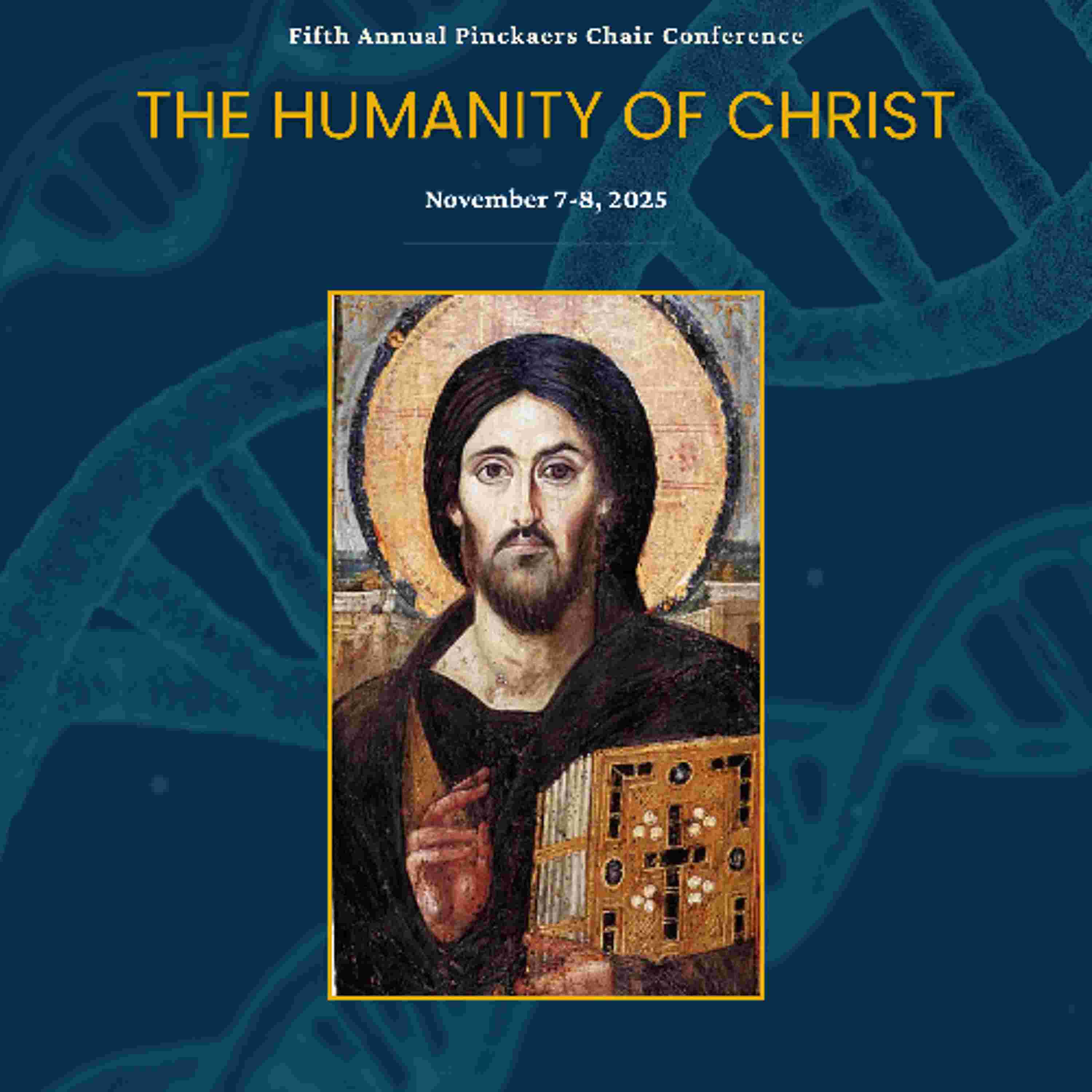
The Scriptures tell us that “Jesus increased in wisdom and in years, and in divine and human favor” (Lk 2:52). How are to interpret these inspired words in the context of the Church’s teaching on the hypostatic union confirmed at both Nicea and Chalcedonian?
This conference draws us into the teaching of theologians throughout the centuries who have struggled to properly interpret “two na¬tures, inconfusedly, unchangeably, indi¬vis¬i¬bly, insepara¬bly,” united in “one Person and one Subsistence”, such that “the property of each nature being pre¬served, and concur¬ring in one Person and one Subsis¬tence […] the same Son, and only begot¬ten, God the Word, the Lord Jesus Christ.”
Having these profound theological statements as a foundation, this paper addresses one seemingly simple question: whether or not Christ, in his human nature, made progress?
I will respond to the question by analyzing three specific aspects of Christ’s assumed nature: first, the question of physiological change and progress; second, progress as to Christ’s knowledge which will necessarily require distinctions as to his Divine and human knowledge; third, the question of whether Christ progressed in moral virtue. Since moral virtue perfects both the rational and sensitive appetite, one cannot avoid mention of Christ’s passions as movements of the latter appetite. This discussion, however, will be limited to a few key points pertinent to the specific question of progress.
[Sources, both ancient, medieval, and contemporary, abound, but Thomas Aquinas’s writings are key both for their abundance and specificity. His Christological teachings appear in many works, including De Veritate, De Virtutibus, and various Commentaries on the Scriptures, and fine nuggets are gleaned from these, but emphasis must be given to his comprehensive mature and subtle synthesis which appears in the Tertia pars of his Summa Theologiae, written shortly before his death. I also will make brief reference to the other Dominican Doctor of the Church, Catherine of Siena. Though not a systematic work, her Dialogue offers a profound Christology, particularly noteworthy in the doctrine of Christ as Il Ponte – the bridge between earth and heaven.]
Angelicum Thomistic Institute
History of the Debates on Divine Action | Dr. Edmund Lazzari by Angelicum Thomistic Institute