Home
Categories
EXPLORE
True Crime
Comedy
Business
Sports
Society & Culture
Health & Fitness
TV & Film
About Us
Contact Us
Copyright
© 2024 PodJoint
00:00 / 00:00
Sign in

or

Don't have an account?
Sign up
Forgot password
https://is1-ssl.mzstatic.com/image/thumb/Podcasts125/v4/f7/22/90/f72290df-6cb9-13f1-c302-532a92f1203e/mza_434975287674386443.jpg/600x600bb.jpg
Animalia
Animalia
88 episodes
1 week ago
At Animalia we aim to share important stories and information related to protecting this planet and positively impacting the public discussion around climate, biodiversity, and the natural world.
Show more...
Earth Sciences
Science
RSS
All content for Animalia is the property of Animalia and is served directly from their servers with no modification, redirects, or rehosting. The podcast is not affiliated with or endorsed by Podjoint in any way.
At Animalia we aim to share important stories and information related to protecting this planet and positively impacting the public discussion around climate, biodiversity, and the natural world.
Show more...
Earth Sciences
Science
https://d3t3ozftmdmh3i.cloudfront.net/production/podcast_uploaded_episode400/3808751/3808751-1639193082484-69fc8e171ef42.jpg
S2:E34 - (Full Version) WE CAN NOW BRING BACK EXTINCT SPECIES, BUT SHOULD WE?
Animalia
1 hour 4 minutes 58 seconds
4 years ago
S2:E34 - (Full Version) WE CAN NOW BRING BACK EXTINCT SPECIES, BUT SHOULD WE?

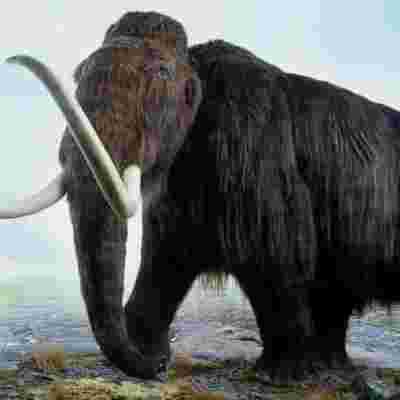
Welcome to a very special episode of Animalia. Today we are talking about the merits, ethics, and potential outcomes good and bad with de-extinction.  Earlier this year, a company named Colossal announced $15M in funding to create a new hybrid wooly mammoth species with plans of reintroducing them to Siberia in hopes of reviving their grasslands.

Now that the dawn of de-extinction possibilities are upon us, we need to carefully consider how this could play out, and what the positive and negative impacts on our climate and biodiversity crises could be.

We have three incredible scientists joining us for this roundtable discussion:

  • Dr. Mackenzie Kwak - parasitologist at the University of Singapore
  • Dr. Dave Strayer - ecologist and invasive species expert at the Cary Institute
  • Dr. Lynn Rothschild - astro biologist and evolutionary biologist at Brown University

This was a fascinating and enlightening discussion that you won't want to miss!  

------------

If you have not yet done so, please join our weekly newsletter. It's totally free and every Thursday we will send you 3 stories designed to be consumed in under 10 minutes that will make you a more informed advocate for this planet and addressing our climate and biodiversity crises.  Go to www.joinanimalia.com/newsletter.

------------

One short edit from Dave: In the podcast, he mentioned that humans have doubled the amount of reactive nitrogen on the planet, but he asked to correct this statement as such: that we've doubled the rate of input of reactive N on the planet (i.e., we now add as much reactive N as all natural sources combined). See Figs. 8.1 and 8.2 in Weathers et al. (eds). 2021. Fundamentals of Ecosystem Science. Academic Press.


Animalia
At Animalia we aim to share important stories and information related to protecting this planet and positively impacting the public discussion around climate, biodiversity, and the natural world.