Angus McEntrye is a Chiropractor, Athletics coach and Strength & Conditioning Coach. He works out of his practice AM Health & Performance in Sydney and specialises in injury diagnosis, management, and rehabilitation. Angus has worked with several different athletes and teams and has coached athletes competing at World Championships, Commonwealth Games, and the Olympic Games in athletics. Angus is also an accredited Level 4 Athletics Coach and ASCA Elite L3 Strength & Conditioning Coach.
QUOTES
"So what is VBT to me? It's all about speed output. So moving the bar or the body as fast as we can."
"The most important part about the competitive season is that they're competing. We're not trying to be Olympic lifters. We're not trying to be power lifters. We want to make sure that their transfer to the sport is as high as possible. That's submaximal loading, accelerative strengthening, power on the force velocity curve. 60-70 % 1RM comes in as the heavy and then we muck around with 50-30 %; lighter, faster, ballistic tosses, jumping, loud noises, trying to get things moving as fast as we can..."
"How many sports generate force up and down like a squat? There aren't too many. In track and field, it's the hammer throw, skiing, rowing, a couple of examples there, but most of what we do is we're generating force in a split based position"
"So then, you know, going into those lighter loads, and doing it with a snatch, Cameron can lift up to four meters per second with 30% 1RM on the bar"
“I've always been somebody that likes to be creative and just think outside of the box and how might this work? How might this better the output that we're trying to achieve? And then in the gym, it just bolsters that as well. So, you know, as long as you're not being stupid, think being creative in your environment … especially with VBT”
SHOWNOTES
1) Angus’ journey in strength and conditioning, athletics coaching and chiropractic influences
2) Velocity based training (VBT) basics and split snatches in Tokyo
3) Periodizing VBT across general prep, specific prep and competition phases
4) Different exercises, including Olympic lifting variations, that Angus will use in his coaching
5) How VBT metrics and speeds can be adapted for power development, including lifts above 3-4 meters per second
6) The benefits of different coaching cues combined with VBT feedback
7) Being creative in your environment as a coach and the use of different exercises to influence technique
PEOPLE MENTIONED
Cam McEntrye
John Mitchell
Nick Winkelman
John Manenti
All content for ASCA Podcast is the property of Joseph Coyne and is served directly from their servers
with no modification, redirects, or rehosting. The podcast is not affiliated with or endorsed by Podjoint in any way.
Angus McEntrye is a Chiropractor, Athletics coach and Strength & Conditioning Coach. He works out of his practice AM Health & Performance in Sydney and specialises in injury diagnosis, management, and rehabilitation. Angus has worked with several different athletes and teams and has coached athletes competing at World Championships, Commonwealth Games, and the Olympic Games in athletics. Angus is also an accredited Level 4 Athletics Coach and ASCA Elite L3 Strength & Conditioning Coach.
QUOTES
"So what is VBT to me? It's all about speed output. So moving the bar or the body as fast as we can."
"The most important part about the competitive season is that they're competing. We're not trying to be Olympic lifters. We're not trying to be power lifters. We want to make sure that their transfer to the sport is as high as possible. That's submaximal loading, accelerative strengthening, power on the force velocity curve. 60-70 % 1RM comes in as the heavy and then we muck around with 50-30 %; lighter, faster, ballistic tosses, jumping, loud noises, trying to get things moving as fast as we can..."
"How many sports generate force up and down like a squat? There aren't too many. In track and field, it's the hammer throw, skiing, rowing, a couple of examples there, but most of what we do is we're generating force in a split based position"
"So then, you know, going into those lighter loads, and doing it with a snatch, Cameron can lift up to four meters per second with 30% 1RM on the bar"
“I've always been somebody that likes to be creative and just think outside of the box and how might this work? How might this better the output that we're trying to achieve? And then in the gym, it just bolsters that as well. So, you know, as long as you're not being stupid, think being creative in your environment … especially with VBT”
SHOWNOTES
1) Angus’ journey in strength and conditioning, athletics coaching and chiropractic influences
2) Velocity based training (VBT) basics and split snatches in Tokyo
3) Periodizing VBT across general prep, specific prep and competition phases
4) Different exercises, including Olympic lifting variations, that Angus will use in his coaching
5) How VBT metrics and speeds can be adapted for power development, including lifts above 3-4 meters per second
6) The benefits of different coaching cues combined with VBT feedback
7) Being creative in your environment as a coach and the use of different exercises to influence technique
PEOPLE MENTIONED
Cam McEntrye
John Mitchell
Nick Winkelman
John Manenti
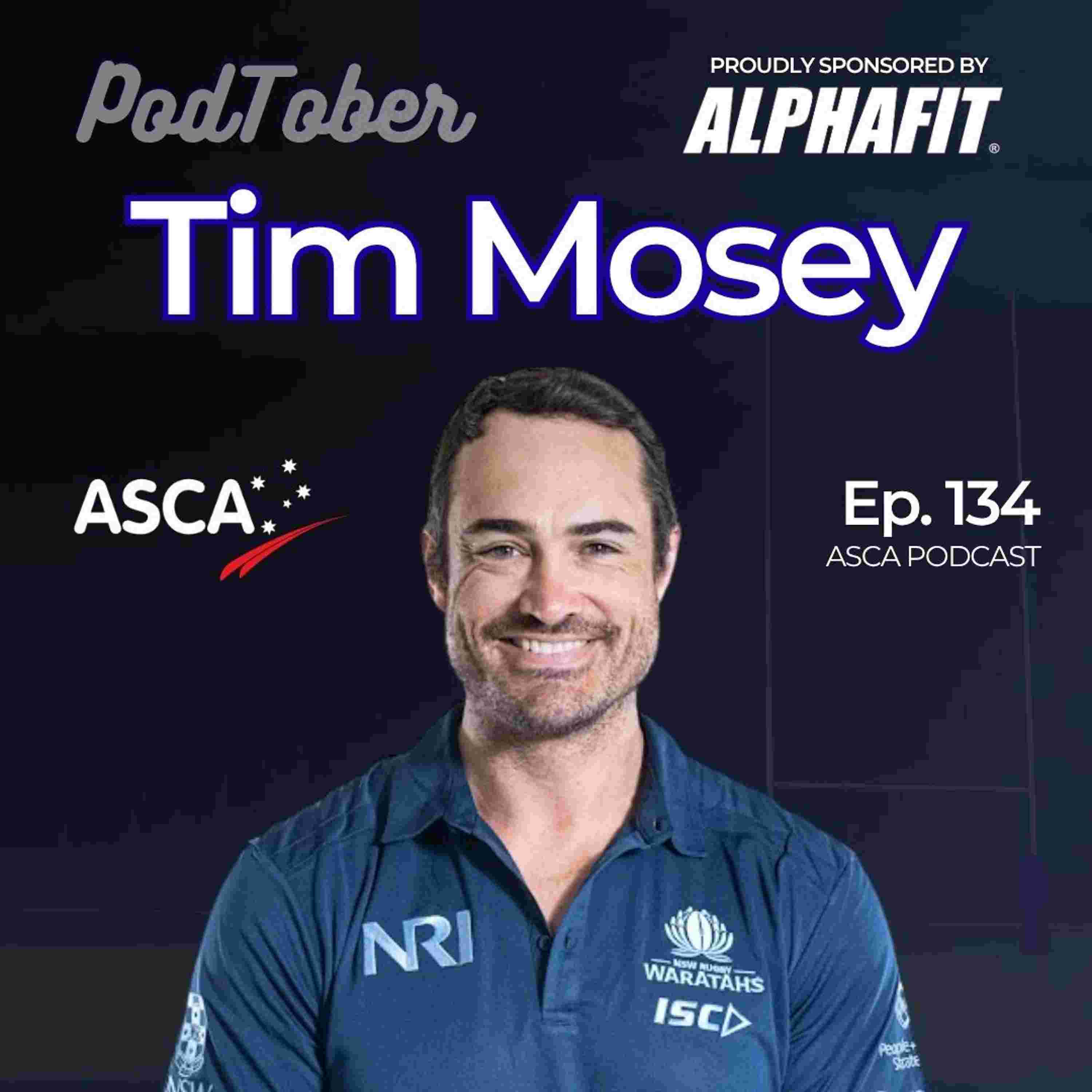
Tim Mosey holds a Master of Exercise Science (Strength and Conditioning) from Edith Cowan University and a Bachelor of Applied Science (Human Movement Studies) from QUT. He is an ASCA Level 3 Master S&C Coach with over sixteen years of experience across Olympic, professional, and youth development sport. Tim is currently the Senior Strength & Conditioning Coach at the NSW Waratahs, where he leads strength, power, and speed development, as well as rehabilitation programming for the Super Rugby squad. He has previously served in high-performance roles at the Queensland Academy of Sport, the Tasmanian Institute of Sport, as Head of Athletic Performance - Academy for the Waratahs, and as Director of Athletic Development at Brisbane Boys’ College. He has supported athletes to Olympic and international success in diving, rowing, archery, water polo, and skeleton, including preparing athletes for the 2010 Whistler and 2014 Sochi Winter Olympic Games. Tim’s areas of expertise include strength, power and speed development, return-to-play programming, and long-term athlete development. He has contributed to the field through published peer-reviewed research, mentoring emerging coaches, and presenting at national conferences.
QUOTES
“I'm a reluctant rehabber. I find it the most challenging and frustrating part of strength and conditioning. It doesn't excite me. It challenges me. I find it difficult I guess and that's weirdly why I wanted to dive into it”
“If we're thinking about aerobic type work, you can break it down into whether you want to do extensive or intensive type work. So maybe extensive work where the length of your effort is a longer, straighter effort versus an intensive type effort where you might have more shuttle-based work.”
“I've always lived off this quote from an old colleague, Nick Lumley and his comment was when the bombs are going off, you don't want blokes who've just been running straight line MAS, you want guys who've been getting off the deck and shuttling. So I guess I'm biased towards a little bit more shuttle-based conditioning work than straight line work”.
“The challenge of rehabbing someone in season is the coach wants him back and there's the old adage of are we returning to play or returning to perform? I don't think that really applies in a lot of instances when we're getting guys back out on the paddock, particularly in-season. I would argue that we return blokes that aren't ready to perform a lot of the time but they're ready to go back and play”
“I would start generally in the backend of a reconditioning block with more aerobic based extensive work and that might involve longer straighter efforts with maybe one turn. I might progress that down to more intensive based conditioning work with more turns, same sort of work to rest ratios, but more change of direction and off deck work, increasing to intensive anaerobic type work as they get towards the backend of the last third and fourth weeks.”
SHOWNOTES
1) Tim’s time in strength and conditioning, from Tasmanian Institute of Sport to Brisbane Boys College and QAS to the NSW Waratahs
2) The basics of reconditioning and using an energy system adaptation led strategy
3) The simplicity of four-minute conditioning blocks and the importance of shuttle-based work
4) Skill work in re-conditioning?
5) Building back into contact after injuries, especially for shoulder cases
6) The difference between returning to play versus returning to perform
7) Reconditioning periodization and the use of extensive and intensive days
8) Tim’s favourite reconditioning drills and the challenges of adapting training to different athlete types within the same squad and sport
PEOPLE MENTIONED
Peter Culhane
Paul Larsen
Martin Buchheit
Nick Lumley
ASCA Podcast
Angus McEntrye is a Chiropractor, Athletics coach and Strength & Conditioning Coach. He works out of his practice AM Health & Performance in Sydney and specialises in injury diagnosis, management, and rehabilitation. Angus has worked with several different athletes and teams and has coached athletes competing at World Championships, Commonwealth Games, and the Olympic Games in athletics. Angus is also an accredited Level 4 Athletics Coach and ASCA Elite L3 Strength & Conditioning Coach.
QUOTES
"So what is VBT to me? It's all about speed output. So moving the bar or the body as fast as we can."
"The most important part about the competitive season is that they're competing. We're not trying to be Olympic lifters. We're not trying to be power lifters. We want to make sure that their transfer to the sport is as high as possible. That's submaximal loading, accelerative strengthening, power on the force velocity curve. 60-70 % 1RM comes in as the heavy and then we muck around with 50-30 %; lighter, faster, ballistic tosses, jumping, loud noises, trying to get things moving as fast as we can..."
"How many sports generate force up and down like a squat? There aren't too many. In track and field, it's the hammer throw, skiing, rowing, a couple of examples there, but most of what we do is we're generating force in a split based position"
"So then, you know, going into those lighter loads, and doing it with a snatch, Cameron can lift up to four meters per second with 30% 1RM on the bar"
“I've always been somebody that likes to be creative and just think outside of the box and how might this work? How might this better the output that we're trying to achieve? And then in the gym, it just bolsters that as well. So, you know, as long as you're not being stupid, think being creative in your environment … especially with VBT”
SHOWNOTES
1) Angus’ journey in strength and conditioning, athletics coaching and chiropractic influences
2) Velocity based training (VBT) basics and split snatches in Tokyo
3) Periodizing VBT across general prep, specific prep and competition phases
4) Different exercises, including Olympic lifting variations, that Angus will use in his coaching
5) How VBT metrics and speeds can be adapted for power development, including lifts above 3-4 meters per second
6) The benefits of different coaching cues combined with VBT feedback
7) Being creative in your environment as a coach and the use of different exercises to influence technique
PEOPLE MENTIONED
Cam McEntrye
John Mitchell
Nick Winkelman
John Manenti