Our ability to live for many decades is often viewed as a modern luxury made possible by clean water, improved living conditions, and advances in medicine. Yet, human longevity is actually part of our deep evolutionary history. The long-standing belief that life in the past was “nasty, brutish, and short” is a widespread misconception—one rooted in misleading averages and often repeated in textbooks and popular media.
In his book “Seven Decades: How We Evolved to Live Longer”, anthropologist Professor Michael Gurven challenges this myth. Drawing on extensive fieldwork, he presents compelling evidence that the capacity for long life first emerged among our hunting and gathering ancestors and argues that the human body is fundamentally designed to function for roughly seven decades. Combining vivid storytelling with rigorous science, Gurven shares insights from years of research among Indigenous societies whose diets and traditional ways of living more closely resemble how humans lived before industrialization. These communities, he shows, experience far lower rates of chronic diseases of aging—such as heart disease, dementia, and diabetes—than populations in industrialized nations.
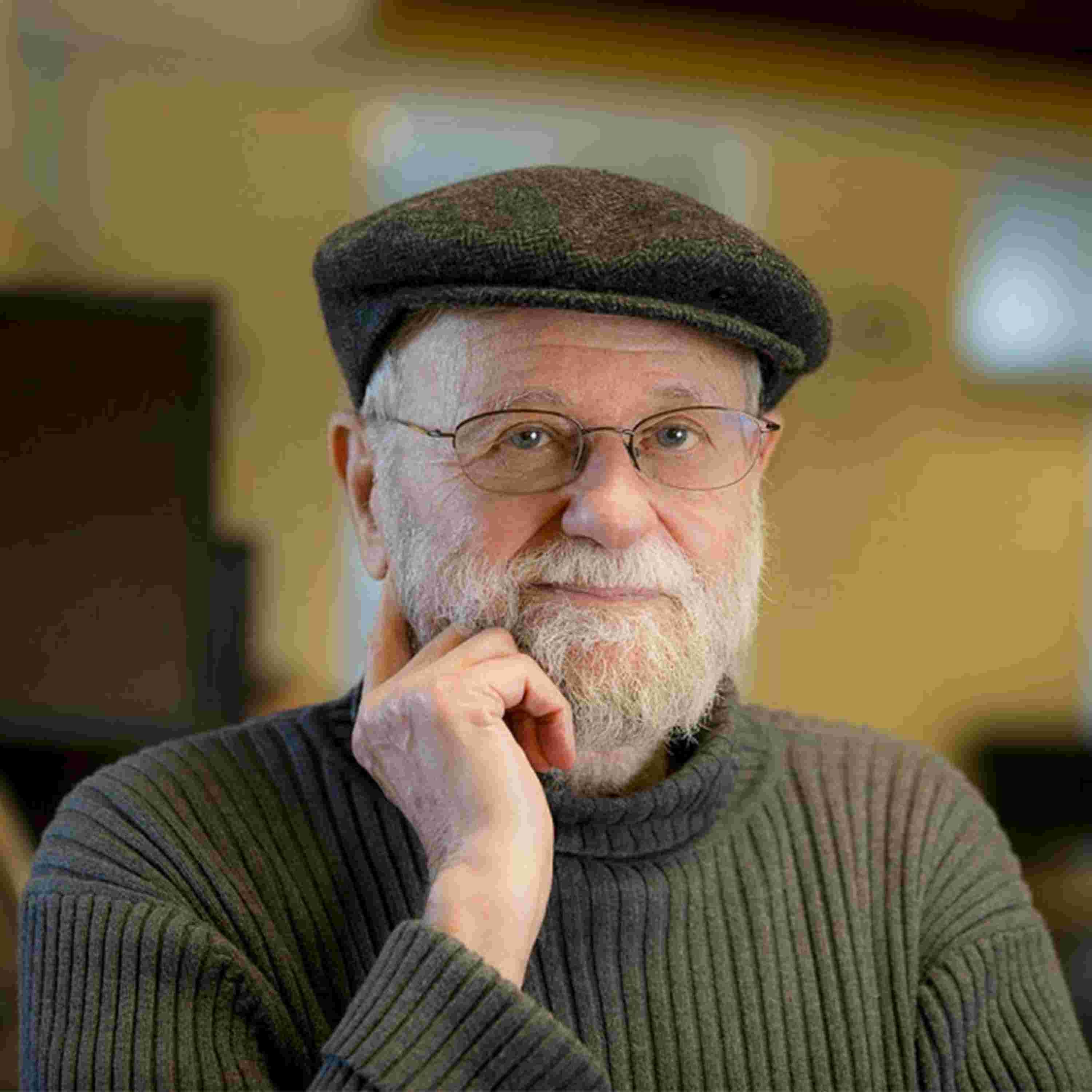
In this episode of Bridging the Gaps, I speak with Professor Michael Gurven, Distinguished Professor of Anthropology at the University of California, Santa Barbara. For more than twenty years, he has worked closely with Indigenous groups in South America to better understand how traditional lifestyles can shed light on the evolution of human behavior, health, and psychology. His research uses an evolutionary framework to help explain modern health challenges and the origins of chronic diseases.
Our conversation offers a detailed exploration of the book and the science behind it. We begin by examining the myth that ancient people rarely reached old age, discussing how misleading averages have shaped this false narrative and why it is important to correct it. We then talk about a central idea in the book: that each stage of human life has an evolutionary purpose, and our bodies and minds have been shaped accordingly.
Another major theme is the evolutionary significance of post-reproductive life. While some biologists have argued that life after reproduction has no adaptive function, Gurven’s work shows that midlife and elderhood evolved for meaningful reasons and contribute to group survival.
At this point, the discussion turns to his fieldwork—what it is like to work with Indigenous communities, the unique challenges of this research, and how these challenges are addressed in study design and implementation. We then explore key findings from his work, including results that challenge assumptions in modern medicine. Gurven explains what these insights can teach us about improving healthcare and rethinking aging in contemporary societies.
Finally, we discuss the book’s broader message: that by understanding our evolutionary past, we can gain powerful new perspectives on aging, health, and what it means to live a long, meaningful, and productive life.
This conversation is wide-ranging, thorough, and deeply informative.
Complement this discussion with ““The Human Journey From Ape to Agriculture” with Professor Peter Bellwood” available at:
https://www.bridgingthegaps.ie/2025/06/the-human-journey-from-ape-to-agriculture-with-professor-peter-bellwood/
And then listen to “The Evolution of Knowledge and Rethinking Science for The Anthropocene with Professor Jürgen Renn” available at:
https://www.bridgingthegaps.ie/2020/06/the-evolution-of-knowledge-and-rethinking-science-for-the-anthropocene-with-professor-jurgen-renn/
All content for Bridging the Gaps: A Portal for Curious Minds is the property of Dr Waseem Akhtar and is served directly from their servers
with no modification, redirects, or rehosting. The podcast is not affiliated with or endorsed by Podjoint in any way.
Our ability to live for many decades is often viewed as a modern luxury made possible by clean water, improved living conditions, and advances in medicine. Yet, human longevity is actually part of our deep evolutionary history. The long-standing belief that life in the past was “nasty, brutish, and short” is a widespread misconception—one rooted in misleading averages and often repeated in textbooks and popular media.
In his book “Seven Decades: How We Evolved to Live Longer”, anthropologist Professor Michael Gurven challenges this myth. Drawing on extensive fieldwork, he presents compelling evidence that the capacity for long life first emerged among our hunting and gathering ancestors and argues that the human body is fundamentally designed to function for roughly seven decades. Combining vivid storytelling with rigorous science, Gurven shares insights from years of research among Indigenous societies whose diets and traditional ways of living more closely resemble how humans lived before industrialization. These communities, he shows, experience far lower rates of chronic diseases of aging—such as heart disease, dementia, and diabetes—than populations in industrialized nations.
In this episode of Bridging the Gaps, I speak with Professor Michael Gurven, Distinguished Professor of Anthropology at the University of California, Santa Barbara. For more than twenty years, he has worked closely with Indigenous groups in South America to better understand how traditional lifestyles can shed light on the evolution of human behavior, health, and psychology. His research uses an evolutionary framework to help explain modern health challenges and the origins of chronic diseases.
Our conversation offers a detailed exploration of the book and the science behind it. We begin by examining the myth that ancient people rarely reached old age, discussing how misleading averages have shaped this false narrative and why it is important to correct it. We then talk about a central idea in the book: that each stage of human life has an evolutionary purpose, and our bodies and minds have been shaped accordingly.
Another major theme is the evolutionary significance of post-reproductive life. While some biologists have argued that life after reproduction has no adaptive function, Gurven’s work shows that midlife and elderhood evolved for meaningful reasons and contribute to group survival.
At this point, the discussion turns to his fieldwork—what it is like to work with Indigenous communities, the unique challenges of this research, and how these challenges are addressed in study design and implementation. We then explore key findings from his work, including results that challenge assumptions in modern medicine. Gurven explains what these insights can teach us about improving healthcare and rethinking aging in contemporary societies.
Finally, we discuss the book’s broader message: that by understanding our evolutionary past, we can gain powerful new perspectives on aging, health, and what it means to live a long, meaningful, and productive life.
This conversation is wide-ranging, thorough, and deeply informative.
Complement this discussion with ““The Human Journey From Ape to Agriculture” with Professor Peter Bellwood” available at:
https://www.bridgingthegaps.ie/2025/06/the-human-journey-from-ape-to-agriculture-with-professor-peter-bellwood/
And then listen to “The Evolution of Knowledge and Rethinking Science for The Anthropocene with Professor Jürgen Renn” available at:
https://www.bridgingthegaps.ie/2020/06/the-evolution-of-knowledge-and-rethinking-science-for-the-anthropocene-with-professor-jurgen-renn/
“Design for a Better World: Meaningful, Sustainable, Humanity Centered” with Professor Don Norman
Bridging the Gaps: A Portal for Curious Minds
1 hour 44 seconds
1 year ago
“Design for a Better World: Meaningful, Sustainable, Humanity Centered” with Professor Don Norman
Has human behaviour pushed our world to the edge, especially the mistaken belief that the earth’s resources are infinite? And can a shift in human behaviour rescue us? The challenges we face, from collapsing social structures to the climate crisis, have been centuries in the making. It is immensely critical that we take immediate and decisive actions; we must transform ourselves to improve our circumstances. In his new book “Design for a Better World: Meaningful, Sustainable, Humanity Centered” Don Norman offers an insightful analysis of our missteps and provides a clear remedy for making things better. The book suggests that the pivotal factor for change lies in human behaviour. The book explores this through three main themes: meaning, sustainability, and humanity-centeredness. In this episode of Bridging the Gaps, I speak with professor Don Norman. We dig deep on these three themes and explore the ideas that a meaningful quality of life, rather than mere monetary gain, restructuring our lifestyles to enhance environmental protection, and adopting an inclusive approach that encompasses all of humanity, can empower us to address the challenges confronting us.
Don Norman is Distinguished Professor Emeritus of Cognitive Science and Psychology and founding director of the Design Lab at the University of California, San Diego. Business Week has named Norman one of the world's most influential designers. He was an Apple Vice President, has been an advisor and board member for numerous companies, and has three honorary degrees. His numerous books have been translated into over 20 languages including “The Design of Everyday Things” and “Living with Complexity”.
We start off by examining the pervasive artificiality surrounding us. Misplaced and disjointed elements, such as non-native plants, high density concrete structures and other artefacts, contribute to environments saturated with artificial constructs. Furthermore, we delve into how our metrics of success are also influenced by this artificiality. We measure our success by using metrics that don’t encompass what really matters. This artificiality has consequently led to an unsustainable sociotechnical system. We touch upon the ramifications of distorted capitalism before delving deeply into the central themes of the book: meaning, sustainability, and humanity-centeredness. Exploring the human quest for significance, we discuss why a sense of meaning is essential for every aspect of our existence. Addressing sustainability, we discuss how to rectify the harm inflicted upon the ecosystem. Finally, we discuss a humanity-centered approach to crafting artefacts and lifestyles that offers a pathway to rectify our current predicament. This discussion has been both enlightening and invigorating.
Complement this discussion with “Philosophy of Technology” with Professor Peter-Paul Verbeek available at:
https://www.bridgingthegaps.ie/2021/01/philosophy-of-technology-with-professor-peter-paul-verbeek/
And then listen to “The Good-Enough Life” with Dr Avram Alpert available at:
https://www.bridgingthegaps.ie/2023/09/the-good-enough-life-with-dr-avram-alpert/
Bridging the Gaps: A Portal for Curious Minds
Our ability to live for many decades is often viewed as a modern luxury made possible by clean water, improved living conditions, and advances in medicine. Yet, human longevity is actually part of our deep evolutionary history. The long-standing belief that life in the past was “nasty, brutish, and short” is a widespread misconception—one rooted in misleading averages and often repeated in textbooks and popular media.
In his book “Seven Decades: How We Evolved to Live Longer”, anthropologist Professor Michael Gurven challenges this myth. Drawing on extensive fieldwork, he presents compelling evidence that the capacity for long life first emerged among our hunting and gathering ancestors and argues that the human body is fundamentally designed to function for roughly seven decades. Combining vivid storytelling with rigorous science, Gurven shares insights from years of research among Indigenous societies whose diets and traditional ways of living more closely resemble how humans lived before industrialization. These communities, he shows, experience far lower rates of chronic diseases of aging—such as heart disease, dementia, and diabetes—than populations in industrialized nations.
In this episode of Bridging the Gaps, I speak with Professor Michael Gurven, Distinguished Professor of Anthropology at the University of California, Santa Barbara. For more than twenty years, he has worked closely with Indigenous groups in South America to better understand how traditional lifestyles can shed light on the evolution of human behavior, health, and psychology. His research uses an evolutionary framework to help explain modern health challenges and the origins of chronic diseases.
Our conversation offers a detailed exploration of the book and the science behind it. We begin by examining the myth that ancient people rarely reached old age, discussing how misleading averages have shaped this false narrative and why it is important to correct it. We then talk about a central idea in the book: that each stage of human life has an evolutionary purpose, and our bodies and minds have been shaped accordingly.
Another major theme is the evolutionary significance of post-reproductive life. While some biologists have argued that life after reproduction has no adaptive function, Gurven’s work shows that midlife and elderhood evolved for meaningful reasons and contribute to group survival.
At this point, the discussion turns to his fieldwork—what it is like to work with Indigenous communities, the unique challenges of this research, and how these challenges are addressed in study design and implementation. We then explore key findings from his work, including results that challenge assumptions in modern medicine. Gurven explains what these insights can teach us about improving healthcare and rethinking aging in contemporary societies.
Finally, we discuss the book’s broader message: that by understanding our evolutionary past, we can gain powerful new perspectives on aging, health, and what it means to live a long, meaningful, and productive life.
This conversation is wide-ranging, thorough, and deeply informative.
Complement this discussion with ““The Human Journey From Ape to Agriculture” with Professor Peter Bellwood” available at:
https://www.bridgingthegaps.ie/2025/06/the-human-journey-from-ape-to-agriculture-with-professor-peter-bellwood/
And then listen to “The Evolution of Knowledge and Rethinking Science for The Anthropocene with Professor Jürgen Renn” available at:
https://www.bridgingthegaps.ie/2020/06/the-evolution-of-knowledge-and-rethinking-science-for-the-anthropocene-with-professor-jurgen-renn/