In September, a wave of protests emerged in Morocco led by the country's youth, known as GenZ 212. Since September, 3 people have been killed and 400 arrested according to Amnesty International. Triggered by the deaths of women in an Agadir hospital, the protest movement’s demands come against the background of widespread unemployment and a lack of funding in health and education sectors.
With King Mohammed VI's latest speech announcing budgetary increases and promises of reform, will this be enough to meet the movement’s demands, and does the movement have enough momentum to continue? This panel of experts will take a look at the current protests, how they have been organised and their capacity to gather widespread support. Panellists will also provide broader political and historical analysis on the country, analysing how capacity for reform can be understood in light of the Kingdom's governance systems and political institutions.
Meet our speakers and chair:
Miriyam Aouragh is Professor of Digital Anthropology at the University of Westminster with a specific focus on West Asia and North Africa. She studies the contradictions of capitalism shape the modes and meanings of resistance in the era of revolution and digital transformations. Her analyses is grounded in the complex revolutionary dynamics in the Arab world. In what she calls "techno-social politics" she studies a political temporality marked by revolution and counter-revolution. She wrote about the paradoxical context of online-revolution and cyber-imperialism. Throughout her academic projects she conducts extended fieldwork (Palestine, Jordan, Lebanon and Morocco), in order to relate participant observation and interviews to media analyses. Miriyam is author of Palestine Online (IB Tauris 2011); (with Hamza Hamouchene) The Arab Spring a decade on (TNI 2022); Mediating the Makhzan about the (r)evolutionary dynamics in Morocco (forthcoming CUP) and (with Paula Chakravartty) Infrastructures of Empire (forthcoming).
Mohamed Daadaoui is professor and chair of Political Science, History, and Philosophy & Rhetoric at Oklahoma City University. He is the author of Moroccan Monarchy and the Islamist Challenge: Maintaining Makhzen Power and The Historical Dictionary of the Arab Uprisings. He is a specialist of North African Politics. Mohamed’s articles have appeared in Middle East Critique, The Journal of North African Studies and Middle Eastern Studies, The British Journal of Middle East Studies, the Journal of Middle East Law and Governance, the Hudson Institute, the Washington Post’s Monkey Cage, the Huffington Post, SADA of the Carnegie Endowment for International Peace, the Middle East Institute, Jadaliyya and Muftah. Mohamed has provided commentary to local and international media outlets such as: C-Span, al-Jazeera English, the BBC, El Pais, and The Irish Times.
Michael J. Willis is King Mohammed VI Fellow in Moroccan and Mediterranean Studies. His research interests focus on the politics, modern history and international relations of the central Maghreb states (Algeria, Tunisia and Morocco). Before joining St Antony’s in 2004, he taught politics at Al Akhawayn University in Ifrane, Morocco for seven years. He is the author of Algeria: Politics and Society from the Dark Decade to the Hirak (Hurst, 2022); Politics and Power in the Maghreb: Algeria, Tunisia and Morocco from Independence to the Arab Spring (Hurst and Oxford University Press, 2012) and The Islamist Challenge in Algeria: A Political History (Ithaca and New York University Press, 1997) and co-editor of Civil Resistance in the Arab Spring: Triumphs and Disasters (Oxford University Press, 2015).
Richard Barltrop is a Visiting Senior Fellow at the LSE Middle East Centre. His research is on contemporary international approaches to peacemaking, and why peace processes fail or succeed, with a particular focus on Yemen, Sudan and South Sudan, and considering Libya, Syria and other examples.
All content for LSE Middle East Centre Podcasts is the property of LSE Middle East Centre and is served directly from their servers
with no modification, redirects, or rehosting. The podcast is not affiliated with or endorsed by Podjoint in any way.
In September, a wave of protests emerged in Morocco led by the country's youth, known as GenZ 212. Since September, 3 people have been killed and 400 arrested according to Amnesty International. Triggered by the deaths of women in an Agadir hospital, the protest movement’s demands come against the background of widespread unemployment and a lack of funding in health and education sectors.
With King Mohammed VI's latest speech announcing budgetary increases and promises of reform, will this be enough to meet the movement’s demands, and does the movement have enough momentum to continue? This panel of experts will take a look at the current protests, how they have been organised and their capacity to gather widespread support. Panellists will also provide broader political and historical analysis on the country, analysing how capacity for reform can be understood in light of the Kingdom's governance systems and political institutions.
Meet our speakers and chair:
Miriyam Aouragh is Professor of Digital Anthropology at the University of Westminster with a specific focus on West Asia and North Africa. She studies the contradictions of capitalism shape the modes and meanings of resistance in the era of revolution and digital transformations. Her analyses is grounded in the complex revolutionary dynamics in the Arab world. In what she calls "techno-social politics" she studies a political temporality marked by revolution and counter-revolution. She wrote about the paradoxical context of online-revolution and cyber-imperialism. Throughout her academic projects she conducts extended fieldwork (Palestine, Jordan, Lebanon and Morocco), in order to relate participant observation and interviews to media analyses. Miriyam is author of Palestine Online (IB Tauris 2011); (with Hamza Hamouchene) The Arab Spring a decade on (TNI 2022); Mediating the Makhzan about the (r)evolutionary dynamics in Morocco (forthcoming CUP) and (with Paula Chakravartty) Infrastructures of Empire (forthcoming).
Mohamed Daadaoui is professor and chair of Political Science, History, and Philosophy & Rhetoric at Oklahoma City University. He is the author of Moroccan Monarchy and the Islamist Challenge: Maintaining Makhzen Power and The Historical Dictionary of the Arab Uprisings. He is a specialist of North African Politics. Mohamed’s articles have appeared in Middle East Critique, The Journal of North African Studies and Middle Eastern Studies, The British Journal of Middle East Studies, the Journal of Middle East Law and Governance, the Hudson Institute, the Washington Post’s Monkey Cage, the Huffington Post, SADA of the Carnegie Endowment for International Peace, the Middle East Institute, Jadaliyya and Muftah. Mohamed has provided commentary to local and international media outlets such as: C-Span, al-Jazeera English, the BBC, El Pais, and The Irish Times.
Michael J. Willis is King Mohammed VI Fellow in Moroccan and Mediterranean Studies. His research interests focus on the politics, modern history and international relations of the central Maghreb states (Algeria, Tunisia and Morocco). Before joining St Antony’s in 2004, he taught politics at Al Akhawayn University in Ifrane, Morocco for seven years. He is the author of Algeria: Politics and Society from the Dark Decade to the Hirak (Hurst, 2022); Politics and Power in the Maghreb: Algeria, Tunisia and Morocco from Independence to the Arab Spring (Hurst and Oxford University Press, 2012) and The Islamist Challenge in Algeria: A Political History (Ithaca and New York University Press, 1997) and co-editor of Civil Resistance in the Arab Spring: Triumphs and Disasters (Oxford University Press, 2015).
Richard Barltrop is a Visiting Senior Fellow at the LSE Middle East Centre. His research is on contemporary international approaches to peacemaking, and why peace processes fail or succeed, with a particular focus on Yemen, Sudan and South Sudan, and considering Libya, Syria and other examples.
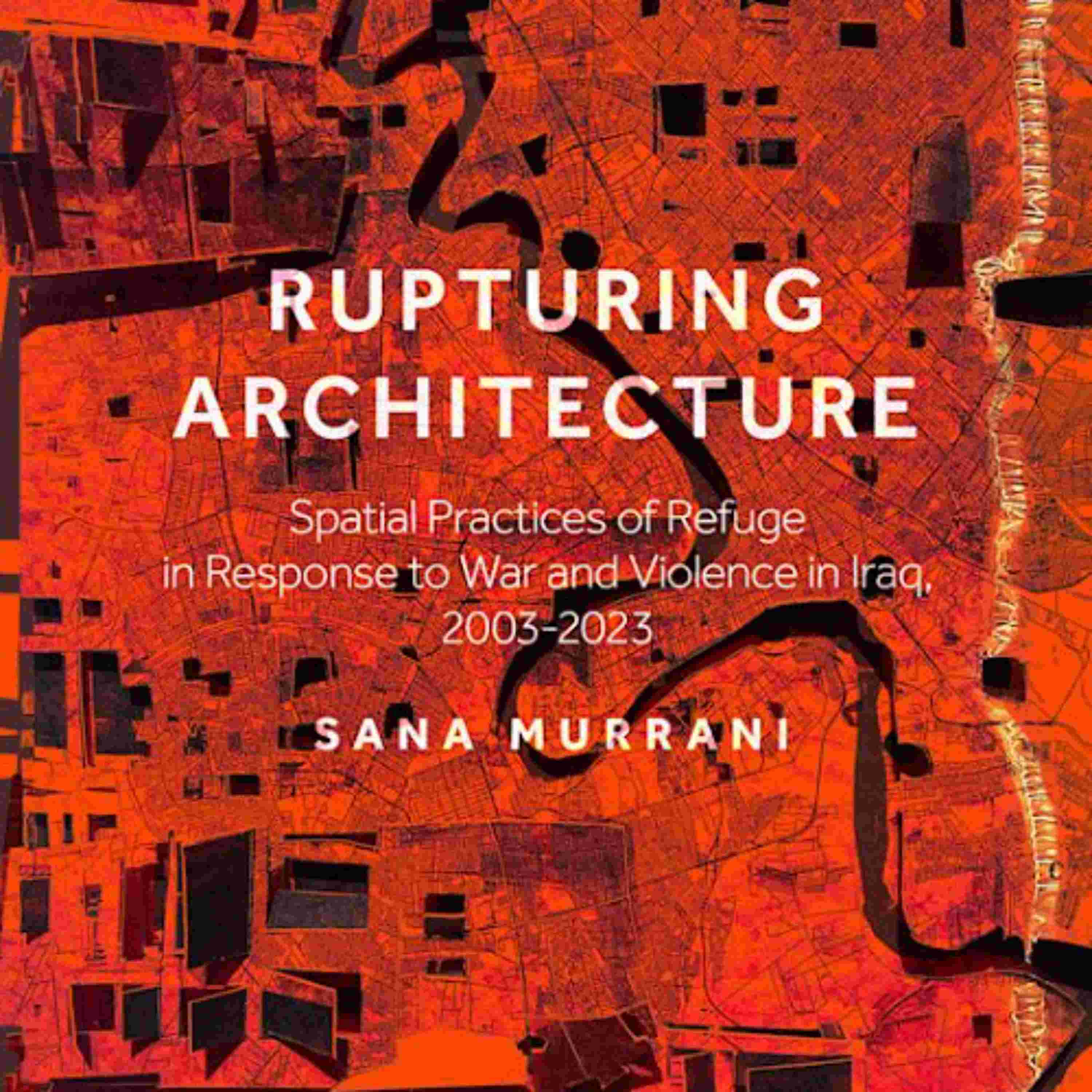
Rupturing Architecture: Spatial Practices of Refuge in Response to War and Violence in Iraq
LSE Middle East Centre Podcasts
1 hour 12 minutes 37 seconds
11 months ago
Rupturing Architecture: Spatial Practices of Refuge in Response to War and Violence in Iraq
This event was the launch of Dr Sana Murrani's latest book 'Rupturing Architecture: Spatial Practices of Refuge in Response to War and Violence in Iraq, 2003–2023' published by Bloomsbury.
Written by an Iraqi architect who has lived through the trauma of several wars, 10 years of UN-imposed sanctions, an invasion, and the subsequent violence, this book captures a broad spectrum of spatial responses to trauma and presents a fresh perspective on how ordinary Iraqis create refuge across the spaces of the home, the urban environment, and border geographies.
In the face of spatial wounding and the many injustices suffered by the Iraqi people, there has also been a wealth of refuge-making practices that showcase their creative and imaginative design and adaptability to change and trauma over time.
Rupturing Architecture employs methods such as creative deep mapping, memory work, storytelling, interviews, and case studies of architectural responses to the geographies of war and violence. At the core of the book are the lived and felt experiences of fifteen Iraqis from across Iraq, whose resilience underscores a broader narrative of spatial justice and feminist spatial practices.
Meet the speakers
Sana Murrani is an Associate Professor in Spatial Practice at the University of Plymouth and a Visiting Senior Fellow at the LSE Middle East Centre. Her research interests are rooted in spatial justice, drawing on her interdisciplinary background in architecture, urban design, and art and media. Her creative, place-based research practice maps built, destroyed, remembered, and reimagined trauma geographies of war, violence, and displacement.
Balsam Mustafa is a Lecturer in Translation Studies at Cardiff University. Her research cuts across translation studies, feminist studies, social movements, media and communication studies as well as politics and sociology, with a focus on the Middle East.
Michael Mason is Director of the Middle East Centre. At LSE, he is also Professor of Environmental Geography in the Department of Geography and Environment and an Associate of the Grantham Research Institute for Climate Change and the Environment. He is interested in ecological politics and governance as applied to questions of accountability, security and sovereignty.
Toby Dodge is a Professor in the Department of International Relations, LSE. He is also Kuwait Professor and Director of the Kuwait Programme, Middle East Centre. Toby's research concentrates on the evolution of the post-colonial state in the international system. The main focus of this work on the developing world is the state in the Middle East, specifically Iraq.
LSE Middle East Centre Podcasts
In September, a wave of protests emerged in Morocco led by the country's youth, known as GenZ 212. Since September, 3 people have been killed and 400 arrested according to Amnesty International. Triggered by the deaths of women in an Agadir hospital, the protest movement’s demands come against the background of widespread unemployment and a lack of funding in health and education sectors.
With King Mohammed VI's latest speech announcing budgetary increases and promises of reform, will this be enough to meet the movement’s demands, and does the movement have enough momentum to continue? This panel of experts will take a look at the current protests, how they have been organised and their capacity to gather widespread support. Panellists will also provide broader political and historical analysis on the country, analysing how capacity for reform can be understood in light of the Kingdom's governance systems and political institutions.
Meet our speakers and chair:
Miriyam Aouragh is Professor of Digital Anthropology at the University of Westminster with a specific focus on West Asia and North Africa. She studies the contradictions of capitalism shape the modes and meanings of resistance in the era of revolution and digital transformations. Her analyses is grounded in the complex revolutionary dynamics in the Arab world. In what she calls "techno-social politics" she studies a political temporality marked by revolution and counter-revolution. She wrote about the paradoxical context of online-revolution and cyber-imperialism. Throughout her academic projects she conducts extended fieldwork (Palestine, Jordan, Lebanon and Morocco), in order to relate participant observation and interviews to media analyses. Miriyam is author of Palestine Online (IB Tauris 2011); (with Hamza Hamouchene) The Arab Spring a decade on (TNI 2022); Mediating the Makhzan about the (r)evolutionary dynamics in Morocco (forthcoming CUP) and (with Paula Chakravartty) Infrastructures of Empire (forthcoming).
Mohamed Daadaoui is professor and chair of Political Science, History, and Philosophy & Rhetoric at Oklahoma City University. He is the author of Moroccan Monarchy and the Islamist Challenge: Maintaining Makhzen Power and The Historical Dictionary of the Arab Uprisings. He is a specialist of North African Politics. Mohamed’s articles have appeared in Middle East Critique, The Journal of North African Studies and Middle Eastern Studies, The British Journal of Middle East Studies, the Journal of Middle East Law and Governance, the Hudson Institute, the Washington Post’s Monkey Cage, the Huffington Post, SADA of the Carnegie Endowment for International Peace, the Middle East Institute, Jadaliyya and Muftah. Mohamed has provided commentary to local and international media outlets such as: C-Span, al-Jazeera English, the BBC, El Pais, and The Irish Times.
Michael J. Willis is King Mohammed VI Fellow in Moroccan and Mediterranean Studies. His research interests focus on the politics, modern history and international relations of the central Maghreb states (Algeria, Tunisia and Morocco). Before joining St Antony’s in 2004, he taught politics at Al Akhawayn University in Ifrane, Morocco for seven years. He is the author of Algeria: Politics and Society from the Dark Decade to the Hirak (Hurst, 2022); Politics and Power in the Maghreb: Algeria, Tunisia and Morocco from Independence to the Arab Spring (Hurst and Oxford University Press, 2012) and The Islamist Challenge in Algeria: A Political History (Ithaca and New York University Press, 1997) and co-editor of Civil Resistance in the Arab Spring: Triumphs and Disasters (Oxford University Press, 2015).
Richard Barltrop is a Visiting Senior Fellow at the LSE Middle East Centre. His research is on contemporary international approaches to peacemaking, and why peace processes fail or succeed, with a particular focus on Yemen, Sudan and South Sudan, and considering Libya, Syria and other examples.