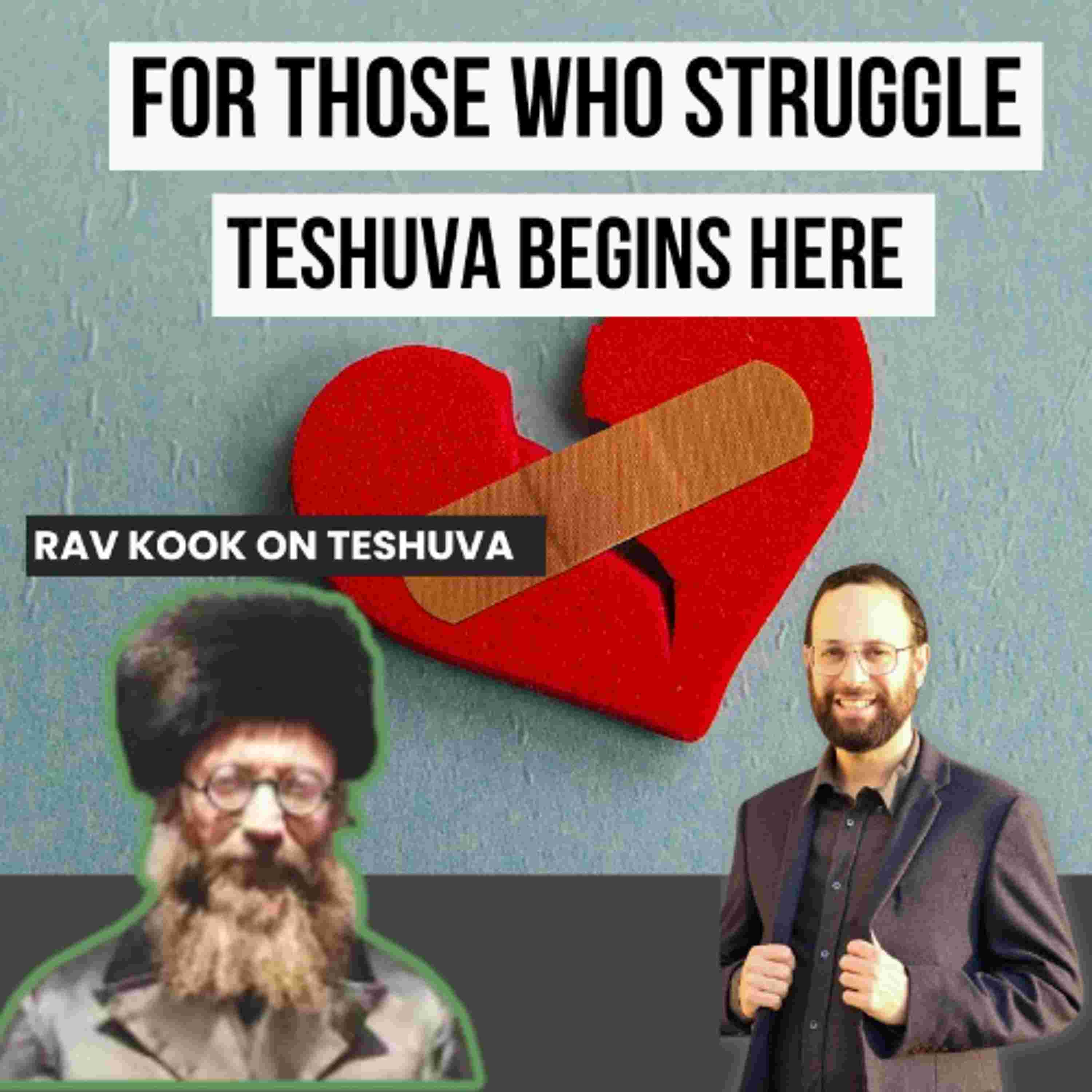
In this shiur, we continued Rav Kook’s Meimor HaDor and explored his deeply compassionate diagnosis of our generation.
Rav Kook teaches that this generation is not sinful or rebellious, but rather emotionally flooded — drowning in spiritual pain. The confusion, anger, distancing, and breakdown we see are not signs of moral failure, but of souls overwhelmed by intensity they cannot yet regulate or contain.
Rav Kook pleads with the leaders and rabbis of his time to respond not with fear, punishment, or scorn, but with empathy, good words, and deep, honest teaching. True leadership, he argues, begins with compassion — the ability to see even ideological opponents, including Zionist youth, as suffering souls in need of guidance and healing, not enemies to be crushed.
We also explored Rav Kook’s radical insight that the very cultural forces that damaged the generation must be transformed into tools of healing. In Rav Kook’s time, this meant redeeming literature and intellectual culture. In our generation, this applies directly to audio, video, social media, and digital culture — not rejecting them, but filling them with deeper inner content, meaning, and light.
We concluded with Rav Kook’s revolutionary teaching of Aliyat HaDorot — the elevation of the generations. The crisis of our time is not because Torah has failed, but because the souls have risen, while the old vessels can no longer contain their light. The task of our generation is not to suppress this light, but to guide it, refine it, and help it find its true place within Torah.
All content for Nach Daily is the property of Rabbi Shaya Sussman, LCSW and is served directly from their servers
with no modification, redirects, or rehosting. The podcast is not affiliated with or endorsed by Podjoint in any way.
In this shiur, we continued Rav Kook’s Meimor HaDor and explored his deeply compassionate diagnosis of our generation.
Rav Kook teaches that this generation is not sinful or rebellious, but rather emotionally flooded — drowning in spiritual pain. The confusion, anger, distancing, and breakdown we see are not signs of moral failure, but of souls overwhelmed by intensity they cannot yet regulate or contain.
Rav Kook pleads with the leaders and rabbis of his time to respond not with fear, punishment, or scorn, but with empathy, good words, and deep, honest teaching. True leadership, he argues, begins with compassion — the ability to see even ideological opponents, including Zionist youth, as suffering souls in need of guidance and healing, not enemies to be crushed.
We also explored Rav Kook’s radical insight that the very cultural forces that damaged the generation must be transformed into tools of healing. In Rav Kook’s time, this meant redeeming literature and intellectual culture. In our generation, this applies directly to audio, video, social media, and digital culture — not rejecting them, but filling them with deeper inner content, meaning, and light.
We concluded with Rav Kook’s revolutionary teaching of Aliyat HaDorot — the elevation of the generations. The crisis of our time is not because Torah has failed, but because the souls have risen, while the old vessels can no longer contain their light. The task of our generation is not to suppress this light, but to guide it, refine it, and help it find its true place within Torah.
For Those Struggling | Rav Kook on Teshuva and the Yamim Noraim
Nach Daily
33 minutes 1 second
3 months ago
For Those Struggling | Rav Kook on Teshuva and the Yamim Noraim
For Those Struggling | Rav Kook on Teshuva and the Yamim Noraim by Rabbi Shaya Sussman, LCSW
Nach Daily
In this shiur, we continued Rav Kook’s Meimor HaDor and explored his deeply compassionate diagnosis of our generation.
Rav Kook teaches that this generation is not sinful or rebellious, but rather emotionally flooded — drowning in spiritual pain. The confusion, anger, distancing, and breakdown we see are not signs of moral failure, but of souls overwhelmed by intensity they cannot yet regulate or contain.
Rav Kook pleads with the leaders and rabbis of his time to respond not with fear, punishment, or scorn, but with empathy, good words, and deep, honest teaching. True leadership, he argues, begins with compassion — the ability to see even ideological opponents, including Zionist youth, as suffering souls in need of guidance and healing, not enemies to be crushed.
We also explored Rav Kook’s radical insight that the very cultural forces that damaged the generation must be transformed into tools of healing. In Rav Kook’s time, this meant redeeming literature and intellectual culture. In our generation, this applies directly to audio, video, social media, and digital culture — not rejecting them, but filling them with deeper inner content, meaning, and light.
We concluded with Rav Kook’s revolutionary teaching of Aliyat HaDorot — the elevation of the generations. The crisis of our time is not because Torah has failed, but because the souls have risen, while the old vessels can no longer contain their light. The task of our generation is not to suppress this light, but to guide it, refine it, and help it find its true place within Torah.