#6 Pink Power at Harvard? Feminism, Ambition, and Cultural Legacy in "Legally Blonde"
For our sixth English episode, we take a fresh look at "Legally Blonde" (US 2001, Robert Luketic), this time in a faster, focused format: one film, one conversation, directly after the screening. We recommend (re)watching Legally Blonde before listening to our episode - just right in time for the 2026 premiere of the prequel series "Elle".
We watched the film together in Cambridge, Massachusetts, so this episode is tied to place and context. While Barbara is spending the fall and spring semester as a visiting scholar at Harvard and Bianca is conducting research at the Schlesinger Library/ Harvard, it felt only fitting to revisit a film so deeply entangled with Harvard’s cultural imagination and representation.
"Legally Blonde" is often dismissed as serving only as light entertainment, yet its influence is anything but superficial. From Elle Woods’ unapologetic femininity to her navigation of elite academic spaces, the film raises many questions about gender, ambition, social class and belonging. We discuss how the movie plays with stereotypes, sometimes reinforcing them, sometimes strategically subverting them, and why its vision of feminist success continues to resonate more than twenty years later.
The film’s lasting cultural power was palpable at the beginning of the fall term, when "Legally Blonde" was screened outdoors in front of Harvard’s Widener library for incoming students. The collective movie-going experience, complete with quoted lines and audience interaction, made clear how deeply the film is embedded in popular memory. Adding to this, Reese Witherspoon herself visited Harvard Business School this semester to discuss her production company Hello Sunshine, the business side of female-lead storytelling and the long-term impact of "Legally Blonde" on her approach to storytelling.
In this episode, we ask: What kind of feminism does "Legally Blonde" offer? How performative is its feminism? How does it imagine access to elite institutions and at what cost? Why does its depiction of sexual harassment at the workplace feel right? And why does Elle Woods remain such a powerful figure for conversations about women, work and visibility up to today?
All content for Ned Wuascht is the property of Ned Wuascht and is served directly from their servers
with no modification, redirects, or rehosting. The podcast is not affiliated with or endorsed by Podjoint in any way.
#6 Pink Power at Harvard? Feminism, Ambition, and Cultural Legacy in "Legally Blonde"
For our sixth English episode, we take a fresh look at "Legally Blonde" (US 2001, Robert Luketic), this time in a faster, focused format: one film, one conversation, directly after the screening. We recommend (re)watching Legally Blonde before listening to our episode - just right in time for the 2026 premiere of the prequel series "Elle".
We watched the film together in Cambridge, Massachusetts, so this episode is tied to place and context. While Barbara is spending the fall and spring semester as a visiting scholar at Harvard and Bianca is conducting research at the Schlesinger Library/ Harvard, it felt only fitting to revisit a film so deeply entangled with Harvard’s cultural imagination and representation.
"Legally Blonde" is often dismissed as serving only as light entertainment, yet its influence is anything but superficial. From Elle Woods’ unapologetic femininity to her navigation of elite academic spaces, the film raises many questions about gender, ambition, social class and belonging. We discuss how the movie plays with stereotypes, sometimes reinforcing them, sometimes strategically subverting them, and why its vision of feminist success continues to resonate more than twenty years later.
The film’s lasting cultural power was palpable at the beginning of the fall term, when "Legally Blonde" was screened outdoors in front of Harvard’s Widener library for incoming students. The collective movie-going experience, complete with quoted lines and audience interaction, made clear how deeply the film is embedded in popular memory. Adding to this, Reese Witherspoon herself visited Harvard Business School this semester to discuss her production company Hello Sunshine, the business side of female-lead storytelling and the long-term impact of "Legally Blonde" on her approach to storytelling.
In this episode, we ask: What kind of feminism does "Legally Blonde" offer? How performative is its feminism? How does it imagine access to elite institutions and at what cost? Why does its depiction of sexual harassment at the workplace feel right? And why does Elle Woods remain such a powerful figure for conversations about women, work and visibility up to today?
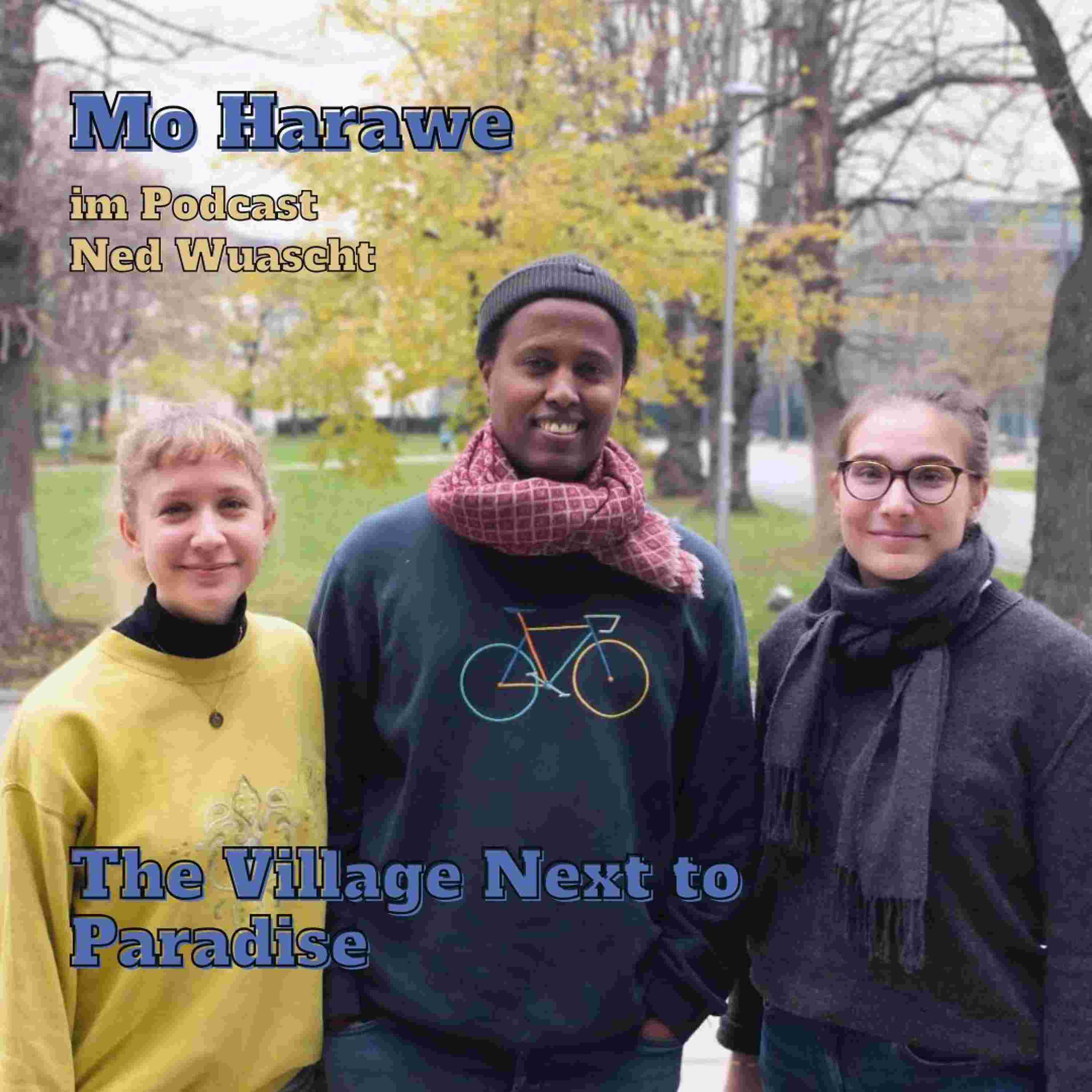
Gespräch mit Mo Harawe über "The Village Next to Paradise" (Staffel 3 - Folge 10)
Ned Wuascht
1 hour 9 minutes 25 seconds
1 year ago
Gespräch mit Mo Harawe über "The Village Next to Paradise" (Staffel 3 - Folge 10)
Folge 10: Gespräch mit Mo Harawe über "The Village Next to Paradise"
Mo Harawes Debütspielfilm läuft gerade in den Kinos und wir freuen uns sehr, dass wir ein so ausführliches Gespräch mit ihm führen dürfen. Wie ihr hören werdet, sind wir große Fans von seinem Film. Seine Kurzfilme "Life on the Horn" (2020) und "Will My Parents Come to See Me" (2022) könnt ihr übrigens kostenlos auf auf dem Portal des Kino Vod Club streamen (dank Kooperation mit Cinema Next)
Über den Film:
In einem abgelegenen Dorf in Somalia kämpft Mamargade, ein alleinerziehender Vater mit den Herausforderungen des täglichen Lebens. Seine Schwester Araweelo sucht nach ihrer Scheidung bei ihm ein neues Zuhause. Cigaal, sein Sohn, wird in den Turbulenzen dieser zerbrechlichen Familie manchmal übersehen. Trotz unterschiedlicher Ziele in einer komplexen Welt findet die Familie durch Liebe, Vertrauen und Zuversicht, ihren eigenen Weg.
Mo Harawe hat einen höchst präzisen Film geschaffen, der starke, progressive Filmfiguren schafft, die mit viel Tiefgang und Sensibilität Solidarität und Zusammenleben zeigt. Wir sprechen ausführlich mit dem Regisseur über die Entwicklung des Films, die Figuren, das Casting und die verschiedenen Ebenen des Films, die sich Schritt für Schritt bei den Zuschauenden entfalten. Am besten vorm Hören der Folge ins Kino gehen und "The Village Next to Paradise" anschauen!
Die Links zu den Filmen sowie die Songtitel findet ihr auf unserer Website nedwuascht.com
Ned Wuascht
#6 Pink Power at Harvard? Feminism, Ambition, and Cultural Legacy in "Legally Blonde"
For our sixth English episode, we take a fresh look at "Legally Blonde" (US 2001, Robert Luketic), this time in a faster, focused format: one film, one conversation, directly after the screening. We recommend (re)watching Legally Blonde before listening to our episode - just right in time for the 2026 premiere of the prequel series "Elle".
We watched the film together in Cambridge, Massachusetts, so this episode is tied to place and context. While Barbara is spending the fall and spring semester as a visiting scholar at Harvard and Bianca is conducting research at the Schlesinger Library/ Harvard, it felt only fitting to revisit a film so deeply entangled with Harvard’s cultural imagination and representation.
"Legally Blonde" is often dismissed as serving only as light entertainment, yet its influence is anything but superficial. From Elle Woods’ unapologetic femininity to her navigation of elite academic spaces, the film raises many questions about gender, ambition, social class and belonging. We discuss how the movie plays with stereotypes, sometimes reinforcing them, sometimes strategically subverting them, and why its vision of feminist success continues to resonate more than twenty years later.
The film’s lasting cultural power was palpable at the beginning of the fall term, when "Legally Blonde" was screened outdoors in front of Harvard’s Widener library for incoming students. The collective movie-going experience, complete with quoted lines and audience interaction, made clear how deeply the film is embedded in popular memory. Adding to this, Reese Witherspoon herself visited Harvard Business School this semester to discuss her production company Hello Sunshine, the business side of female-lead storytelling and the long-term impact of "Legally Blonde" on her approach to storytelling.
In this episode, we ask: What kind of feminism does "Legally Blonde" offer? How performative is its feminism? How does it imagine access to elite institutions and at what cost? Why does its depiction of sexual harassment at the workplace feel right? And why does Elle Woods remain such a powerful figure for conversations about women, work and visibility up to today?