#6 Pink Power at Harvard? Feminism, Ambition, and Cultural Legacy in "Legally Blonde"
For our sixth English episode, we take a fresh look at "Legally Blonde" (US 2001, Robert Luketic), this time in a faster, focused format: one film, one conversation, directly after the screening. We recommend (re)watching Legally Blonde before listening to our episode - just right in time for the 2026 premiere of the prequel series "Elle".
We watched the film together in Cambridge, Massachusetts, so this episode is tied to place and context. While Barbara is spending the fall and spring semester as a visiting scholar at Harvard and Bianca is conducting research at the Schlesinger Library/ Harvard, it felt only fitting to revisit a film so deeply entangled with Harvard’s cultural imagination and representation.
"Legally Blonde" is often dismissed as serving only as light entertainment, yet its influence is anything but superficial. From Elle Woods’ unapologetic femininity to her navigation of elite academic spaces, the film raises many questions about gender, ambition, social class and belonging. We discuss how the movie plays with stereotypes, sometimes reinforcing them, sometimes strategically subverting them, and why its vision of feminist success continues to resonate more than twenty years later.
The film’s lasting cultural power was palpable at the beginning of the fall term, when "Legally Blonde" was screened outdoors in front of Harvard’s Widener library for incoming students. The collective movie-going experience, complete with quoted lines and audience interaction, made clear how deeply the film is embedded in popular memory. Adding to this, Reese Witherspoon herself visited Harvard Business School this semester to discuss her production company Hello Sunshine, the business side of female-lead storytelling and the long-term impact of "Legally Blonde" on her approach to storytelling.
In this episode, we ask: What kind of feminism does "Legally Blonde" offer? How performative is its feminism? How does it imagine access to elite institutions and at what cost? Why does its depiction of sexual harassment at the workplace feel right? And why does Elle Woods remain such a powerful figure for conversations about women, work and visibility up to today?
All content for Ned Wuascht is the property of Ned Wuascht and is served directly from their servers
with no modification, redirects, or rehosting. The podcast is not affiliated with or endorsed by Podjoint in any way.
#6 Pink Power at Harvard? Feminism, Ambition, and Cultural Legacy in "Legally Blonde"
For our sixth English episode, we take a fresh look at "Legally Blonde" (US 2001, Robert Luketic), this time in a faster, focused format: one film, one conversation, directly after the screening. We recommend (re)watching Legally Blonde before listening to our episode - just right in time for the 2026 premiere of the prequel series "Elle".
We watched the film together in Cambridge, Massachusetts, so this episode is tied to place and context. While Barbara is spending the fall and spring semester as a visiting scholar at Harvard and Bianca is conducting research at the Schlesinger Library/ Harvard, it felt only fitting to revisit a film so deeply entangled with Harvard’s cultural imagination and representation.
"Legally Blonde" is often dismissed as serving only as light entertainment, yet its influence is anything but superficial. From Elle Woods’ unapologetic femininity to her navigation of elite academic spaces, the film raises many questions about gender, ambition, social class and belonging. We discuss how the movie plays with stereotypes, sometimes reinforcing them, sometimes strategically subverting them, and why its vision of feminist success continues to resonate more than twenty years later.
The film’s lasting cultural power was palpable at the beginning of the fall term, when "Legally Blonde" was screened outdoors in front of Harvard’s Widener library for incoming students. The collective movie-going experience, complete with quoted lines and audience interaction, made clear how deeply the film is embedded in popular memory. Adding to this, Reese Witherspoon herself visited Harvard Business School this semester to discuss her production company Hello Sunshine, the business side of female-lead storytelling and the long-term impact of "Legally Blonde" on her approach to storytelling.
In this episode, we ask: What kind of feminism does "Legally Blonde" offer? How performative is its feminism? How does it imagine access to elite institutions and at what cost? Why does its depiction of sexual harassment at the workplace feel right? And why does Elle Woods remain such a powerful figure for conversations about women, work and visibility up to today?
Masks, Gender, and Genre: Inside Billy Wilder’s Cinema
Ned Wuascht
1 hour 37 minutes 9 seconds
6 months ago
Masks, Gender, and Genre: Inside Billy Wilder’s Cinema
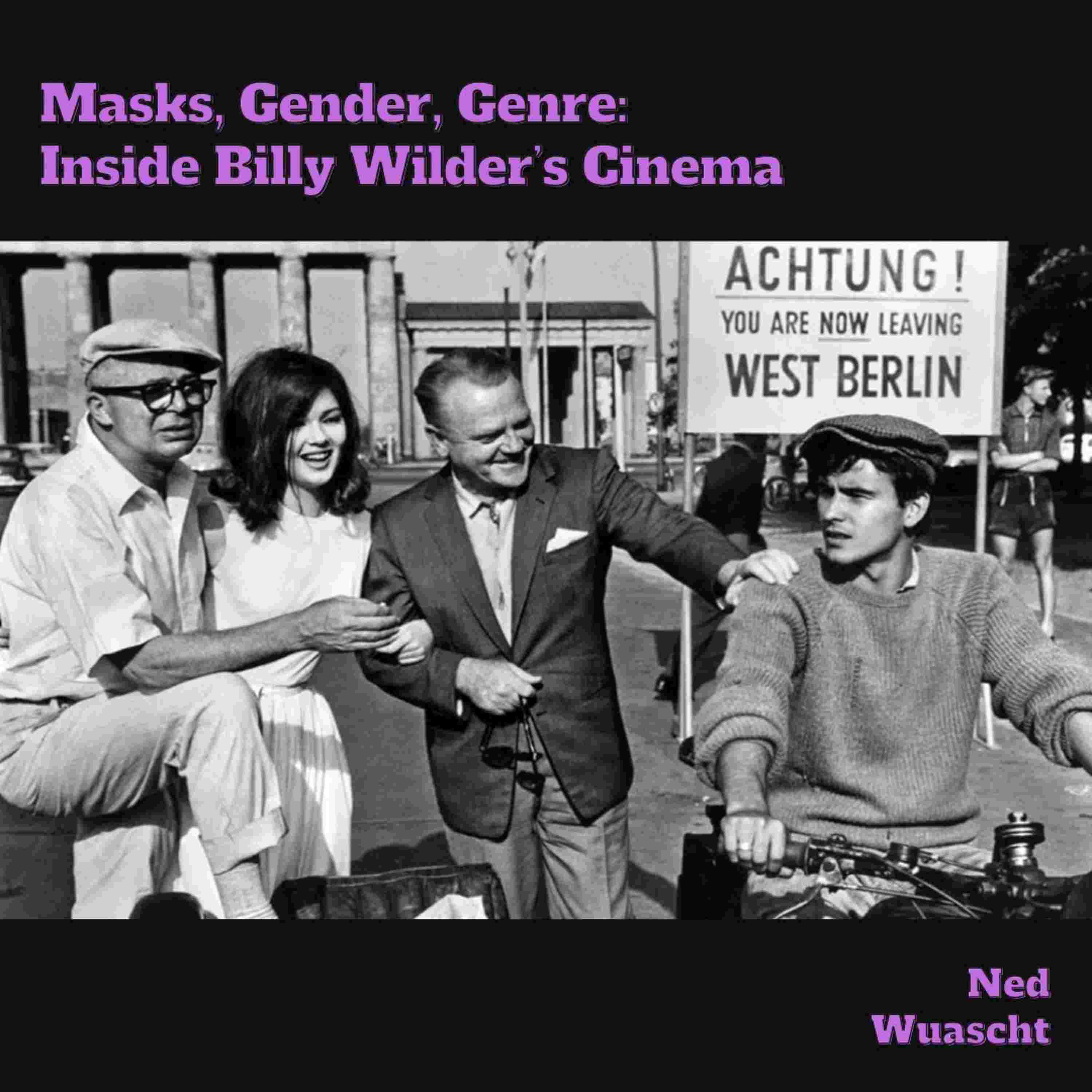
#5 Masks, Gender, and Genre: Inside Billy Wilder’s Cinema in Sunset Boulevard, Some Like It Hot, and One, Two, Three
This episode takes us from the shadows of Sunset Boulevard to the political turmoils of Cold War Berlin—through the sharp, satirical, and entertaining world of Billy Wilder. Born in Austria-Hungary and later forced into exile by the Nazi regime, Wilder rose to become one of the most iconic writer-directors of Hollywood’s so-called Golden Age. But beneath the wit and glamour of his films lie biting critiques of power, gender, and performance—on and off screen.
We explore three of Wilder’s most famous works: the noir comedy of Sunset Boulevard (1950), the screwball cross-dressing comedy Some Like It Hot (1959), and the hyperactive capitalist satire One, Two, Three (1961).
Wilder’s characters are often caught between self-invention and social expectation—whether it's two musicians hiding in plain sight in women's clothing, a fading diva clinging to a forgotten image, or a Coca-Cola executive trying to control everything (and everyone) around him. His films perform genre, but they also perform ideology: letting us laugh, wince, and sometimes mourn at the ways gender, class, and desire are negotiated in mid-century cinema.
Through a diverse-feminist lens, we ask: How does Wilder use performance and disguise—especially in Some Like It Hot—to explore the instability of gender roles and social norms? What do Norma Desmond’s haunting monologues in Sunset Boulevard tell us about ageism, stardom, and the gendered decay of Hollywood dreams? And how does One, Two, Three deploy rapid-fire dialogue and farce to reveal the absurdities of postwar capitalism and patriarchal order?
Key questions in this episode include: How does disguise (voluntary or not) expose deeper truths about identity and social gender performance? What does Wilder’s comedy make visible about power and exclusion? And how do these films speak to the immigrant experience of navigating and reshaping dominant narratives?
Ned Wuascht
#6 Pink Power at Harvard? Feminism, Ambition, and Cultural Legacy in "Legally Blonde"
For our sixth English episode, we take a fresh look at "Legally Blonde" (US 2001, Robert Luketic), this time in a faster, focused format: one film, one conversation, directly after the screening. We recommend (re)watching Legally Blonde before listening to our episode - just right in time for the 2026 premiere of the prequel series "Elle".
We watched the film together in Cambridge, Massachusetts, so this episode is tied to place and context. While Barbara is spending the fall and spring semester as a visiting scholar at Harvard and Bianca is conducting research at the Schlesinger Library/ Harvard, it felt only fitting to revisit a film so deeply entangled with Harvard’s cultural imagination and representation.
"Legally Blonde" is often dismissed as serving only as light entertainment, yet its influence is anything but superficial. From Elle Woods’ unapologetic femininity to her navigation of elite academic spaces, the film raises many questions about gender, ambition, social class and belonging. We discuss how the movie plays with stereotypes, sometimes reinforcing them, sometimes strategically subverting them, and why its vision of feminist success continues to resonate more than twenty years later.
The film’s lasting cultural power was palpable at the beginning of the fall term, when "Legally Blonde" was screened outdoors in front of Harvard’s Widener library for incoming students. The collective movie-going experience, complete with quoted lines and audience interaction, made clear how deeply the film is embedded in popular memory. Adding to this, Reese Witherspoon herself visited Harvard Business School this semester to discuss her production company Hello Sunshine, the business side of female-lead storytelling and the long-term impact of "Legally Blonde" on her approach to storytelling.
In this episode, we ask: What kind of feminism does "Legally Blonde" offer? How performative is its feminism? How does it imagine access to elite institutions and at what cost? Why does its depiction of sexual harassment at the workplace feel right? And why does Elle Woods remain such a powerful figure for conversations about women, work and visibility up to today?