Rural populations are shrinking. In 11 of the 29 OECD countries included in the OECD Reinforcing Rural Resilience report (https://www.oecd.org/en/publications/reinforcing-rural-resilience_7cd485e3-en.html), rural populations are declining, not only as percentage of national populations but also in absolute numbers. Rural regions close to cities are also exposed to this trend, particularly if their populations tend more easily to move to urban areas. Despite not being an OECD Member country, Kazakhstan is experiencing similar trends. During the Soviet Union, its urban population was 53% but today that percentage has increased to 63%. Now only 37% of its population is living in rural areas, with only 5% of its GDP coming from the agricultural sector.
Discussing all things decentralisation, digitalisation and democracy in Kazakhstan, Shayne MacLachlan from the OECD has a conversation with Zhanerke Kochiigit. This conversation took place at the 2025 OECD Latin American Rural Development Conference, Rural-Urban Connections: Pathways to Sustainable Development (https://www.oecd.org/en/events/2025/11/oecd-latin-american-rural-development-conference.html) in Rio de Janeiro, Brazil. Have a listen.
Zhanerke Kochiigit is a researcher in Nazarbayev University, located in Astana, Kazakhstan. She works in the Graduate School of Public Policy and is dedicated to studying rural development in northern regions of Kazakhstan, where there is very low population density. Her recent papers include: "Analysis of Migration Processes and Recommendations on Regulation of Internal Migration from Southern to Northern Regions of Kazakhstan" https://www.researchgate.net/publication/345845312_Analysis_of_Migration_Processes_and_Recommendations_on_Regulation_of_Internal_Migration_from_Southern_to_Northern_Regions_of_Kazakhstan?_tp=eyJjb250ZXh0Ijp7ImZpcnN0UGFnZSI6InByb2ZpbGUiLCJwYWdlIjoicHJvZmlsZSJ9fQ and " Actual aspects of population migration from labor surplus to the labor-deficit regions of Kazakhstan and state regulation of migration processes" https://www.researchgate.net/publication/328552379_Actual_aspects_of_population_migration_from_labor_surplus_to_the_labor-deficit_regions_of_Kazakhstan_and_state_regulation_of_migration_processes. She previously worked at Eli Lilly and Company as a Product Manager.
https://www.linkedin.com/in/zhanerke-kochiigit-7ab130b9/?originalSubdomain=kz
****
To learn more, visit OECD Latin American Rural Development Conference https://www.oecd.org/en/events/2025/11/oecd-latin-american-rural-development-conference.html and the OECD's work on Rural Development https://www.oecd.org/en/topics/policy-issues/rural-development.html. Find out more on these topics by reading Reinforcing Rural Resilience https://www.oecd.org/en/publications/reinforcing-rural-resilience_7cd485e3-en.html and Rural Innovation Pathways https://www.oecd.org/en/publications/rural-innovation-pathways_c86de0f4-en.html.
To learn more about the OECD, our global reach, and how to join us, go to www.oecd.org/about/
To keep up with latest at the OECD, visit www.oecd.org/
Get the latest OECD content delivered directly to your inbox! Subscribe to our newsletters: www.oecd.org/newsletters
All content for OECD Podcasts is the property of OECD and is served directly from their servers
with no modification, redirects, or rehosting. The podcast is not affiliated with or endorsed by Podjoint in any way.
Rural populations are shrinking. In 11 of the 29 OECD countries included in the OECD Reinforcing Rural Resilience report (https://www.oecd.org/en/publications/reinforcing-rural-resilience_7cd485e3-en.html), rural populations are declining, not only as percentage of national populations but also in absolute numbers. Rural regions close to cities are also exposed to this trend, particularly if their populations tend more easily to move to urban areas. Despite not being an OECD Member country, Kazakhstan is experiencing similar trends. During the Soviet Union, its urban population was 53% but today that percentage has increased to 63%. Now only 37% of its population is living in rural areas, with only 5% of its GDP coming from the agricultural sector.
Discussing all things decentralisation, digitalisation and democracy in Kazakhstan, Shayne MacLachlan from the OECD has a conversation with Zhanerke Kochiigit. This conversation took place at the 2025 OECD Latin American Rural Development Conference, Rural-Urban Connections: Pathways to Sustainable Development (https://www.oecd.org/en/events/2025/11/oecd-latin-american-rural-development-conference.html) in Rio de Janeiro, Brazil. Have a listen.
Zhanerke Kochiigit is a researcher in Nazarbayev University, located in Astana, Kazakhstan. She works in the Graduate School of Public Policy and is dedicated to studying rural development in northern regions of Kazakhstan, where there is very low population density. Her recent papers include: "Analysis of Migration Processes and Recommendations on Regulation of Internal Migration from Southern to Northern Regions of Kazakhstan" https://www.researchgate.net/publication/345845312_Analysis_of_Migration_Processes_and_Recommendations_on_Regulation_of_Internal_Migration_from_Southern_to_Northern_Regions_of_Kazakhstan?_tp=eyJjb250ZXh0Ijp7ImZpcnN0UGFnZSI6InByb2ZpbGUiLCJwYWdlIjoicHJvZmlsZSJ9fQ and " Actual aspects of population migration from labor surplus to the labor-deficit regions of Kazakhstan and state regulation of migration processes" https://www.researchgate.net/publication/328552379_Actual_aspects_of_population_migration_from_labor_surplus_to_the_labor-deficit_regions_of_Kazakhstan_and_state_regulation_of_migration_processes. She previously worked at Eli Lilly and Company as a Product Manager.
https://www.linkedin.com/in/zhanerke-kochiigit-7ab130b9/?originalSubdomain=kz
****
To learn more, visit OECD Latin American Rural Development Conference https://www.oecd.org/en/events/2025/11/oecd-latin-american-rural-development-conference.html and the OECD's work on Rural Development https://www.oecd.org/en/topics/policy-issues/rural-development.html. Find out more on these topics by reading Reinforcing Rural Resilience https://www.oecd.org/en/publications/reinforcing-rural-resilience_7cd485e3-en.html and Rural Innovation Pathways https://www.oecd.org/en/publications/rural-innovation-pathways_c86de0f4-en.html.
To learn more about the OECD, our global reach, and how to join us, go to www.oecd.org/about/
To keep up with latest at the OECD, visit www.oecd.org/
Get the latest OECD content delivered directly to your inbox! Subscribe to our newsletters: www.oecd.org/newsletters
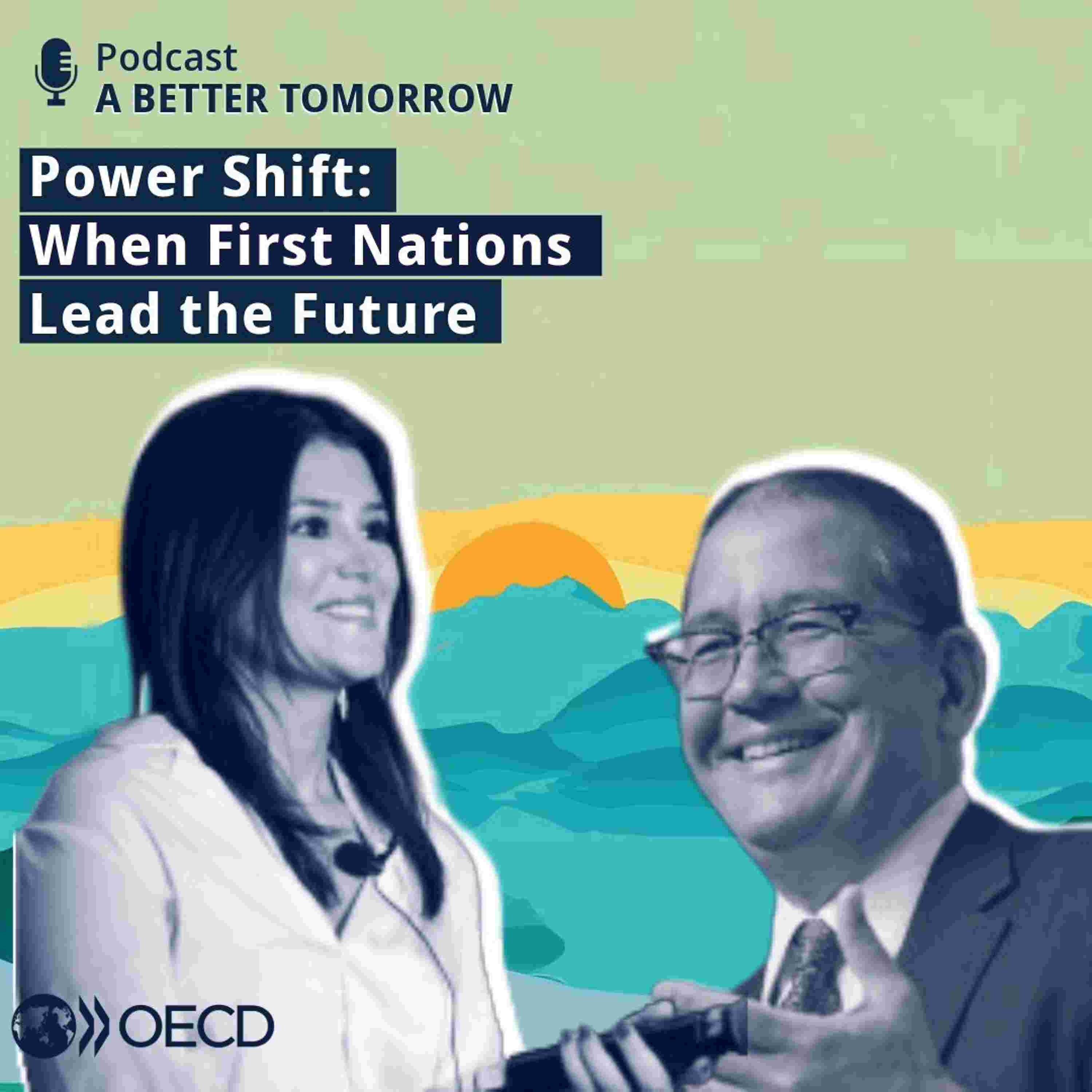
What happens when First Nations take the lead in shaping the future of clean energy and infrastructure in Indigenous communities? In this episode, we hear from Mark Podlasly, CEO of the First Nations Major Projects Coalition (FNMPC) and member of the Nlaka’pamux Nation in British Columbia. He speaks with Sinead Teevan from the OECD about how the coalition is helping First Nations secure ownership in major energy and infrastructure projects. The FNMPC, now representing 175 communities across Canada, focuses on the economic, environmental, and public policy interests of its members.
Together, they explore the power of Indigenous consent, the importance of equitable partnerships, and why integrating Indigenous values into policy and investment decisions isn’t just the right thing to do, it’s essential for reaching climate goals and long-term prosperity. With real-world examples, from clean energy projects to revenue-sharing agreements, this conversation highlights how economic reconciliation is not only possible, but already underway in Canada.
Looking ahead, Mark shares a bold vision: Indigenous communities not only participating in, but leading, global investment through Indigenous-controlled capital. And the world is taking notice. Groups from Australia, New Zealand, the US, and Latin America are reaching out to learn how First Nations in Canada are achieving results.
Host: Shayne MacLachlan, Public Affairs and Communications Manager at the OECD Centre for Entrepreneurship, SMEs, Regions and Cities
Guests:
Sinead Teevan is currently working as a Policy Consultant at the OECD, working on regional, rural and urban development. She is Indigenous from Curve Lake First Nation in Ontario, and has gained valuable experience in various roles, including as a Policy Intern at the Ministry of Energy in Ontario. Additionally, she been an active member of the Indigenous Student Association at Western University.
Mark Podlasly, a member of the Nlaka’pamux Nation in British Columbia, is CEO of the First Nations Major Projects Coalition (FNMPC) in Canada. FNMPC is a national organization of 175+ Indigenous communities working to ensure environmental and economic values are reflected in major projects on traditional territories. He has global experience leading large-scale energy and infrastructure projects and has delivered strategy programs for companies like Unilever and Goldman Sachs. A frequent contributor on Indigenous-industry economic reconciliation, his work spans ESG, climate policy, and governance.
To learn more about policy area: https://www.oecd.org/en/topics/regional-rural-and-urban-development.html
To learn more about the OECD, our global reach, and how to join us, go to www.oecd.org/about/
To keep up with latest at the OECD, visit www.oecd.org/
Get the latest OECD content delivered directly to your inbox! Subscribe to our newsletters: www.oecd.org/newsletters
OECD Podcasts
Rural populations are shrinking. In 11 of the 29 OECD countries included in the OECD Reinforcing Rural Resilience report (https://www.oecd.org/en/publications/reinforcing-rural-resilience_7cd485e3-en.html), rural populations are declining, not only as percentage of national populations but also in absolute numbers. Rural regions close to cities are also exposed to this trend, particularly if their populations tend more easily to move to urban areas. Despite not being an OECD Member country, Kazakhstan is experiencing similar trends. During the Soviet Union, its urban population was 53% but today that percentage has increased to 63%. Now only 37% of its population is living in rural areas, with only 5% of its GDP coming from the agricultural sector.
Discussing all things decentralisation, digitalisation and democracy in Kazakhstan, Shayne MacLachlan from the OECD has a conversation with Zhanerke Kochiigit. This conversation took place at the 2025 OECD Latin American Rural Development Conference, Rural-Urban Connections: Pathways to Sustainable Development (https://www.oecd.org/en/events/2025/11/oecd-latin-american-rural-development-conference.html) in Rio de Janeiro, Brazil. Have a listen.
Zhanerke Kochiigit is a researcher in Nazarbayev University, located in Astana, Kazakhstan. She works in the Graduate School of Public Policy and is dedicated to studying rural development in northern regions of Kazakhstan, where there is very low population density. Her recent papers include: "Analysis of Migration Processes and Recommendations on Regulation of Internal Migration from Southern to Northern Regions of Kazakhstan" https://www.researchgate.net/publication/345845312_Analysis_of_Migration_Processes_and_Recommendations_on_Regulation_of_Internal_Migration_from_Southern_to_Northern_Regions_of_Kazakhstan?_tp=eyJjb250ZXh0Ijp7ImZpcnN0UGFnZSI6InByb2ZpbGUiLCJwYWdlIjoicHJvZmlsZSJ9fQ and " Actual aspects of population migration from labor surplus to the labor-deficit regions of Kazakhstan and state regulation of migration processes" https://www.researchgate.net/publication/328552379_Actual_aspects_of_population_migration_from_labor_surplus_to_the_labor-deficit_regions_of_Kazakhstan_and_state_regulation_of_migration_processes. She previously worked at Eli Lilly and Company as a Product Manager.
https://www.linkedin.com/in/zhanerke-kochiigit-7ab130b9/?originalSubdomain=kz
****
To learn more, visit OECD Latin American Rural Development Conference https://www.oecd.org/en/events/2025/11/oecd-latin-american-rural-development-conference.html and the OECD's work on Rural Development https://www.oecd.org/en/topics/policy-issues/rural-development.html. Find out more on these topics by reading Reinforcing Rural Resilience https://www.oecd.org/en/publications/reinforcing-rural-resilience_7cd485e3-en.html and Rural Innovation Pathways https://www.oecd.org/en/publications/rural-innovation-pathways_c86de0f4-en.html.
To learn more about the OECD, our global reach, and how to join us, go to www.oecd.org/about/
To keep up with latest at the OECD, visit www.oecd.org/
Get the latest OECD content delivered directly to your inbox! Subscribe to our newsletters: www.oecd.org/newsletters