Home
Categories
EXPLORE
True Crime
Comedy
Society & Culture
Business
Sports
History
Technology
About Us
Contact Us
Copyright
© 2024 PodJoint
00:00 / 00:00
Sign in

or

Don't have an account?
Sign up
Forgot password
https://is1-ssl.mzstatic.com/image/thumb/Podcasts221/v4/81/48/2a/81482a18-3223-a3c7-3285-bfffec80bc77/mza_17066979910753137591.jpg/600x600bb.jpg
Perspectives with Neilo
PwNeilo
81 episodes
1 week ago
There’s a metaphor often used in diplomatic and academic circles to describe China’s influence — the anaconda in the chandelier. Everyone can see it. Everyone knows it’s there. But no one wants to acknowledge it, because naming it would mean having to act. The phrase was coined in 2002 by the American scholar Perry Link, in an essay for The New York Review of Books. One of the world’s foremost experts on Chinese language, literature, and political expression, Link used the metaphor to describe the quiet but pervasive power of the Chinese Communist Party — a system that enforces obedience not only through censorship, but through fear and self-censorship. He wrote that the Chinese state’s authority doesn’t resemble a roaring tiger or a fire-breathing dragon, but a massive anaconda coiled silently overhead. It rarely moves. It doesn’t need to. Its message is implicit: you decide. And under its shadow, people — journalists, academics, politicians — instinctively adjust what they say and do, often without being told. The fear this creates isn’t dramatic or overt. It’s subtle, normalized, and deeply ingrained — a quiet calculation that becomes part of the landscape. And it is precisely that psychological control that makes the anaconda so effective. Legend tells us that St Patrick banished all the snakes from Ireland. But by the early 1990s, it appears that one very large snake had quietly found its way back into the Oireachtas — not as a myth, but as a political reality. In this special episode of Perspectives with Neilo, we examine how fear of offending Beijing has shaped Irish government behaviour for decades. From Ireland’s muted response to China’s human rights abuses, to its cautious stance on Tibet, Xinjiang, and Taiwan, we explore how economic pressure and political self-censorship have influenced policy, limited transparency, and raised serious questions about Ireland’s democratic resilience. This is a conversation about power, fear, and silence — and about what happens to a democracy when everyone sees the anaconda, but no one dares to say its name. Music Credits: Cinematic Piano Ambient Trailer Soundtrack by Open-Music-for-Videos via Pixabay Sound Soul (This Logo Reveal) by Diamond_Tunes via Pixabay Slow immersion by SamuelFJohanns via Pixabay Tibet by AdvGold via Pixabay Shining Bright Dusk by FreeSoundServer via Pixabay Enter the realm - no Piano by SamuelFJohanns via Pixabay Speeches: Excerpt from Closing statement by Josep Borrell Fonelles, High Representative of the Union for Foreign Affairs and Security Policy and Vice-President of the European Commission on Sept 13th, 2022, provided courtesy of the European Parliament Multimedia Centre. © European Union, 2022 – Source: EP. / Excerpts from Senator Michael McDowell's speech at Seanad Eireann, Human Rights in China: Motion, Dec 1st, 2021 provided courtesy of the Houses of the Oireachtas. © Houses of the Oireachtas, 2021.
Show more...
News
RSS
All content for Perspectives with Neilo is the property of PwNeilo and is served directly from their servers with no modification, redirects, or rehosting. The podcast is not affiliated with or endorsed by Podjoint in any way.
There’s a metaphor often used in diplomatic and academic circles to describe China’s influence — the anaconda in the chandelier. Everyone can see it. Everyone knows it’s there. But no one wants to acknowledge it, because naming it would mean having to act. The phrase was coined in 2002 by the American scholar Perry Link, in an essay for The New York Review of Books. One of the world’s foremost experts on Chinese language, literature, and political expression, Link used the metaphor to describe the quiet but pervasive power of the Chinese Communist Party — a system that enforces obedience not only through censorship, but through fear and self-censorship. He wrote that the Chinese state’s authority doesn’t resemble a roaring tiger or a fire-breathing dragon, but a massive anaconda coiled silently overhead. It rarely moves. It doesn’t need to. Its message is implicit: you decide. And under its shadow, people — journalists, academics, politicians — instinctively adjust what they say and do, often without being told. The fear this creates isn’t dramatic or overt. It’s subtle, normalized, and deeply ingrained — a quiet calculation that becomes part of the landscape. And it is precisely that psychological control that makes the anaconda so effective. Legend tells us that St Patrick banished all the snakes from Ireland. But by the early 1990s, it appears that one very large snake had quietly found its way back into the Oireachtas — not as a myth, but as a political reality. In this special episode of Perspectives with Neilo, we examine how fear of offending Beijing has shaped Irish government behaviour for decades. From Ireland’s muted response to China’s human rights abuses, to its cautious stance on Tibet, Xinjiang, and Taiwan, we explore how economic pressure and political self-censorship have influenced policy, limited transparency, and raised serious questions about Ireland’s democratic resilience. This is a conversation about power, fear, and silence — and about what happens to a democracy when everyone sees the anaconda, but no one dares to say its name. Music Credits: Cinematic Piano Ambient Trailer Soundtrack by Open-Music-for-Videos via Pixabay Sound Soul (This Logo Reveal) by Diamond_Tunes via Pixabay Slow immersion by SamuelFJohanns via Pixabay Tibet by AdvGold via Pixabay Shining Bright Dusk by FreeSoundServer via Pixabay Enter the realm - no Piano by SamuelFJohanns via Pixabay Speeches: Excerpt from Closing statement by Josep Borrell Fonelles, High Representative of the Union for Foreign Affairs and Security Policy and Vice-President of the European Commission on Sept 13th, 2022, provided courtesy of the European Parliament Multimedia Centre. © European Union, 2022 – Source: EP. / Excerpts from Senator Michael McDowell's speech at Seanad Eireann, Human Rights in China: Motion, Dec 1st, 2021 provided courtesy of the Houses of the Oireachtas. © Houses of the Oireachtas, 2021.
Show more...
News
https://i1.sndcdn.com/artworks-R7gDNKOvzda4oz0X-ZIrtdA-t3000x3000.jpg
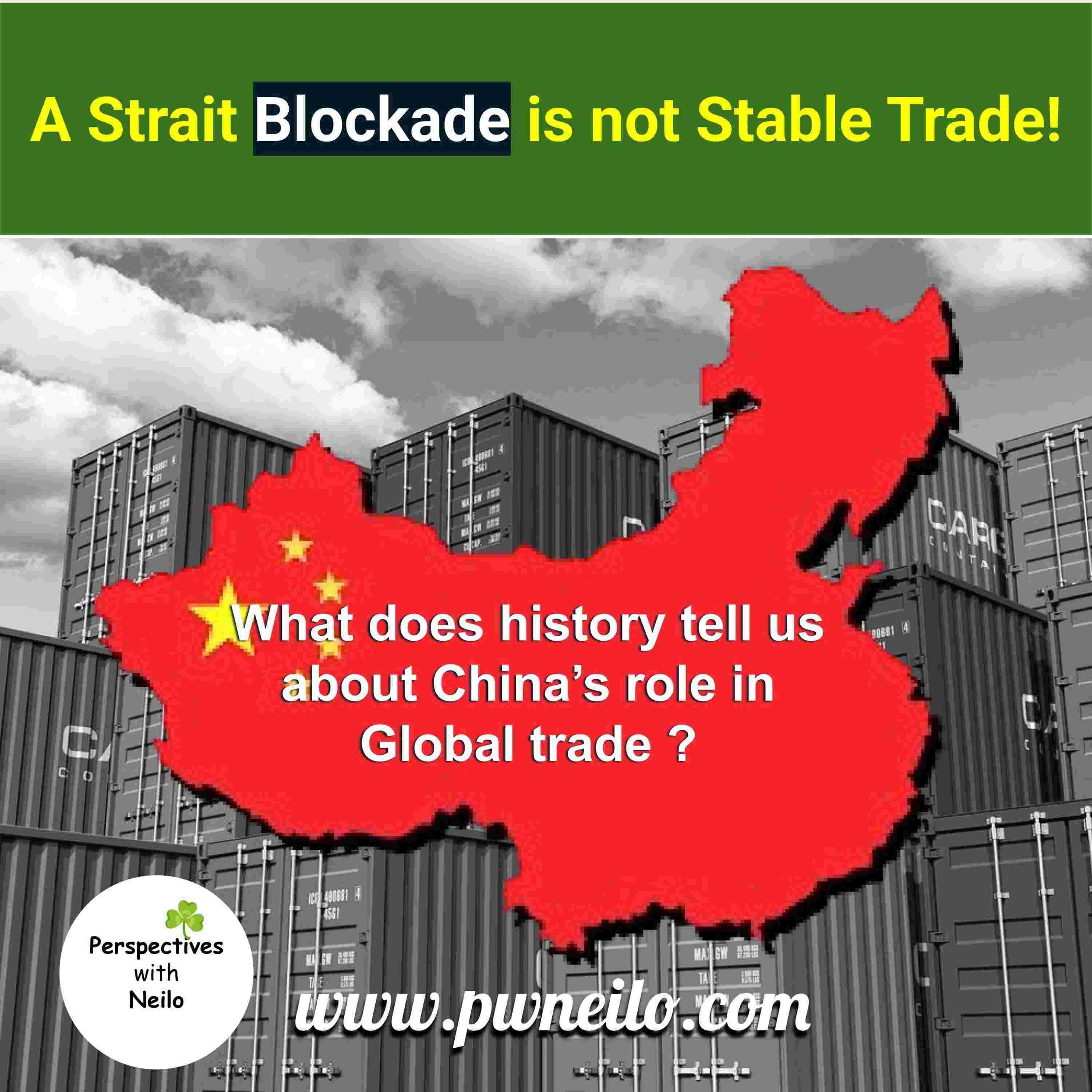
A Strait Blockade is not Stable Trade
Perspectives with Neilo
20 minutes 16 seconds
8 months ago
A Strait Blockade is not Stable Trade
As the global economy continues to grapple with the roller coaster uncertainties of President Donald Trump's tariff war, trade relations between the world's two largest economies - the United States and China - have reached a breaking point. A series of tit-for-tat tariff escalations has pushed their economic ties to the brink, with ripple effects being felt far beyond their borders. While many smaller nations scramble to shield themselves from the fallout of this high-stakes trade conflict, China is positioning itself as a stabilizing force - seeking to capitalize on global dissatisfaction with U.S. trade policy and promote its own image as a force for stable trade in the world. But how does China's claim hold up under scrutiny ? In this episode of Perspectives with Neilo, we unpack China's performance as a global trading partner, explore its engagement with the World Trade Organization, and examine whether its claims of being a stabilizing force in global trade hold any water or just mask deeper strategic ambitions. Date of Recording: April 21st, 2025 Music Credits: Title music: Uplifting by Plastic3 used under license Certificate number: 463851b2-7fe3-486b-aabf-64f4dea6047f/4827 Audio transition: Sound Soul (This Logo Reveal) by Diamond_Tunes via Pixabay #geopolitics, #globaltrade, #china, #USChinaRelations, #Tradewar, #Trump2024, #ChinaPolitics, #worldEconomy, #CCP, #EconomicPower, #Taiwan, #Taiwanstrait, #military, #WTO, #Podcast, #Podcastrecommendations #台灣海峽, #貿易戰
Perspectives with Neilo
There’s a metaphor often used in diplomatic and academic circles to describe China’s influence — the anaconda in the chandelier. Everyone can see it. Everyone knows it’s there. But no one wants to acknowledge it, because naming it would mean having to act. The phrase was coined in 2002 by the American scholar Perry Link, in an essay for The New York Review of Books. One of the world’s foremost experts on Chinese language, literature, and political expression, Link used the metaphor to describe the quiet but pervasive power of the Chinese Communist Party — a system that enforces obedience not only through censorship, but through fear and self-censorship. He wrote that the Chinese state’s authority doesn’t resemble a roaring tiger or a fire-breathing dragon, but a massive anaconda coiled silently overhead. It rarely moves. It doesn’t need to. Its message is implicit: you decide. And under its shadow, people — journalists, academics, politicians — instinctively adjust what they say and do, often without being told. The fear this creates isn’t dramatic or overt. It’s subtle, normalized, and deeply ingrained — a quiet calculation that becomes part of the landscape. And it is precisely that psychological control that makes the anaconda so effective. Legend tells us that St Patrick banished all the snakes from Ireland. But by the early 1990s, it appears that one very large snake had quietly found its way back into the Oireachtas — not as a myth, but as a political reality. In this special episode of Perspectives with Neilo, we examine how fear of offending Beijing has shaped Irish government behaviour for decades. From Ireland’s muted response to China’s human rights abuses, to its cautious stance on Tibet, Xinjiang, and Taiwan, we explore how economic pressure and political self-censorship have influenced policy, limited transparency, and raised serious questions about Ireland’s democratic resilience. This is a conversation about power, fear, and silence — and about what happens to a democracy when everyone sees the anaconda, but no one dares to say its name. Music Credits: Cinematic Piano Ambient Trailer Soundtrack by Open-Music-for-Videos via Pixabay Sound Soul (This Logo Reveal) by Diamond_Tunes via Pixabay Slow immersion by SamuelFJohanns via Pixabay Tibet by AdvGold via Pixabay Shining Bright Dusk by FreeSoundServer via Pixabay Enter the realm - no Piano by SamuelFJohanns via Pixabay Speeches: Excerpt from Closing statement by Josep Borrell Fonelles, High Representative of the Union for Foreign Affairs and Security Policy and Vice-President of the European Commission on Sept 13th, 2022, provided courtesy of the European Parliament Multimedia Centre. © European Union, 2022 – Source: EP. / Excerpts from Senator Michael McDowell's speech at Seanad Eireann, Human Rights in China: Motion, Dec 1st, 2021 provided courtesy of the Houses of the Oireachtas. © Houses of the Oireachtas, 2021.