More at https://www.philosophytalk.org/shows/shakespeares-outsiders.
Over 400 years after his death, Shakespeare is still widely regarded as the greatest dramatist of all time. His many plays tackle questions about power, influence, identity, and moral and social status. His characters—be they villains or heroes—are often disdained because of their race, religion, class, disability, or gender. So what do Shakespeare’s plays reveal about identity and status in his time? How might they shed light on who we include and who we exclude today? Could Shakespearian dramas have more in common with modern day soap operas than we think? Ray and guest-host Adrian Daub go inside with David Sterling Brown from Trinity College in Hartford, author of "Shakespeare's White Others."
All content for Philosophy Talk: Select Episodes is the property of Philosophy Talk and is served directly from their servers
with no modification, redirects, or rehosting. The podcast is not affiliated with or endorsed by Podjoint in any way.
More at https://www.philosophytalk.org/shows/shakespeares-outsiders.
Over 400 years after his death, Shakespeare is still widely regarded as the greatest dramatist of all time. His many plays tackle questions about power, influence, identity, and moral and social status. His characters—be they villains or heroes—are often disdained because of their race, religion, class, disability, or gender. So what do Shakespeare’s plays reveal about identity and status in his time? How might they shed light on who we include and who we exclude today? Could Shakespearian dramas have more in common with modern day soap operas than we think? Ray and guest-host Adrian Daub go inside with David Sterling Brown from Trinity College in Hartford, author of "Shakespeare's White Others."
More at https://www.philosophytalk.org/shows/hildegard-of-bingen.
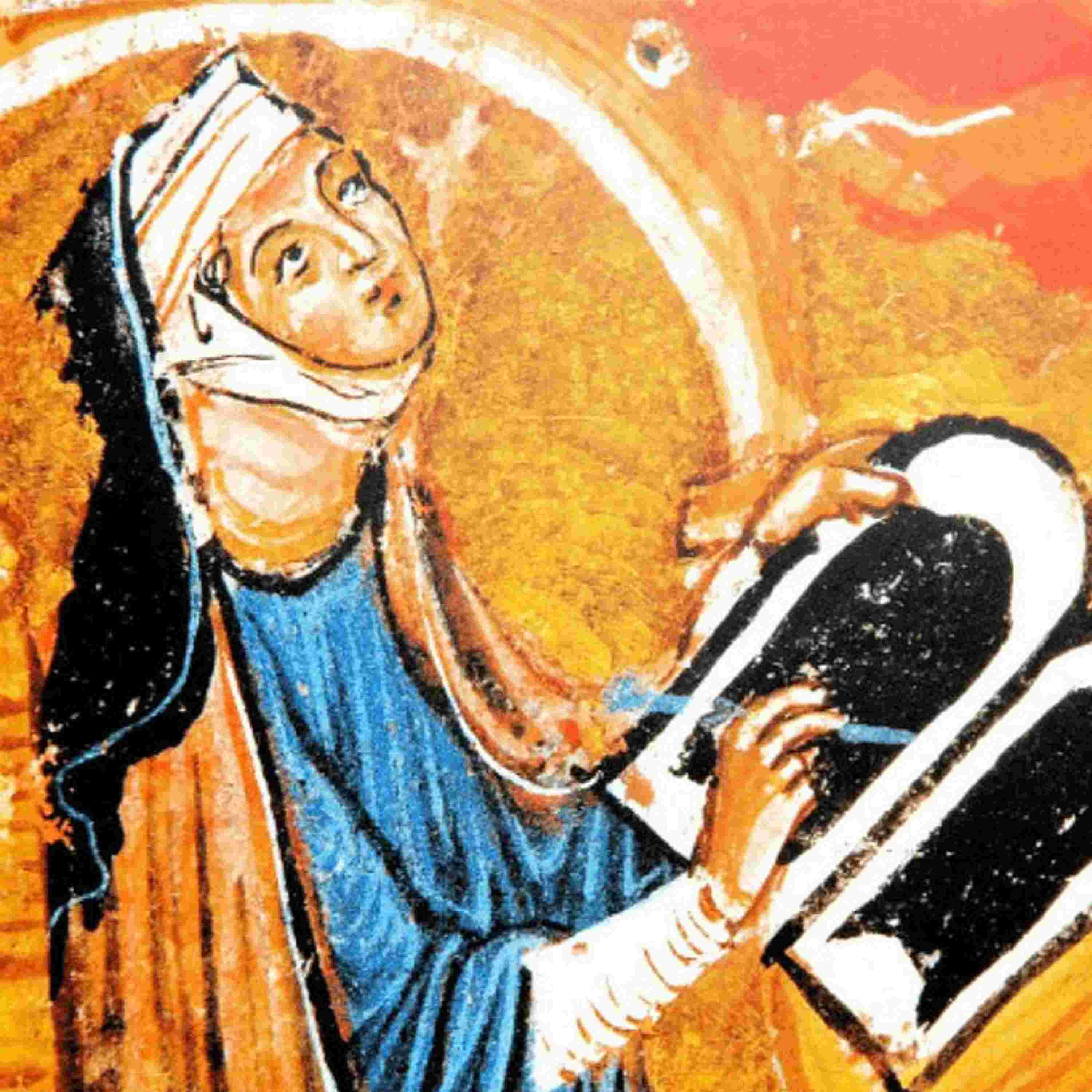
Hildegard von Bingen was a 12th century mystic, polymath, and composer whose work spanned visionary theology, philosophy, cosmology, medicine, botany, and music. Her extraordinary intellectual accomplishments belie her humble claim to be “just a woman”. Was her humility justified in the face of the divine, internalizing misogynistic stereotypes, or a strategic decision to get her voice heard? What can mystical experience teach us about the world? And how can we understand ourselves in relation to the divine? Josh and Ray explore her life and thought with Jennifer Bain from Dalhousie University, editor of "The Cambridge Companion to Hildegard of Bingen."
Philosophy Talk: Select Episodes
More at https://www.philosophytalk.org/shows/shakespeares-outsiders.
Over 400 years after his death, Shakespeare is still widely regarded as the greatest dramatist of all time. His many plays tackle questions about power, influence, identity, and moral and social status. His characters—be they villains or heroes—are often disdained because of their race, religion, class, disability, or gender. So what do Shakespeare’s plays reveal about identity and status in his time? How might they shed light on who we include and who we exclude today? Could Shakespearian dramas have more in common with modern day soap operas than we think? Ray and guest-host Adrian Daub go inside with David Sterling Brown from Trinity College in Hartford, author of "Shakespeare's White Others."