
Interviews with architects, artists and designers. Produced by the Architecture Foundation and hosted by Matthew Blunderfield.
Hosted on Acast. See acast.com/privacy for more information.
Interviews with architects, artists and designers. Produced by the Architecture Foundation and hosted by Matthew Blunderfield.
Hosted on Acast. See acast.com/privacy for more information.
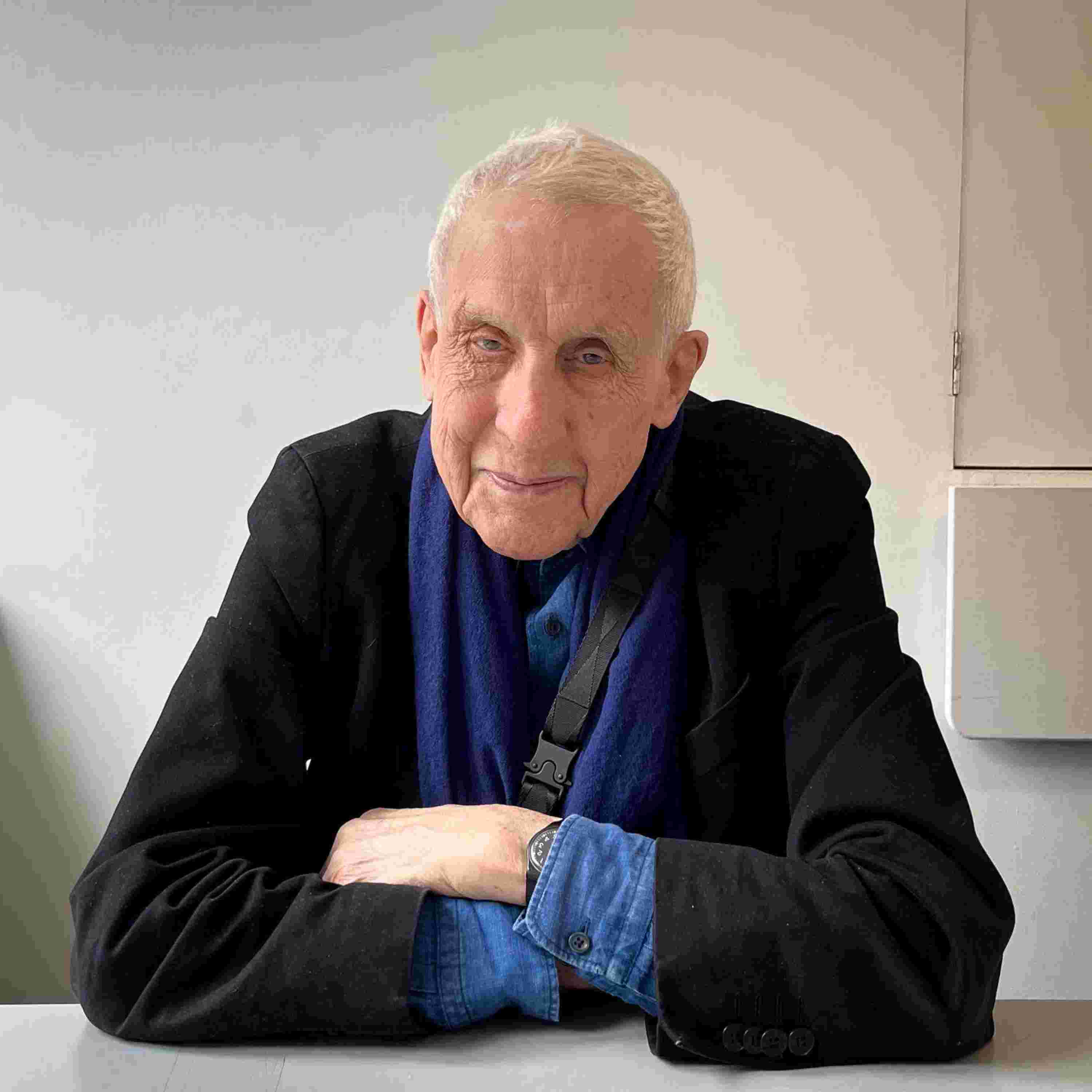
Architectural historian Kenneth Frampton remembers the exact moment of his political awakening.
Arriving in the United States in 1965, flying over the blazing island of Manhattan and suddenly grasping the visibility of capitalist power there—“a ferocious panorama” of light, cars and consumption that stood in stark contrast to what he calls the “concealed” capitalism of mid-century Britain. From that moment, his architectural writing became inseparable from politics: shaped by Hannah Arendt’s idea of the space of appearance, by phenomenology’s insistence on embodied experience, and by a Marxist attention to exploitation, power and the global neoliberal order.
In this first episode of a two-part interview, Kenneth Frampton, arguably the most celebrated and influential architectural thinker of the past half century, looks back over nearly six decades of his writing and teaching.
In the first half of the conversation he addresses the idea critical regionalism as “an architecture of resistance” to commodification, connects phenomenology to political agency rather than aesthetic escapism, and defends his own “operative” criticism—writing that openly aims to influence how architects practice. He is unsparing about the state of architectural education, where social-justice rhetoric often displaces serious engagement with construction and craft, and where capitalism itself remains strangely unnamed. Along the way he reflects on being, as he puts it, “a Marxist who believes in phenomenology,” on the tectonic poetics of building, and, closing out the episode, he reckons with becoming a father at 52 and a grandfather in his mid-90s—thinking about legacy, continuity and what it means for architects, in Álvaro Siza’s phrase, not to invent anything, but to transform reality.
Scaffold is an Architecture Foundation production, created and hosted by Matthew Blunderfield.
Become an Architecture Foundation Patreon member and be a part of a growing coalition of architects and built environment professionals supporting our vital and independent work.
Hosted on Acast. See acast.com/privacy for more information.