In this episode of the Scaled Up Twilight podcast, Mike Dias interviews Lucas Lovell, VP of Product at Paddle. Lucas shares his unique journey from studying law in Australia to becoming a product leader in the tech industry. He discusses his experiences at Paddle, the importance of founder backgrounds in product management, and the skills necessary for transitioning from a founder to a VP role. The conversation highlights the significance of adaptability, empowerment, and the evolving nature of product management as companies scale. In this conversation, Mike Dias and Lucas discuss the challenges of cross-functional alignment in product and go-to-market functions, the impact of incentivization structures on decision-making, and the balance between passion and financial outcomes in leadership roles. They explore the evolving role of AI in product management, emphasizing the need for customer centricity despite the efficiencies AI brings. Lucas reflects on his career choices, highlighting the importance of continuous learning and growth.
Takeaways
The role of a VP of Product differs significantly from a PM.
Metrics shift from product-focused to business-focused at the VP level.
Collaboration across functions is essential for product success. Product leaders need a founder mindset to navigate silos.
Cross-functional alignment is a maturity journey for companies.
Clarity in strategy helps reduce friction among leaders.
Incentivization structures can create misalignment between teams.
Balancing passion and financial outcomes is crucial for leaders.
AI is transforming product management by speeding up execution.
Sound Bites
"Paddle is a great place for founders."
"Your primary artifact becomes strategy."
"Why do we have such a lot of silos?"
"Alignment on strategy is crucial."
"We didn't have alignment on ICP."
"We want to be more piratic."
"Execution is becoming cheaper and faster."
"AI is making PMs less customer centric."
"Keep indexing towards learning."
All content for Scaleup Valley Podcast is the property of Scaleup Valley Podcast and is served directly from their servers
with no modification, redirects, or rehosting. The podcast is not affiliated with or endorsed by Podjoint in any way.
In this episode of the Scaled Up Twilight podcast, Mike Dias interviews Lucas Lovell, VP of Product at Paddle. Lucas shares his unique journey from studying law in Australia to becoming a product leader in the tech industry. He discusses his experiences at Paddle, the importance of founder backgrounds in product management, and the skills necessary for transitioning from a founder to a VP role. The conversation highlights the significance of adaptability, empowerment, and the evolving nature of product management as companies scale. In this conversation, Mike Dias and Lucas discuss the challenges of cross-functional alignment in product and go-to-market functions, the impact of incentivization structures on decision-making, and the balance between passion and financial outcomes in leadership roles. They explore the evolving role of AI in product management, emphasizing the need for customer centricity despite the efficiencies AI brings. Lucas reflects on his career choices, highlighting the importance of continuous learning and growth.
Takeaways
The role of a VP of Product differs significantly from a PM.
Metrics shift from product-focused to business-focused at the VP level.
Collaboration across functions is essential for product success. Product leaders need a founder mindset to navigate silos.
Cross-functional alignment is a maturity journey for companies.
Clarity in strategy helps reduce friction among leaders.
Incentivization structures can create misalignment between teams.
Balancing passion and financial outcomes is crucial for leaders.
AI is transforming product management by speeding up execution.
Sound Bites
"Paddle is a great place for founders."
"Your primary artifact becomes strategy."
"Why do we have such a lot of silos?"
"Alignment on strategy is crucial."
"We didn't have alignment on ICP."
"We want to be more piratic."
"Execution is becoming cheaper and faster."
"AI is making PMs less customer centric."
"Keep indexing towards learning."
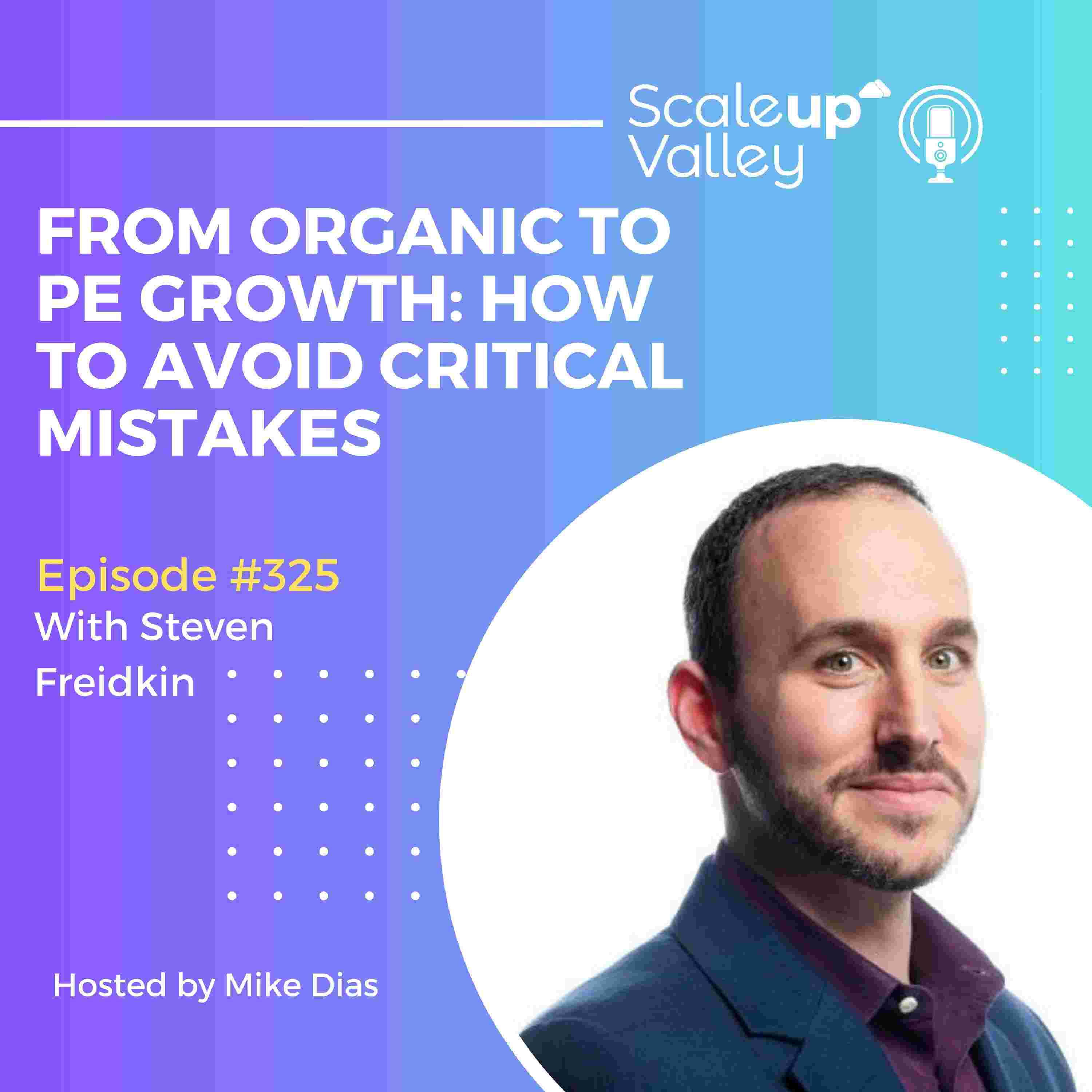
325 | From Organic To PE Growth How To Avoid Critical Mistakes With Steven Freidkin, CEO Of Ntiva
Scaleup Valley Podcast
49 minutes 59 seconds
1 year ago
325 | From Organic To PE Growth How To Avoid Critical Mistakes With Steven Freidkin, CEO Of Ntiva
On this Episode of the Scale Up Valley Podcast, Mike Dias speaks with Steven Freidkin, CEO of Ntiva
Summary
Steven Freidkin, CEO of Ntiva, shares his journey of scaling the company from 100 to 800 employees and $18 million to $170 million in revenue. The company's purpose is to grow each other, and they focus on automation, organic sales and marketing, and strategic acquisitions. Fragin discusses the challenges he faced at different revenue plateaus and the decision to seek private equity investment. He emphasizes the importance of finding the right partner who aligns with the company's purpose and values. Ntiva has experienced significant growth and success through their strategic investments and partnerships. Steven Freidkin shares his experience of partnering with private equity firms to scale his business and create meaningful jobs and opportunities. He emphasizes the importance of finding the right partner and aligning goals and expectations. He also discusses the importance of self-awareness as a CEO and the need to work oneself out of a job to support the growth of other leaders in the organization. He shares his mistakes and lessons learned, including the importance of using debt intelligently and making cultural fit a priority in acquisitions. He encourages founders and CEOs to know their intentions, communicate openly with investors, and focus on creating a positive impact in the world.
Takeaways
Scaling a company requires strategic investments in automation, sales and marketing, and acquisitions.
Finding the right partner in private equity is crucial for growth and success.
Revenue plateaus can be overcome by making major adjustments and focusing on the company's purpose.
Having a clear purpose and values helps drive the company's growth and energizes the team.
Ntiva's journey from $18 million to $170 million in revenue showcases the power of strategic investments and partnerships. Finding the right partner is crucial when partnering with private equity firms to scale a business.
Self-awareness is important for CEOs to work themselves out of their job and support the growth of other leaders in the organization.
Using debt intelligently and considering cultural fit in acquisitions can prevent costly mistakes.
Clear communication and alignment of goals with investors is essential for long-term success.
Focus on creating a positive impact and leaving a legacy in the world.
Titles
Finding the Right Partner in Private Equity
Scaling a Company: From 100 to 800 Employees Aligning Goals and Communicating with Investors
Creating a Positive Impact and Leaving a Legacy
Sound Bites
"I was getting paid to do the thing that I actually love to do."
"We exist to grow each other, technology is simply the accelerator of that growth."
"If something doesn't change, you need to sell this business."
"There was a tremendous amount of alignment."
"I'm always trying to work myself out of my job."
"We exist to grow each other."
Chapters
00:00
Introduction and Background
06:26
Forming Antiva and Early Growth
10:24
Strategic Investments: Automation, Sales and Marketing, Acquisitions
12:19
Seeking Private Equity Investment
16:41
Choosing the Right Partner in Private Equity
19:27
Growth with Private Equity and Second Capital Sponsor
23:05
Partnering with Private Equity
26:30
Working Yourself Out of a Job
29:38
Lessons Learned: Debt and Cultural Fit
34:58
Aligning Goals and Communicating with Investors
46:57
Creating a Positive Impact and Leaving a Legacy
Scaleup Valley Podcast
In this episode of the Scaled Up Twilight podcast, Mike Dias interviews Lucas Lovell, VP of Product at Paddle. Lucas shares his unique journey from studying law in Australia to becoming a product leader in the tech industry. He discusses his experiences at Paddle, the importance of founder backgrounds in product management, and the skills necessary for transitioning from a founder to a VP role. The conversation highlights the significance of adaptability, empowerment, and the evolving nature of product management as companies scale. In this conversation, Mike Dias and Lucas discuss the challenges of cross-functional alignment in product and go-to-market functions, the impact of incentivization structures on decision-making, and the balance between passion and financial outcomes in leadership roles. They explore the evolving role of AI in product management, emphasizing the need for customer centricity despite the efficiencies AI brings. Lucas reflects on his career choices, highlighting the importance of continuous learning and growth.
Takeaways
The role of a VP of Product differs significantly from a PM.
Metrics shift from product-focused to business-focused at the VP level.
Collaboration across functions is essential for product success. Product leaders need a founder mindset to navigate silos.
Cross-functional alignment is a maturity journey for companies.
Clarity in strategy helps reduce friction among leaders.
Incentivization structures can create misalignment between teams.
Balancing passion and financial outcomes is crucial for leaders.
AI is transforming product management by speeding up execution.
Sound Bites
"Paddle is a great place for founders."
"Your primary artifact becomes strategy."
"Why do we have such a lot of silos?"
"Alignment on strategy is crucial."
"We didn't have alignment on ICP."
"We want to be more piratic."
"Execution is becoming cheaper and faster."
"AI is making PMs less customer centric."
"Keep indexing towards learning."