Lots of research has tried to break down how music toys with the emotions of any audience, but have you ever thought about how music makes the musicians playing it feel? A group of researchers from Italy recently noticed this gap in the science and decided to answer it.
They found that when violinists play more emotional pieces, their bow movements are rougher. Nicola di Stefano, the cognitive scientist who led the study, thinks that this effect might come from musicians reacting strongly to the emotions in the pieces they play. He suggests that psychological pressure is the root cause.
Professional violinist Curtis Macomber, though, doesn't see these results echoed in reality. He thinks of emotion as an overwhelmingly positive tool in his arsenal, something that makes his playing better, rather than worse. While Nicola and his team found that emotions can hamper a violinist, Curt actually looks forward to encountering them.
Listen in as we dive into how playing emotional pieces affects musicians.
Music:
• Bach - Prelude and Fugue in C minor - BWV 847 - The Well-Tempered Clavier, No. 2 - Arranged for Strings [Gregor Quendel | Free Music Archive]
• Mozart - Eine Kleine Nachtmusik / Serenade No. 13 - KV 525.mp3 [Gregor Quendel | Free Music Archive]
• György Kurtág - Kafka Fragmente op. 24 [Divertimento Ensemble]
All content for Scienceline is the property of Scienceline and is served directly from their servers
with no modification, redirects, or rehosting. The podcast is not affiliated with or endorsed by Podjoint in any way.
Lots of research has tried to break down how music toys with the emotions of any audience, but have you ever thought about how music makes the musicians playing it feel? A group of researchers from Italy recently noticed this gap in the science and decided to answer it.
They found that when violinists play more emotional pieces, their bow movements are rougher. Nicola di Stefano, the cognitive scientist who led the study, thinks that this effect might come from musicians reacting strongly to the emotions in the pieces they play. He suggests that psychological pressure is the root cause.
Professional violinist Curtis Macomber, though, doesn't see these results echoed in reality. He thinks of emotion as an overwhelmingly positive tool in his arsenal, something that makes his playing better, rather than worse. While Nicola and his team found that emotions can hamper a violinist, Curt actually looks forward to encountering them.
Listen in as we dive into how playing emotional pieces affects musicians.
Music:
• Bach - Prelude and Fugue in C minor - BWV 847 - The Well-Tempered Clavier, No. 2 - Arranged for Strings [Gregor Quendel | Free Music Archive]
• Mozart - Eine Kleine Nachtmusik / Serenade No. 13 - KV 525.mp3 [Gregor Quendel | Free Music Archive]
• György Kurtág - Kafka Fragmente op. 24 [Divertimento Ensemble]
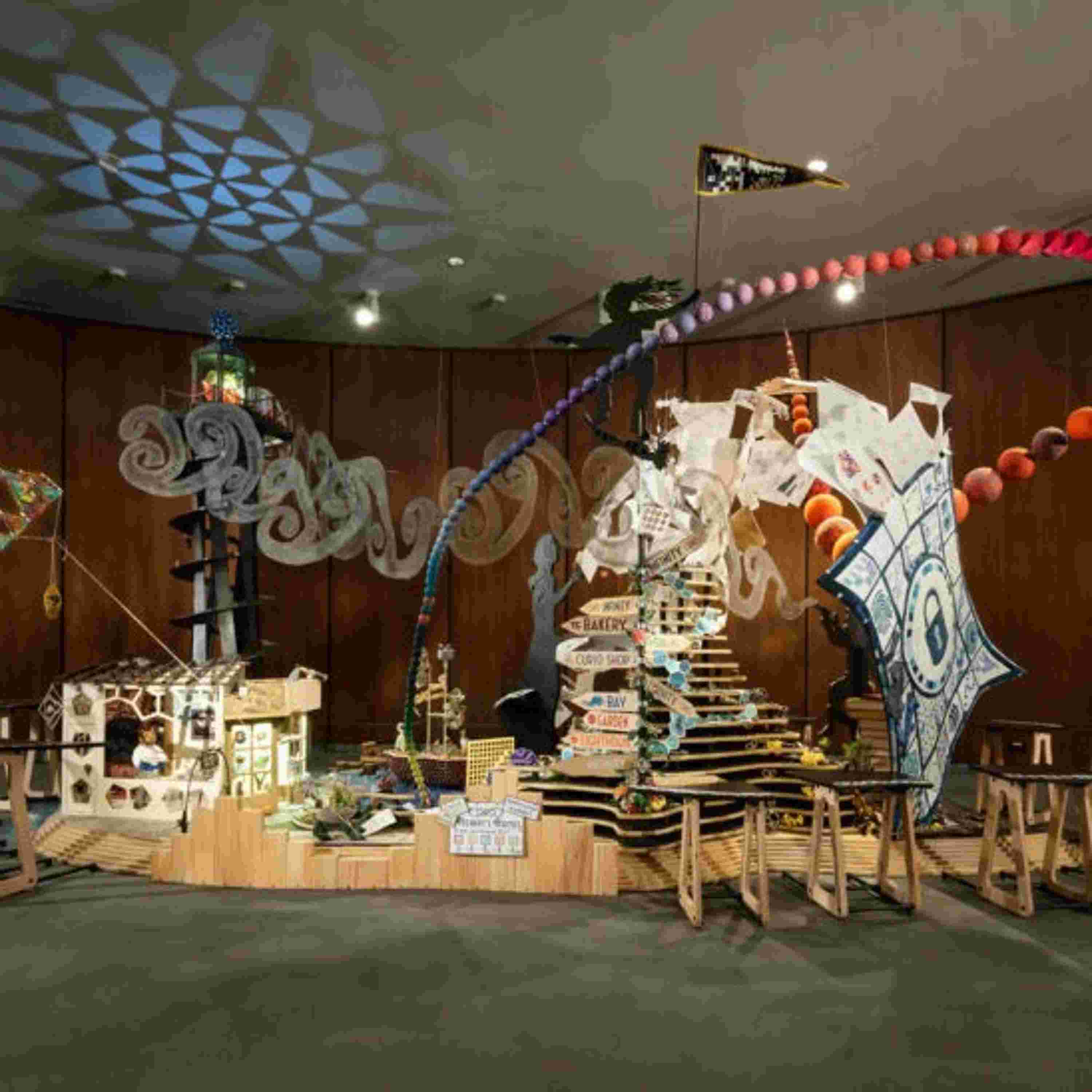
Boredom under COVID quarantine led many to pursue some strange side hobby, but for 24 mathematicians and artists, it resulted in Mathemalchemy — a collective of mathematically (aesthetically, too) charming pieces of art — from cryptographic quilts, huge parabolas of embroidered spheres, crochet theta curves caught in fishing nets, and murals of OctoPi, seen generating various wave-related equations per every water ripple.
For the “Mathemalchemists,” their project is a lively, whimsical invitation into the world of mathematics, made for an audience of all ages and interests. The goal is to illustrate how math can be fun — not something schools force you to do, but something that leaves you inspired.
So, how did this project come to be? What makes Mathemalchemy so special, both for the Mathemalchemists and anyone that comes across the exhibition? In this podcast, Gayoung Lee goes behind the scenes of Mathemalchemy with co-founders Ingrid Daubechies and Dominique Ehrmann, in addition to Mathemalchemists Jessica Sklar, Elizabeth Paley and Carolyn Yackel.
MUSIC:
“Pglet Into” by Blue Dot Sessions | CC BY-NC 4.0
“The Gran Dias” by Blue Dot Sessions | CC BY-NC 4.0
“Spring Cleaning” by Blue Dot Sessions | CC BY-NC 4.0
Scienceline
Lots of research has tried to break down how music toys with the emotions of any audience, but have you ever thought about how music makes the musicians playing it feel? A group of researchers from Italy recently noticed this gap in the science and decided to answer it.
They found that when violinists play more emotional pieces, their bow movements are rougher. Nicola di Stefano, the cognitive scientist who led the study, thinks that this effect might come from musicians reacting strongly to the emotions in the pieces they play. He suggests that psychological pressure is the root cause.
Professional violinist Curtis Macomber, though, doesn't see these results echoed in reality. He thinks of emotion as an overwhelmingly positive tool in his arsenal, something that makes his playing better, rather than worse. While Nicola and his team found that emotions can hamper a violinist, Curt actually looks forward to encountering them.
Listen in as we dive into how playing emotional pieces affects musicians.
Music:
• Bach - Prelude and Fugue in C minor - BWV 847 - The Well-Tempered Clavier, No. 2 - Arranged for Strings [Gregor Quendel | Free Music Archive]
• Mozart - Eine Kleine Nachtmusik / Serenade No. 13 - KV 525.mp3 [Gregor Quendel | Free Music Archive]
• György Kurtág - Kafka Fragmente op. 24 [Divertimento Ensemble]