
Every January, I head to the American Astronomical Society's big annual meeting with an ulterior motive in mind. Beyond merely uncovering new scientific findings, gathering information for potential stories, and connecting with friends and colleagues, I also look to meet emerging junior researchers who are swiftly becoming not only experts, but leaders, in their particular sub-field of astronomy.
One of the most popular research topics in astrophysics today is the connection between the dark Universe, including the only indirectly-observed dark matter and dark energy, and the observable components that astronomers routinely see: stars, galaxies, gas, plasma, and other forms of light-emitting and light-absorbing matter. The dark Universe, to date, is best revealed by looking at the luminous, electromagnetic signals that are imprinted onto the visible components of our cosmos.
To better understand what scientists are investigating, I'm so pleased to welcome KeShawn Ivory to the podcast. KeShawn is a PhD candidate at Vanderbilt University and researches the connection between dark matter, the non-luminous, gravitationally interacting "stuff" that holds the Universe together (as best as it can), and the luminous, observable galaxies that populate the visible Universe in numbers that rise into the trillions. It's a fascinating topic and a great addition to your May listening, right here on Starts With A Bang!
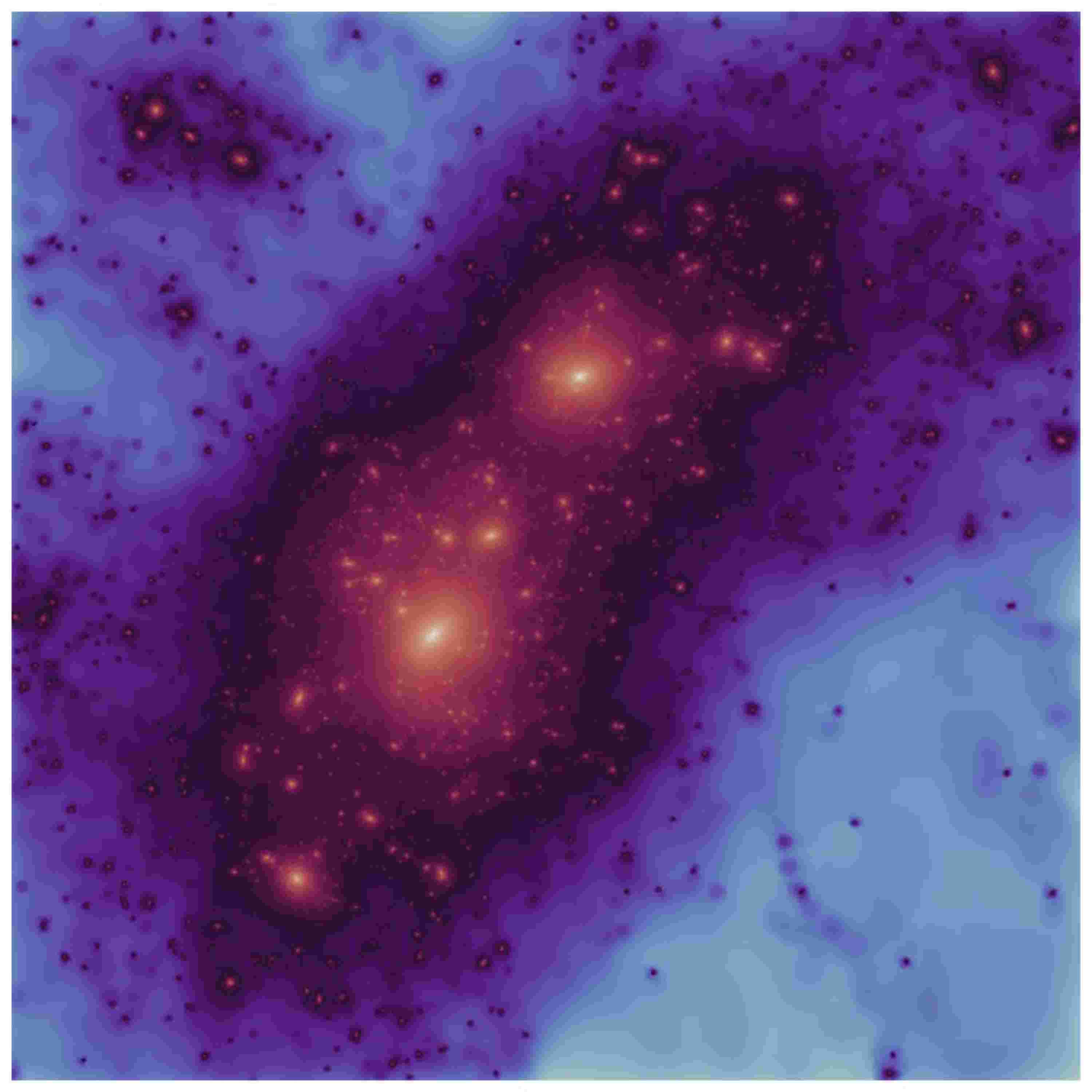
(The SIBELIUS project, which simulates galaxies and structures beyond the local Universe, is part of the Virgo Consortium that attempts to use cosmological simulations to reproduce features of galaxies, groups, and clusters that are seen all across the Universe. By using a mix of theory, observations, and simulations, astrophysicists can better understand the nature of dark matter in our cosmos. Credit: Virgo Consortium/SIBELIUS project)