
Hosted on Acast. See acast.com/privacy for more information.
Hosted on Acast. See acast.com/privacy for more information.
In a world first Australia is raising the age of access to social media from 13 to 16.
And there are plenty of questions:
Why are we changing the age of access to social media?
What are the impacts of social media on the brain?
Why should parents support the social media ban for teens?
How can we help young people with social media withdrawal symptoms?
“The current 13 year old minimum age isn’t based on any meaningful development appropriateness for social media. There is not evidence that 13 year olds are in fact ready for social media. The 13 year old minimum came from a law in the US from 1996, which was actually well before smartphones or social media was even fully developed.” – Dr Simon Wilksch
This podcast is an edited version of one of EDFA’s live webinar series. It was held just a couple of weeks before the introduction of the social media restrictions.
In it we take a closer look at how social media affects the brain, from falling IQ and eating-disorder risk, to what withdrawal can look like when access to social media platforms is restricted. We also hear powerful insights from social media users who’ve been caught up in the algorithms themselves.
“We know that when you're on a device you're not socialising, when you're on a device you are not using your working memory in the same way, you're not actually coming up with new ideas or your curiosity and those things are what is really affected in the IQ test as well.” – Dr Mark Williams
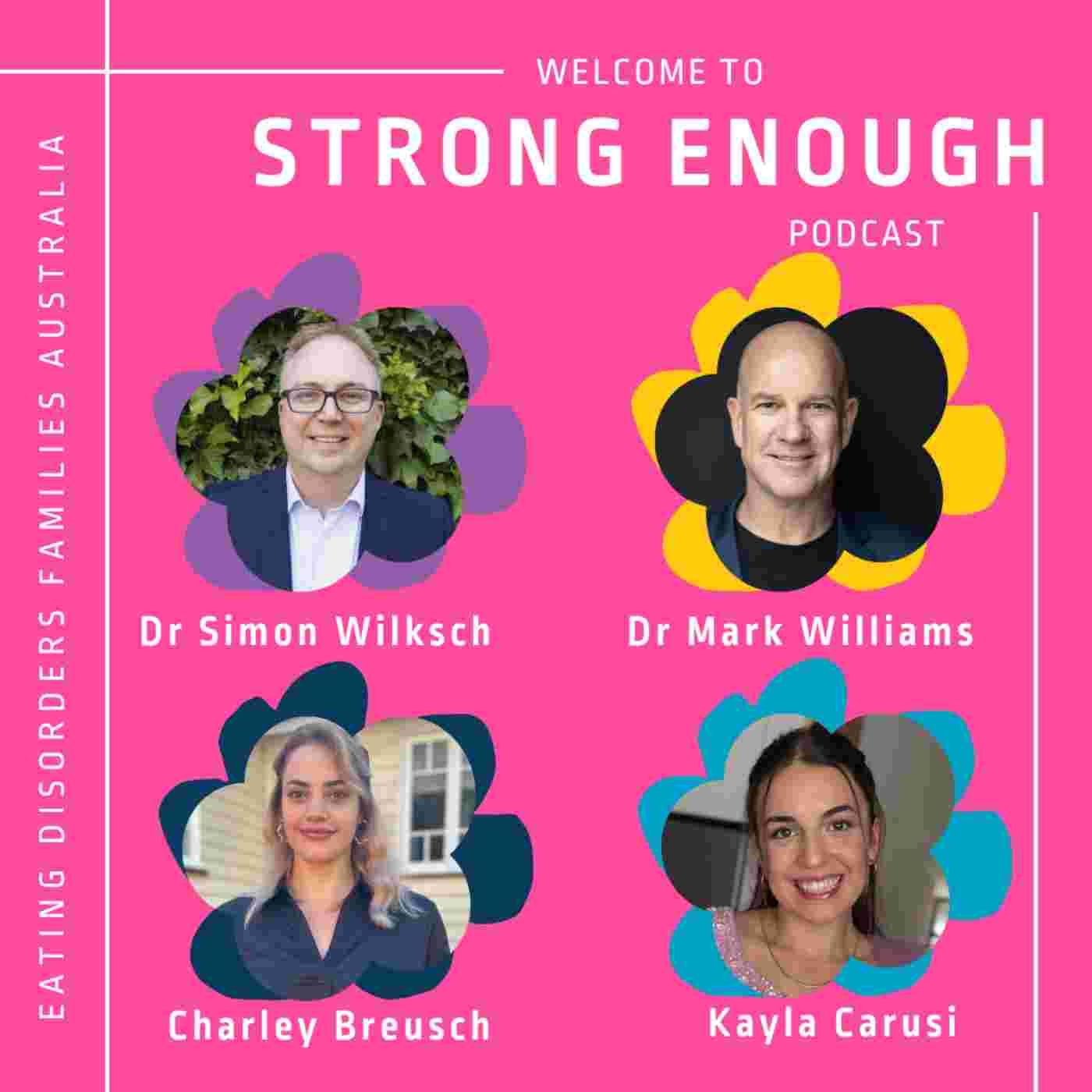
The panel includes:
Dr Simon Wilksch, a leading Australian researcher and psychologist at Advanced Psychology Services. He explains how social media harms mental health, and why these new laws and stronger restrictions really matter, plus has great practical advice about how we can support our young people.
Dr Mark Williams, a leading cognitive neuroscientist and author of Screen Smart Children. He’ll unpack how social media is reshaping our brains and how we can reverse some of the damage that been done, not only inside our heads, but to our real life relationships too.
We’re also joined by two young women, Kayla Carusi and Charley Breusch, who know firsthand just how powerful and overwhelming social media can be when it comes to disordered eating. These young women share how they believe social media contributed to the development of their eating disorders and also how it hindered their recovery.
#edfa
#eatingdisordersfamiliesaustralia
#socialmediareset
#letkidsbekids
#socialmediaagerestrictions
#socialmediaagechange
#socialmediabrain
#arfid
#eatingdisorders
#anorexia
#bulimia
#eatingdisorderrecovery
Hosted on Acast. See acast.com/privacy for more information.