
While personal training is built entirely around the individual, group training operates on a "bell curve"—designed for the majority but requiring the individual to be more engaged and prepared. The Vera Strengths team discusses how to bridge the gap between being a participant and being an athlete, emphasizing that coaching is a two-way street.
Preparation is Protection: Using tools like the Team Builder app to study movements and videos before you walk through the door reduces anxiety and increases "workout acuity."
The Two-Way Street: Coaches are there to guide, but they aren’t mind readers. Asking for form checks and communicating how you slept or traveled helps coaches "triage" the floor effectively.
Movement Patterns vs. Exercises: Don’t be "married" to a specific lift. If an injury or limitation exists, focus on the movement pattern (e.g., a squat) rather than the specific tool (e.g., a barbell).
Identity Shift: The most successful members don't just "go to the gym"—they identify as people who train. They become "students of the game."
[00:00:18] The difference between Personal Training and the "Bell Curve" of Group Training.
[00:01:27] Tip #1: Why mental preparation is like learning a foreign language.
[00:04:49] Overcoming the intimidation factor and the "Sticking Point."
[00:07:21] The "Triage" Reality: Why coaches focus on certain people and how to get the attention you need.
[00:09:50] The power of active listening during the workout briefing.
[00:11:34] Using video and mirrors to fix the "Olympian in your mind" vs. reality.
[00:13:42] Communicating "Non-Injuries": How sleep, travel, and stress change your workout.
[00:17:00] Becoming a Student of the Game: Moving fitness into your identity
While personal training is built entirely around the individual, group training operates on a "bell curve"—designed for the majority but requiring the individual to be more engaged and prepared. The Vera Strengths team discusses how to bridge the gap between being a participant and being an athlete, emphasizing that coaching is a two-way street.
Preparation is Protection: Using tools like the Team Builder app to study movements and videos before you walk through the door reduces anxiety and increases "workout acuity."
The Two-Way Street: Coaches are there to guide, but they aren’t mind readers. Asking for form checks and communicating how you slept or traveled helps coaches "triage" the floor effectively.
Movement Patterns vs. Exercises: Don’t be "married" to a specific lift. If an injury or limitation exists, focus on the movement pattern (e.g., a squat) rather than the specific tool (e.g., a barbell).
Identity Shift: The most successful members don't just "go to the gym"—they identify as people who train. They become "students of the game."
[00:00:18] The difference between Personal Training and the "Bell Curve" of Group Training.
[00:01:27] Tip #1: Why mental preparation is like learning a foreign language.
[00:04:49] Overcoming the intimidation factor and the "Sticking Point."
[00:07:21] The "Triage" Reality: Why coaches focus on certain people and how to get the attention you need.
[00:09:50] The power of active listening during the workout briefing.
[00:11:34] Using video and mirrors to fix the "Olympian in your mind" vs. reality.
[00:13:42] Communicating "Non-Injuries": How sleep, travel, and stress change your workout.
[00:17:00] Becoming a Student of the Game: Moving fitness into your identity
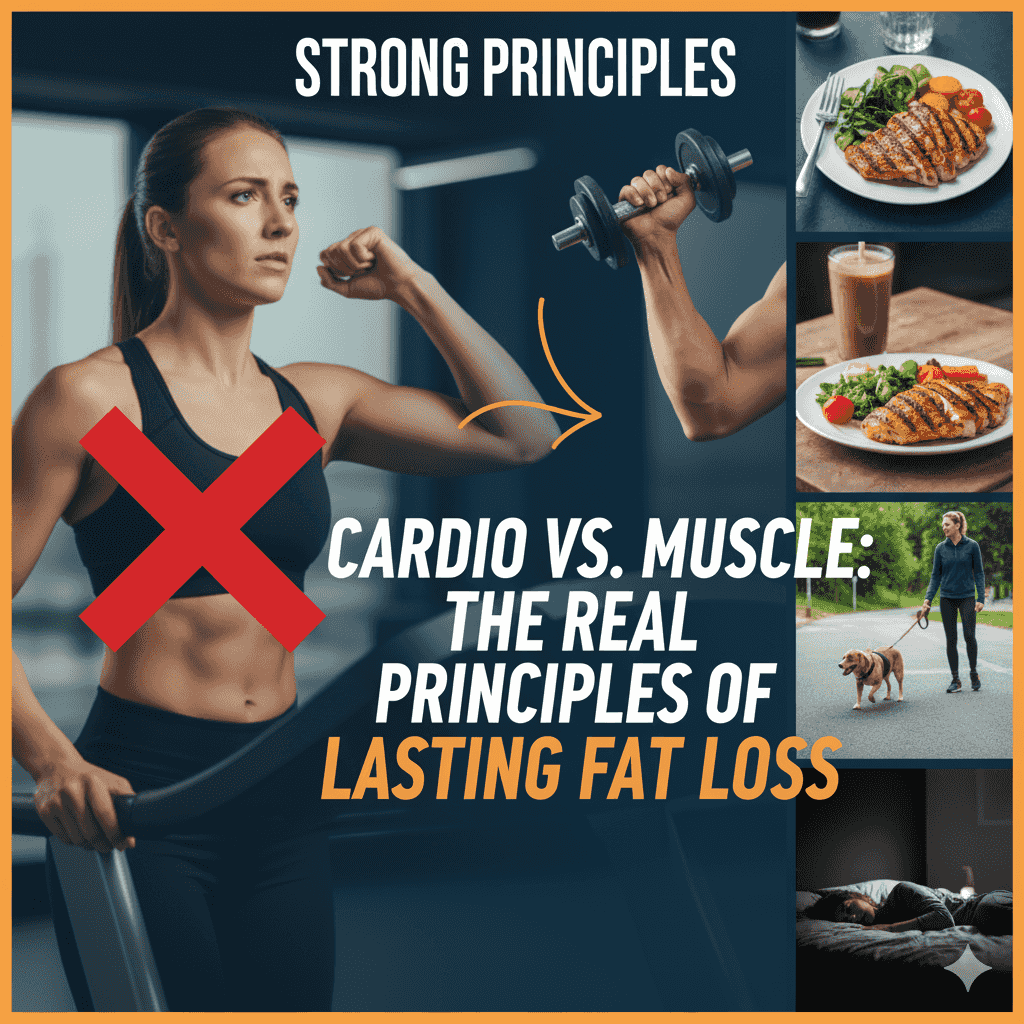
Cardio vs. Muscle: The Real Principles of Lasting Fat Loss
This week on Strong Principles, Wendy, Rob, and Larry tackle a client question that's on everyone's mind: How much cardio should I add to lose fat quickly?
The hosts unpack the common trap of relying on calorie-burning cardio, explaining why it's a short-term fix that can actually slow down your metabolism. If your goal is sustainable, long-term fat loss, the answer isn't more hours on the treadmill—it's building muscle and optimizing your daily habits.
Key Principles Discussed:
The Metabolism Myth: Why focusing on calories burned during a workout is less important than your Basal Metabolic Rate (BMR), which is shaped by muscle. Rob explains how muscle makes your body "more expensive to operate" all day long.
Protein is Priority: The team emphasizes that nutrition, specifically protein intake, is critical for supporting muscle and keeping you full. They discuss the target of aiming for 0.8 to 1 gram of protein per pound of goal body weight.
The Power of NEAT: Wendy breaks down Non-Exercise Activity Thermogenesis, explaining that all those little movements (walking, standing, fidgeting) throughout the day add up to more calorie burn than you think—and why a great workout shouldn't lead to a sedentary day.
The "Powerful Pill" of Sleep: Larry admits his struggles, while Rob and Wendy explain why sleep deprivation is a major stressor that pushes your body to hold onto fat. They share how an extra hour of sleep can actually change your body composition.
Actionable Takeaways:
Prioritize Strength Training: Focus on lifting weights to increase your BMR.
Boost Protein Intake: Track your intake for a few days and start inching toward your goal.
Move More All Day: Increase your steps, use a standing desk, and move every 15 minutes to increase NEAT.
Get 7+ Hours of Sleep: Treat sleep as a non-negotiable component of your fat loss strategy.