
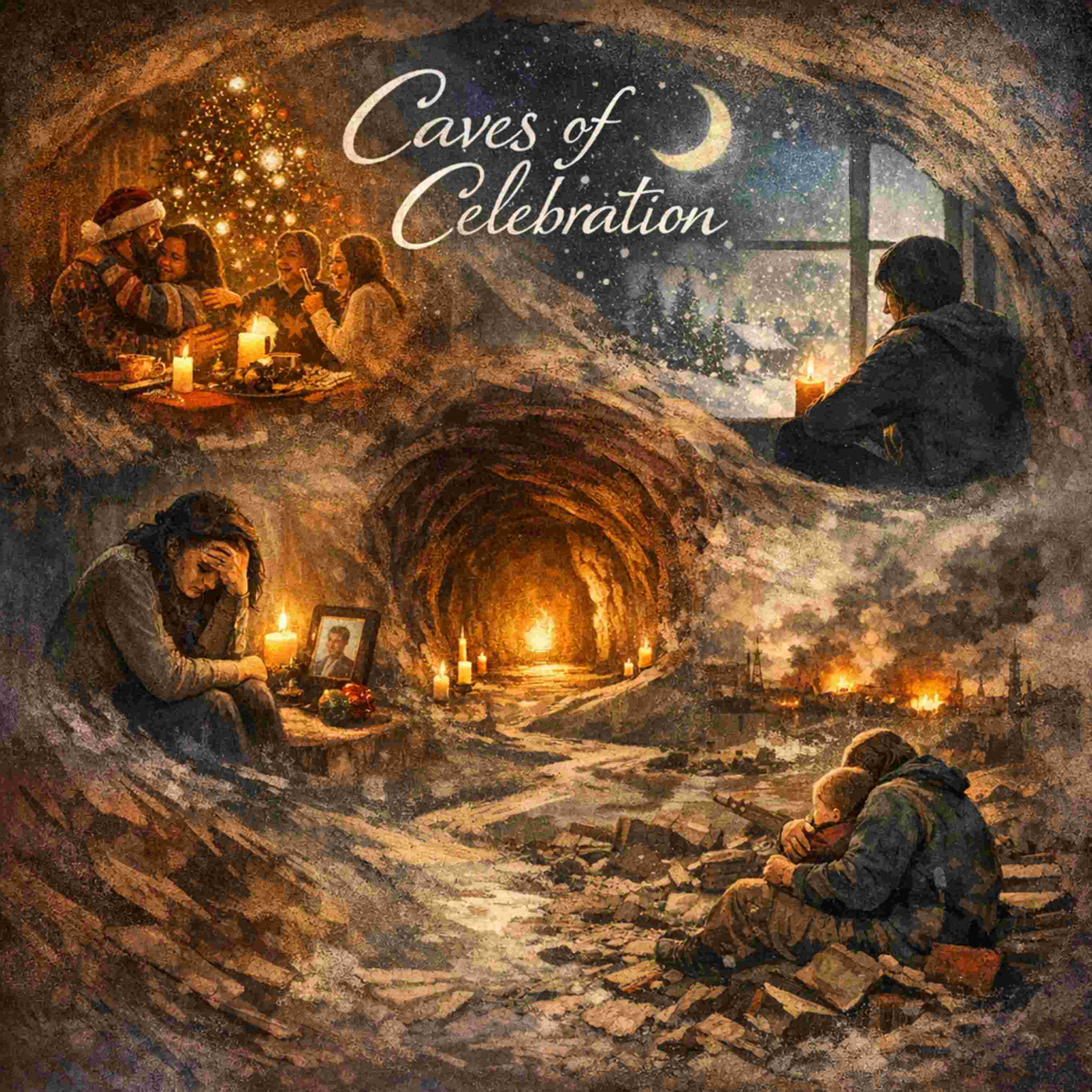
✨ The Quiet Moments After Christmas: Reflecting on Caves of Celebration
As the glitter settles and the noise softens, I find myself in that familiar stillness—the quiet moments after Christmas.
This year, I’ve been reflecting on the many caves of celebration I’ve seen and sensed around me. Some were full of light, laughter, and warmth. Others were quieter… sometimes painfully so.
What exactly did this festive season mean for you?
We don’t often speak about the unwritten rules that shape this time of year—the silent scripts we’re expected to follow:
On Christmas Eve, many of us retreat into our chosen or inherited caves—preparing for the big day, the ‘climax’ that is Christmas.
But what did your cave look like this year?
For some, it’s a cave of community—surrounded by family, friends, rituals, and joy.
For others, it’s a cave of isolation, where the absence of loved ones echoes louder than any carol.
For some, it’s a cave of grief, facing the first Christmas without someone they loved.
And for far too many, it’s a cave of war, violence, or displacement—where survival, not celebration, is the priority.
Some couldn’t wait for Christmas to be over. Others wish it could last a little longer.
So let me ask you:
🌀 If you had to describe the emotional space you inhabited this Christmas—your cave of celebration—what three words would you choose?
Was it joyful? Exhausting? Restorative? Lonely? Complicated?
🌙 If you found yourself in a cave of loneliness or loss—how did you cope? What got you through?
And when people ask “How was Christmas?”, how do you respond?
Would you say:
— “It was perfect.”
— “It was fine.”
— “Honestly? It was hard.”
— “I don’t know.”
And equally important:
👉 When you ask someone how their Christmas was, and they hesitate—or tell you they were lonely, sad, or grieving—how do you respond?
Can you hold that space with compassion?
Can you sit with their discomfort, or does it make you want to move on quickly?
Can you pause and truly listen?
💭 If there’s one thing that might have made Christmas better for you, what would it have been? A person? A moment of peace? A conversation? A hug?
This isn’t about guilt or comparison. Christmas is a time of celebration—and we all deserve that. But the unwritten rule to “keep things positive” can sometimes silence the full truth.
👉 Is there space in our culture for both joy and honesty?
👉 Can we allow ourselves to acknowledge the privilege of celebration, even as we protect it?
👉 Did you have the capacity this year to think about others in different caves—or did you need to shut those thoughts away for your own survival?
There’s no judgment here.
But perhaps the quiet moments after Christmas give us a chance—not for regret—but for reflection.
🔍 To pause.
💬 To be honest.
🌱 To grow.
So I’ll leave you with this question:
What cave did you inhabit this Christmas—and what will you carry forward from it into the new year?
#CavesOfCelebration #ReflectAndRenew #FestiveReflections #SixStagesFramework #EmpathyInAction #InclusionPsychologists #PostChristmasPause #UnspokenTruths #EmotionalSpaces #WhatChristmasMeant
https://www.linkedin.com/pulse/unmasking-holidays-guide-understanding-silent-scripts-m-gadzah-gsq0e