
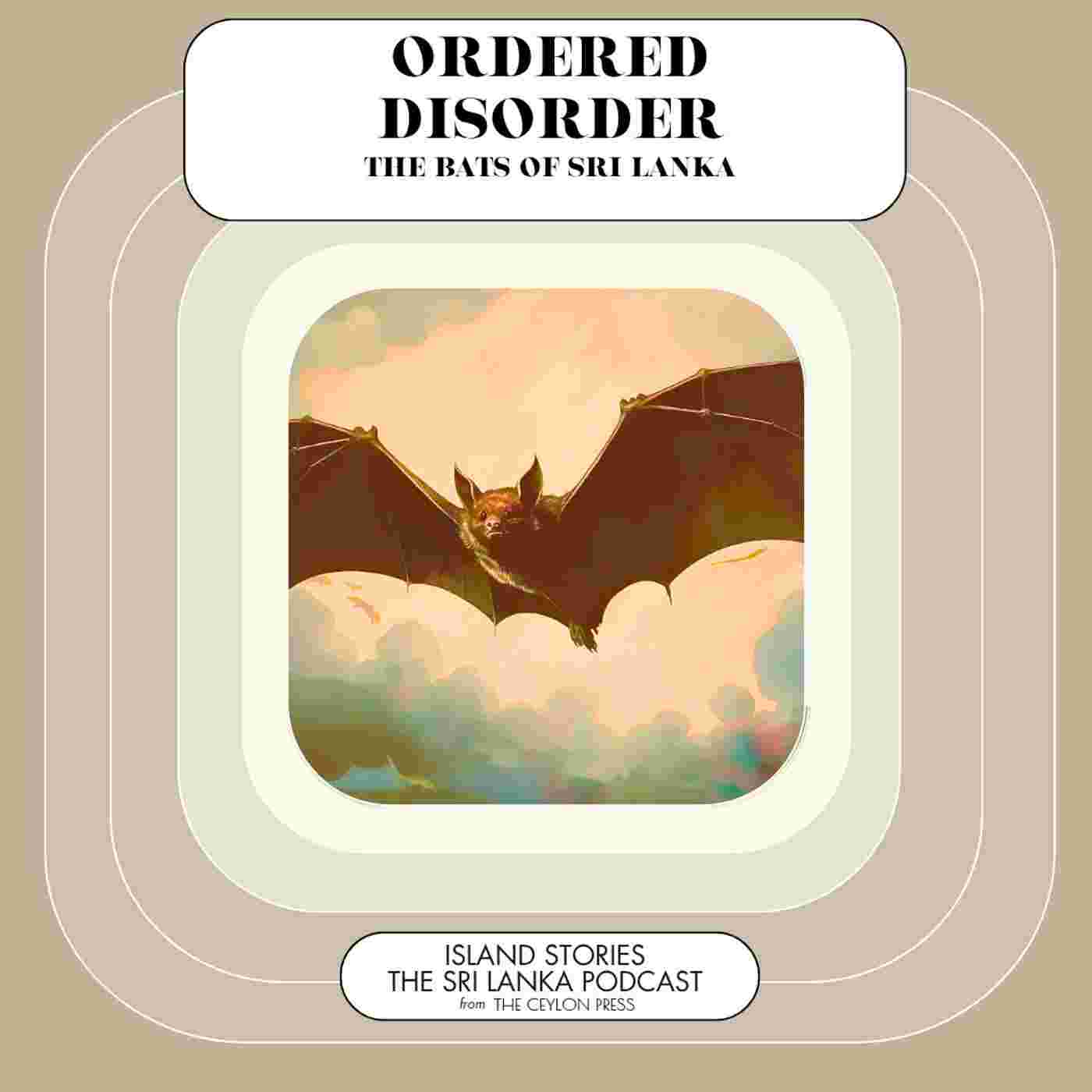
Cryptology, fractals, even Einstein’s Theory of Relatively – they all pale into bashful insignificance when compared to bat taxology. Between the kingdom within which a bat might exist, to the species to which it is classed as belonging, there are at least 8 levels of mind-numbing grouping that bat scientists, or chiropterologists as they prefer to be called, pin their descriptions to. Unwilling to rest there, many then spend entire careers reordering the species, family and even the genus of these miniature mammals. The more daring go much further and bestow new sub species divisions with all the generosity of a pools winner.
The net result is that this most tiny of all mammals has had - and continues to endure - more names changes than even the hapless city of Plovdiv in Bulgaria. This blameless city of some 350,000 souls, famous for its icon painting, has endured 11 name changes so far. Somewhat co-incidentally it is also renowned for its bats, housing over 20 different spcies and hosting regular Bat Nights to introduce its avian mammals to its two-legged ones.
Short of dusting the animals with poisonous radioactive dust and equipping them with miniature Kalashnikov, there is little else science can really do to make them more unapproachable. Which is a terrible shame because bats – like lichen, coral, or bees - are among the world’s best indicator species, those ones that tell you quite how healthy or not the environment really is.
Chiropterologists aside, we ought to pay attention to what is going on in the bat world for if what have bats have to say is anything to go by, then we are in trouble. All around the world bats are in decline. Facing a tsunami of pollution, habitat loss, climate change, and aggressive new farming techniques, bat numbers in every country of the world have plummeted and the continued future existence of almost one third of their species is threatened. It is ironic that in the face of such a burgeoning catastrophe, the number of identifiably different bat spcies continues to grow – it is now up to over 1500.
The counting of bat species in Sri Lanka is an art still much in the making, but all the signs are that the overall decline of numbers non withstanding, the country bats way above its weight. Though owning barely 1% of the world total land mass, Sri Lankan houses well over 2% of the recognised bat species across the world.
Scientists are of course minded to disagree with one another at most times; indeed, put just one Chiropterologist in a room by himself and you will foster dissent. This is especially true when it comes to nailing down the number of bat species that exist here. It was thought to be 28. Then 29. Several new bats were discovered. Older bats were reclassified. Today the number appears to be 37, though like adolescents with mood swings, this can change in an instant and often does.
But whatever family, genius, species, or sub species they belong to, they all share certain bat-like sureties. They all fly, for example. Bats are of course the only mammals able to truly fly, angels excepted and are famous for roosting upside down from their feet, viewing the world like happy drunks, a propensity make worse by their extremely poor vision. They all enjoy ultrasonic sound and with this gift of super charged hearing, they navigate the world with expert dexterity. Most live in large colonies and are much given to hibernation, a habit that accounts for their exceptionally long lifespan – with one bat recorded to have lived 41 years. Less happily, many are enthusiastic harbingers of diseases, especially those best able to leap from animal to human.
XS
The Extra Small Bats
Sri Lanka’s bats can best be divided to eight broad categories, the first of which are the extremely small bats, the ones so extraordinary petit that their bodies barely measure 2 to 3 centimetres. There are 3 bats in the XS range, the smallest being the Indian Pygmy Pipistrelle Bat, whose Latin name (mimus mimus) is all the guidance you really need to know quite how tiny it is. Next up in size is the Painted Bat, sometimes known as the butterfly bat. Small though it is, the creature is also dazzlingly beautiful with thick bright orange fur all over, its wings decorated with black pyramids inset on orange lines like stained glass windows. Decidedly less glamorous is the rust brown Pungent Pipistrelle, common in SE Asia but rarely found in Sri Lanka. The more exacting scientists have long ago declaring its few sightings here to have been avoidable mistakes. The third XS bat, Hardwicke's Forest Bat, is one of those wretched beasts whose existence has been especially tortured by name changes and reclassifications. The most recent occurrence was in 2018 when it was dragged out of one species and reallocated to an another under the name The Malpas Bat. Unlike most other bats, Hardwicke's Forest Bat is something of a loner. It was named after the East India Company soldier, Major-General Thomas Hardwicke, a man as much noted for his love of natural history as for his determination to defeat Tipu Sultan in battles across India. Like many East India men, Hardwicke he had a complicated domestic life, leaving behind five illegitimate children and two other daughters born to his Indian mistress.
S
Bats of Small Size
Eight bats populate Sri Lanka’s Small Bat category, their sizes averaging around 4 centimetres with upper ranges for some of up to 6 centimetres. The Indian Pipistrelle stands out, despite its size, for its rampant fertility. Most bats give birth once a year – usually to a single pup. The Indian Pipistrelle however opts to do this three times a year. Dull orange with a worrying tendency to beige, the Fulvus Roundleaf Bat follows bat reproductive norms more exactly, breeding in November, to produce a single pup who will take well over a year to gain sexual maturity.
Little is known about the third XS bat, the Sri Lankan Leaf-Nosed Bat as it was only identified as a new endemic species in 2025, its existence until then having been clumsily muddled up with other cousins and near cousins. It tell-tale giveaways were its extra board nose, unusual ear shape, and the marginally different set to the bone structure of its tiny head.
The same sorry fate was to befall the Dekhan Leaf-Nosed Bat which, until 2025, has been horribly confused with several other species to which it only had a nodding acquaintanceship. It is regarded as critically endangered and most scientists believe that it doesn’t actually exist in Sri Lanka at all. Most that is, but not quite all. Such rarity does not haunt Schneider’s Leaf-nosed Bat wo lives in colonies with around 1000 mates in caves across Sri Lanka.
The Rufous Horseshoe Bat, beautifully orange though it is, remains one to be avoided, being responsible for the 2002–2004 SARS outbreak. Van Hasselt’s Mouse-Eared Bat was named for the great biologist Johan Conrad van Hasselt, whose wretched reputation was such that almost everyone who joined him for expeditions into the unknown died or returned with a terminal illness, himself included.
His little bat is unusual for its fondness for living near water, alone. More social is Cantor's Leaf-Nosed Bat, named for a Danish zoologist more famous for having nailed the taxological complexities of Siamese fighting fish.
M
Bats of Medium Size
Four baths fill the medium size bat category, though medium means little more than between 5 to five a...