
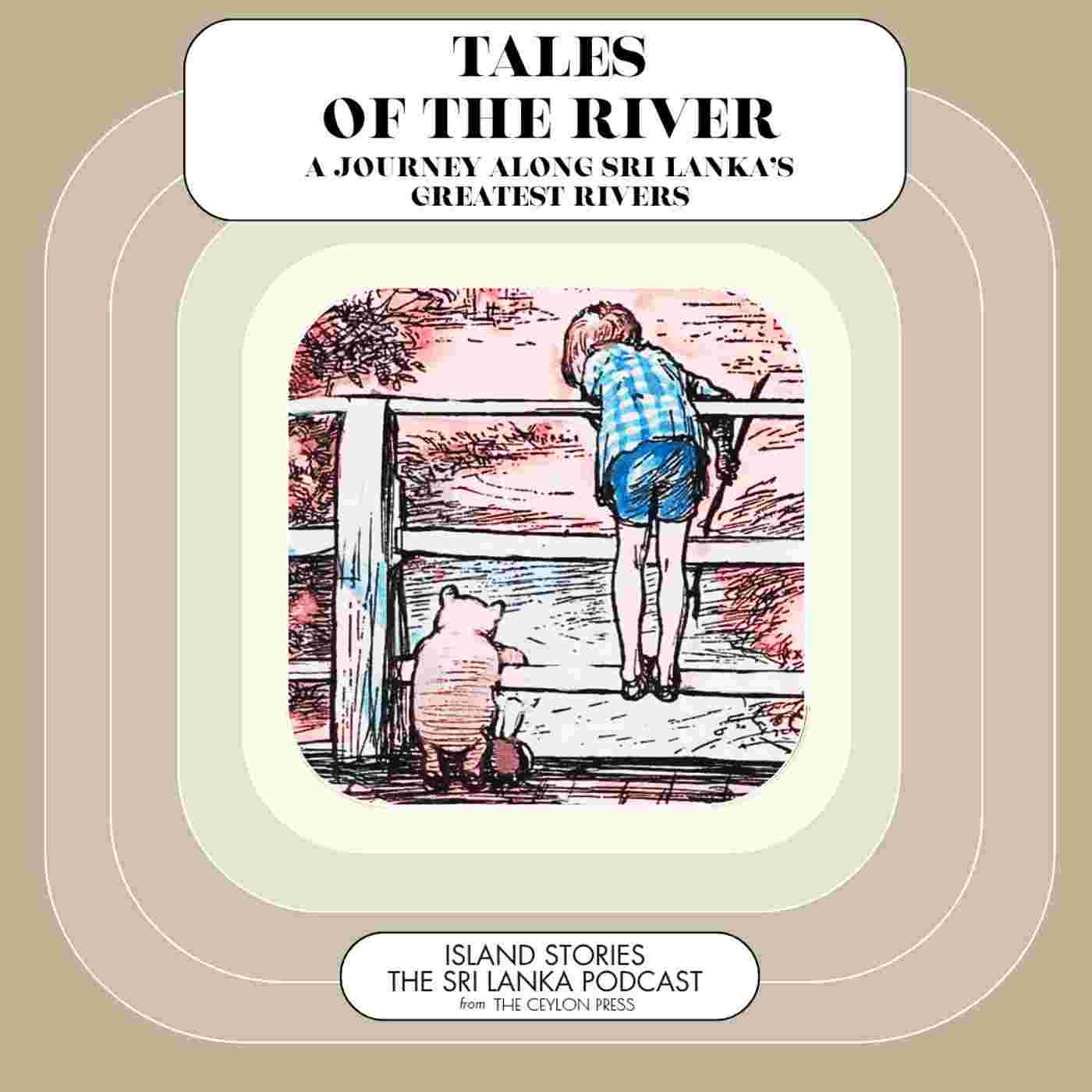
Sri Lanka’s 14 great rivers offer a rarely explored opportunity to unearth its history and its greatest dishes - morish reminders that rivers, being all about life, prove there is no better way to experience it than to eat or drink it
This was something that Winne-the-Poos’s dear friend Eeyore knew all about, having famously fallen into the river.
“Oh, Eeyore, you are wet!” said Piglet, feeling him. Eeyore shook himself and asked somebody to explain to Piglet what happened when you had been inside a river for quite a long time.”
Presented with a honey jar by Winne the Pooh, Eeyore would have known what any Sri Lankan Vedda could have told him: that honey was not just yummy but perfect too for preserving meat. The Vedda, Sri Lanka’s Aboriginal community, still exists. Descended from the county’s stone age hunter gathers, they make up 1% of the population, a community with strong animist beliefs that has, against all the odds, retained some part of its distinctive identity. Honey and meat, wild at that, and mostly wild boar, is one of their preferred dishes and the history of some of the very earliest Vedda tribes can be traced around the watershed of the Maduru Oya.
At 136 kilometres, the Maduru Oya is the country’s eighth longest river, collecting its waters in the mountains beyond Mahiyan ganaya, halfway from Kandy to the Indian Ocean at Batticaloa. The streams around its collection points are much revered, being said to have once hosted Lord Buddha himself who came to settle a land and water dispute between warring Vedda tribes. Their fondness for wild boar has endured and the meat is a popular curry dish in Sri Lanka – dark and spicy, marinated in turmeric, chilli, pepper, ginger, lemon grass and pandam leaves. Known as Ela Mas Curry, it is usually made as a dry curry, so that the gamey flavour of the wild boar dominate.
All along the dry scrubland banks that enclose the Maduru Oya are the ruins of the outer most reaches of the Anuradhapuran Kingdom – including 6th century irrigation structures bisokotuwas, built to maximise drainage- that it took the west a hundred years more to invent. The Maduru Oya drains out at Kalkudah, a small town surrounded by beaches still abandoned since the ending of the civil war.
The Vedda were just the first of many people appreciate the pivotal importance of the country’s rivers – for if ever a country can be said to have been made by its rivers, it is Sri Lanka. It was by harnessing their fecund power that its first kings fuelled their kingdom with the benefits of plentiful agriculture. Urbanization, trade, religion, buildings, and society itself all came from a society that was able to grow its most basic crops with assured regularity. Indeed, so great was the sophistication of the techniques used to trap, store and distribute the waters across the kingdom, that it allowed the kings to build, and go on building in Anuradhapura, the city that for almost 1,500 would govern the island and whose bewitching influences would dazzle the kings and countries in lands right across the Indian Ocean.
Water management became a national obsession. The Vedda began this rare expertise which was perfected during the Anduraupuran era. Rivers were dammed, massive tanks and reservoirs dug out, and canals and water streams cut in gradients of breathtaking precision using a tank cascade system dating back to the first century BCE. Even the trees and bushes that grew along the water’s edge were carefully selected to deter evaporation and loss. It is therefore unsurprising that almost sixty percent of the power generated now comes from hydroelectricity.
No river best exemplifies this history than the Malvathu River. At 164 kilometres, the Malvathu is the country’s second largest river, and was what the Tiber was to Rome, the Thames to London or the Nile to Egypt. Spiling from the streams around Dambulla and Sigiriya, it flowed onto Anuradhapura, connecting the capital with what Ptolemy mapped in the 2nd century CE as Medettu - the port of Mannar, the maritime gateway to the island.
Much of the ancient port now lies beneath the sea - but once, through its roads and the Malvathu River came gems, pearls, cinnamon, elephants, and spices, packed up for export.
And back came a royal princess in the 5th century BCE to marry the county’s first Singhala king; warrior Tamil invaders; merchants and emissaries from Persia, China, and Rome.
Today the river knows no such glamour, harnessed by water resource schemes and travelling through lands long forgotten by the mainstream, to provide the workaday water solutions needed by the farmers and settlements around its banks. But in memory of those marvellous ancient royal times, is the inspirational Thirty Two Curry Feast, a dish favoured by the island’s early kings. This gargantuan feast required its partakers to eat 32 mouthfuls of red rice, each with a different curry. Fish, chicken, beef, lentils, jackfruit, pumpkin – all were simmered, slow cooked, roasted, steamed, and tempered with every possible spice from tamarind, cinnamon and fenugreek to pepper and coriander. Oceans of coconut milk were added. Its more modest and – from a medical point of view – acceptable descendant is the traditional Sri Lankan Village rice and curry – a capacious set of dishes that varies from place to place and fills many happy hours.
Twenty-four massive dams and over 20 vast reservoirs lie behind modern Sri Lanka’s energy grid, backed up by over 60 smaller dams and 18,000 smaller tanks and reservoirs, many going back well over a thousand years. With an average rainfall of over 1,700 millimetres per year, Sri Lanka receives more rain than all European and most African and Asian countries. Dams and reservoirs are still being built today – with one especially massive new entrant slated for the waters of the Kumbukkan Oya. At 116 kilometres, the Kumbukkan Oya is the country’s twelfth longest river, collecting its waters near the blameless hill town of Lunugala and flowing out into the Indian Ocean at Kumana National Park through a series of lagoons shallow brackish tanks. This is home to many visiting and endemic birds including the black-necked stork, and the exhausted pintail snipe that will have travelled over 10,000 kilometres to escape the Siberian winter.
Quite how the area will survive the proposed Kumbukkan Oya development project, which aims to create a reservoir of almost 50 million cubic metres of water, has yet to be fathomed. The river collects its waters around Monaragala, a lush area in the south east of the island and famous for the antiquity of its Muslim community. Muslims make up the second largest ethnic group here and have a history that goes back well over 500 years. The area is dotted with old mosques and shrines, its folklore rich with Islamic story lines and the countryside sprinkled with the very distinct archaeology of the community. It is the perfect place to order up Watalappam – the islands most popular pudding. Made with eggs, coconut milk, jaggery, nutmeg and cardamom, the dessert arrived on the island with the Malay Moors, the Muslims of Indonesia who knew it as srikaya, a festive dish favoured for Eid.
Not all Sri Lanka’s guest arrivals or river folk were so benign. The Chinese, one of the island’s lesser known invaders, can be traced to a river, and to food, to HBC or Hot Butter Cuttlefish. This popular starter is made with deep fried squid or cuttlefish and enliven...