
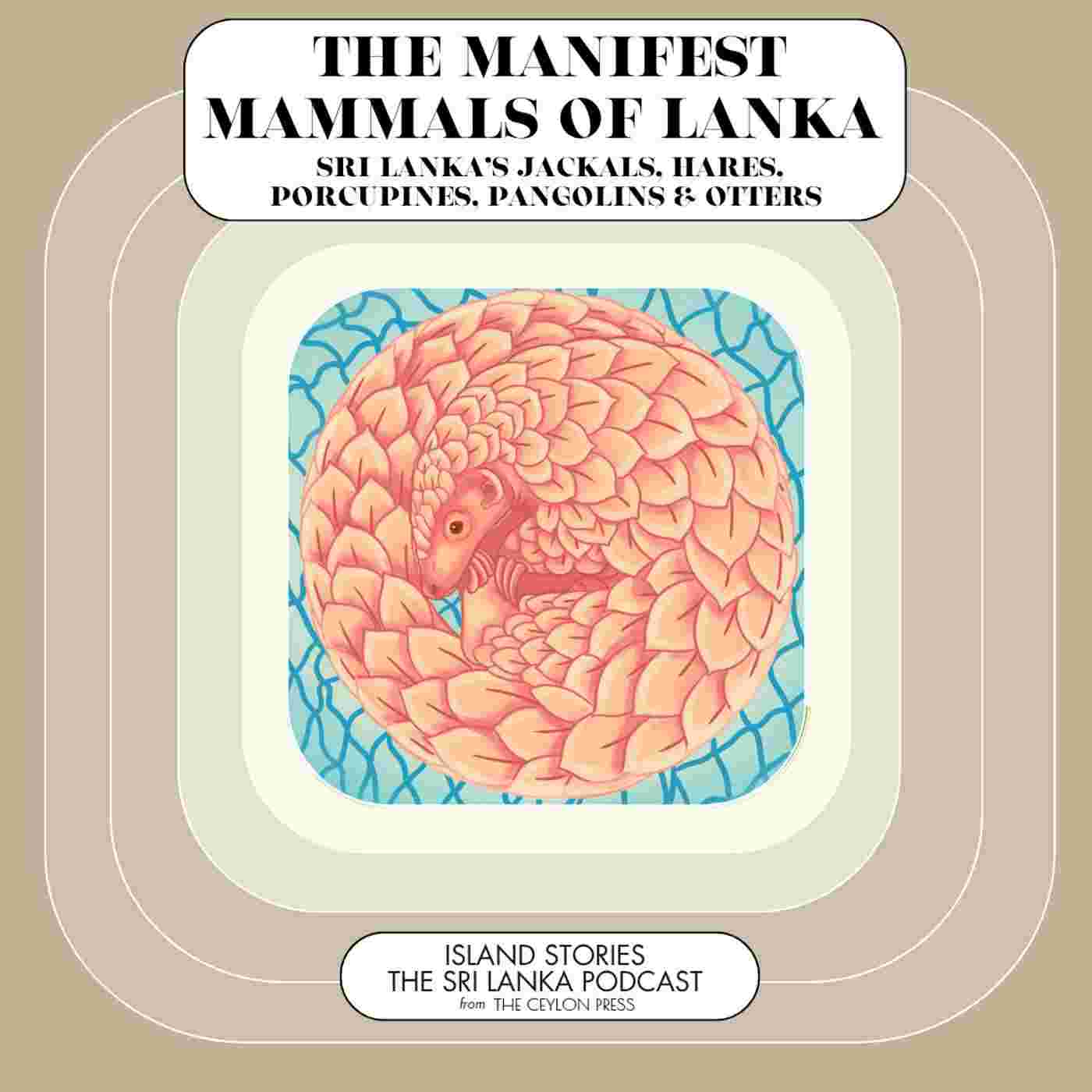
The most discerning of mammal spotters in Sri Lanka pursue neither the elephant, monkey nor leopard. Instead, they seek encounters with those five mammals that live in plain sight almost everywhere – the ones that can be spotted from a tuk tuk, a veranda, a city park, or riverbank. Free of drama, subterfuge, or infuriating modesty, all five can be added daily – indeed, repeatedly – to that invisible and life affirming tally that tips life just a little further away from the claustrophobic norms of humankind.
The first and most common of these creatures is the porcupine, known to the consternation of proto nationalists as the Indian Crested Porcupine. It is found is found right across Sri Lanka - and India.
Nikita Khrushchev, the bombastic Russian leader, was unexpectedly wise to the beast, stating to his enemies that “if you start throwing hedgehogs at me, I shall throw a couple of porcupines under you.“ Up to three feet long and sixteen kilos in weight, they are, like Khrushchev, highly territorial.
When their feel threated or their territory is unacceptably encroached upon, their sharp quills will spring up, and they will go on the attack. Nocturnal, and usually hidden in the burrows that are their homes, they are eager consumers of bark, fruit, berries, vegetables and almost most plants in gardens and plantations. Gratifyingly monogamous, their pregnancies last eight months and the two to four cubs that are born live on with the parents until they are two or three years old.
Fossilised records from thousands of years ago show that the present porcupine once had an ancestor similar though smaller to its form today, the Hystrix Sivalensis Sinhaleyus. No linguist has yet come forward to show whether or not this antique version of today’s porcupine would have been able to talk to its modern heir. But it is more than likely, not least because the language of porcupines is far removed from the vagaries that force most human languages to bend, evolve, or corrupt.
Even when alone porcupine are astonishingly chatty and keep themselves entertained with a wide range of grunts, whines, moans, snorts, and murmurs. Inter porcupine communication happens more naturally at the mating season, a time joyfully characterised by shattering shrieks and screams. Wailing and a clattering of teeth is a racket saved for predators. For one-on-one inter porcupine fights – more common when two males are in ardent courtship of a single female, they will add to their usual litany of noises a deafening set of howls and screams.
Pangolins, however, the second of the island’s manifest mammals, or scaley anteaters as they are also called, have an almost wholly different array of sounds that they use to get through their day. Of the many blessings given to them by the good lord, sight, sadly, was not one of them. Their tiny eyes are covered by the thickest of eye lids - a sort of anti-termite defence – and their vision is poor to myopic. It semes that as the animal because ever more nocturnal, its eyesight decreased accordingly, proving once again that evolution, unlike one’s bank account, can always keep up with events.
It is sound and smell therefore that gives the beast all the guiding lights it needs to flourish. Their hearing is acute and their noses, bristling with the most powerful of scent sensors, sit at the end of exceptionally long snouts. They can find their way into ant or termite nests, however far underground, eyes closed. Given that their sticky tongues can stretch for almost 28 inches, the blighted insects have little option but to surrender themselves gracefully as supper – some 70 million a year per pangolin, on the count of one exhausted scientist.
On the auditory front the pangolin repertoire of sound is all hisses, whimpers, snuffles, and sniffs – a breathier orchestration when compared to porcupines. If disturbed, they hiss and chuff in deep breaths. Snorting is often used in place of hallo to a fellow pangolin, and happy contented grunts accompany their dining.
Pangopups are much given to whimpering as a way of communicating with their mothers though no one has yet deciphered the sheer variety of whimpers recorded in order to ascertain what sort of whimper is slated for what sort of inter family statement. Pregnancies last around two months and the pangopup (for there is usually only one) gets carried on its mother’s tail until it is able to move around confidently.
Pangolins reserve their most arresting sound for when they are most really alarmed. Curling themselves into a ball they will rubs their hard scales together to generate a unique jungle maraca commotion. This is often accompanied by the ejection of an exceptionally noxious acid smelling liquid distilled in glands near their anus. It is hard to clean off, the obvious lesson being, never shock a pangolin, especially before a date.
But of course the most immediately exciting thing about spotting a pangolin is not their smell or sound – but their looks. Clothed in dexterous overlapping and generously rounded scales, they are a unique cross between an architectural marvel, a desert tank, and a Viking warrior clad in chain mail.
Measuring some fix feet nose to tail, pangolins make their home in burrows in rainforest and grassland and even modest hill country - right across the Indian subcontinent and all across Sri Lanka. Even so, they may soon drop off the Manifest Mammals list as they have become increasingly threatened – as much by the habitat loss that is affecting almost all animals on the island, as by illegal poaching. Its meat is seen as a luxurious bush meat to jazz up the jaded appetites of decadent diners. And its scales are prized in Chinese and traditional medicines for all manner of disorders for which there is not a single shred of supporting or validating evidence. It skins are routinely butchered into rings, charms or crafted in grisly leather goods, like boots and shoes that shame their wearers more than they might be if caught dancing naked down Galle Face Green on the top of big red bus.
Such predatory and pointless threats are more understandably avoided by the third of the island’s manifest mammals – the jackal with whom the word cherish has yet to find much of a home. “It is far better,” wrote Tipu Sultan, shortly before being killed by the future Duke of Wellington in Srirangapatna in 1799, “to live like a lion for a day then to live like a jackal for hundred years”.
The Sultan, who of course, saw himself as the lion, was merely channelling the unrelentingly poor press that jackals have endured since recorded time - in Arabic holy writ, the Bible; even in Buddhist Pali literature which depicts them as inferior, greedy, cunning creatures.
Despite accruing the sort of headlines beloved of the Daily Mail, the Sri Lankan Jackel is second only to the Leopard in the pecking order of island predators. And Sri Lankan it is, to its very paws, for the Sri Lankan jackal differences from its Indian cousin, the Soutth Indian Golden Jackal, by virtue of its marginally greater size, the rooted lobe on the inner side of the third upper premolar (a peculiarity to capture the attention of the more discerning spotters) and a darker less shaggy coat all round.
It is a skilled hunter, and, like a wolf, a pack animal that will eat anything from rodents, birds, and mice to young gazelles, reptiles, and even fruit. It is also an admirable scavenger, good a...