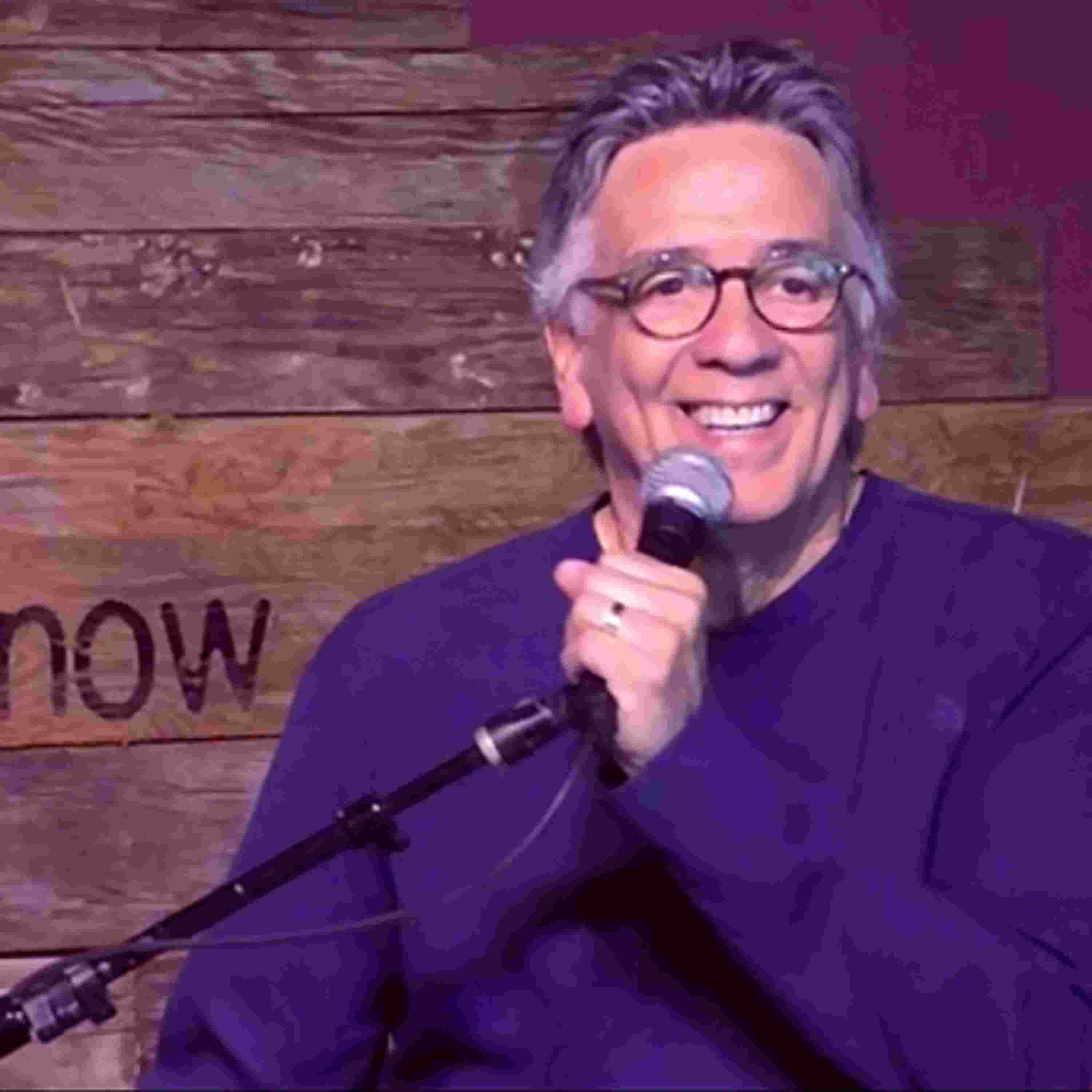
Dave Brisbin 12.28.25
Before he sails off to the Trojan war, Thetis tells her son Achilles that if he stays home, he will find peace. Will marry a wonderful woman and have children and grandchildren who will love him and remember his name. But when they are all dead, his name will be forgotten. If he goes to Troy, he will find such glory that his name will never be forgotten. But he will not come back, and his mother will never see him again.
Obviously, he went or we wouldn’t be talking about him. The world remembers those who do great things, leave a legacy of spectacularly big things. But such legacies always come at a price. Did Achilles make the right choice? Is the building of a legacy that lives beyond the generations we actually touch more important than what happens within them? Such choices are not binary, of course. If we’re consciously careful, we can have at least some elements of both.
But where do we find real meaning in life?
If all our focus is on not yet, imaginings of a great legacy, Solomon, traditional writer of Ecclesiastes has a Hebrew word for all our efforts: hevel. Vain, futile, meaningless, of no purpose or profit…chasing after the wind. After acquiring and accomplishing everything possible in a human lifetime, he writes, Meaningless! Everything is meaningless. Generations come and generations go…no one remembers the people of old, and even those yet to come will not be remembered by those who follow them. Sounds brutally depressing. Sounds like giving up, but it’s not.
It’s redirection.
Where do we find real meaning? In a legacy the world remembers even as we, the builders, are forgotten? Something more immediate? The question places us right at the crux of life. Solomon realizes that there is nothing better than for us to be glad and do good while life is in us, take our food and drink and have joy in our work. He’s saying all that matters is contained in this moment and nowhere else. Even if we work to build a lasting legacy, if we’re immersed in the joy of the work itself and those with us, we find meaning. Because in the end, the only legacy that matters is a legacy of little things.
All content for theeffect Podcasts is the property of David Brisbin and is served directly from their servers
with no modification, redirects, or rehosting. The podcast is not affiliated with or endorsed by Podjoint in any way.
Dave Brisbin 12.28.25
Before he sails off to the Trojan war, Thetis tells her son Achilles that if he stays home, he will find peace. Will marry a wonderful woman and have children and grandchildren who will love him and remember his name. But when they are all dead, his name will be forgotten. If he goes to Troy, he will find such glory that his name will never be forgotten. But he will not come back, and his mother will never see him again.
Obviously, he went or we wouldn’t be talking about him. The world remembers those who do great things, leave a legacy of spectacularly big things. But such legacies always come at a price. Did Achilles make the right choice? Is the building of a legacy that lives beyond the generations we actually touch more important than what happens within them? Such choices are not binary, of course. If we’re consciously careful, we can have at least some elements of both.
But where do we find real meaning in life?
If all our focus is on not yet, imaginings of a great legacy, Solomon, traditional writer of Ecclesiastes has a Hebrew word for all our efforts: hevel. Vain, futile, meaningless, of no purpose or profit…chasing after the wind. After acquiring and accomplishing everything possible in a human lifetime, he writes, Meaningless! Everything is meaningless. Generations come and generations go…no one remembers the people of old, and even those yet to come will not be remembered by those who follow them. Sounds brutally depressing. Sounds like giving up, but it’s not.
It’s redirection.
Where do we find real meaning? In a legacy the world remembers even as we, the builders, are forgotten? Something more immediate? The question places us right at the crux of life. Solomon realizes that there is nothing better than for us to be glad and do good while life is in us, take our food and drink and have joy in our work. He’s saying all that matters is contained in this moment and nowhere else. Even if we work to build a lasting legacy, if we’re immersed in the joy of the work itself and those with us, we find meaning. Because in the end, the only legacy that matters is a legacy of little things.
Dave Brisbin 8.10.25
Central jail is a different world. Humorless guards, colorless surfaces, bolted down tables, stools. Time is wherever you are told to wait for as long as it turns out to be. I have plenty of time to take it all in. Unexpected energy, more family reunion than jail visit. Young women dressed up, made up, parents, grandparents, two girls next to me over the low, privacyless divider speaking fast and high, Spanish and English in same sentences. I spin on my stool to face the opposite wall of windows.
Young woman leaning into the glass speaking to a young man in his orange jumpsuit. The look in her eye, even from my angle, stops me. She could have been staring across white tablecloth and candlelight. Nothing else exists except the face in the glass. Like the prodigal son in an orange jumpsuit being hugged home, seems that Jesus, God, and the girl are all orange colorblind. No-fault love.
So what about justice? God is supposed to be just, right?
Well, we’re in a jail, so justice is grinding along, but Jesus understands that humans occupy two contexts at once. We live in macro groups, but our moment by moment encounters are micro, one on one. And though there is only one love, that love looks like justice in the macro and mercy and compassion in the micro. Because justice must rule in the macro—to lose fairness and equality is to lose the cohesion of the group. But justice becomes intolerance in the micro—mercy and compassion must define actual relationships.
Jesus and a girl at the jail are showing us how it works. Mercy within justice. Love shape-shifting through all of human experience. Though Jesus is always teaching from within a micro context, he respects the law and the macro justice it represents, but uses it as a guide, instruction—never an absolute instrument, never an excuse to miss the opportunity for mercy, for loving the person behind the glass. The young man will wear his orange jumpsuit however long justice requires, but if he keeps that look in his woman’s eyes, his soul will manage.
Isn’t that what we all need?
To see love and acceptance through the glass while still in our orange jumpsuits?
theeffect Podcasts
Dave Brisbin 12.28.25
Before he sails off to the Trojan war, Thetis tells her son Achilles that if he stays home, he will find peace. Will marry a wonderful woman and have children and grandchildren who will love him and remember his name. But when they are all dead, his name will be forgotten. If he goes to Troy, he will find such glory that his name will never be forgotten. But he will not come back, and his mother will never see him again.
Obviously, he went or we wouldn’t be talking about him. The world remembers those who do great things, leave a legacy of spectacularly big things. But such legacies always come at a price. Did Achilles make the right choice? Is the building of a legacy that lives beyond the generations we actually touch more important than what happens within them? Such choices are not binary, of course. If we’re consciously careful, we can have at least some elements of both.
But where do we find real meaning in life?
If all our focus is on not yet, imaginings of a great legacy, Solomon, traditional writer of Ecclesiastes has a Hebrew word for all our efforts: hevel. Vain, futile, meaningless, of no purpose or profit…chasing after the wind. After acquiring and accomplishing everything possible in a human lifetime, he writes, Meaningless! Everything is meaningless. Generations come and generations go…no one remembers the people of old, and even those yet to come will not be remembered by those who follow them. Sounds brutally depressing. Sounds like giving up, but it’s not.
It’s redirection.
Where do we find real meaning? In a legacy the world remembers even as we, the builders, are forgotten? Something more immediate? The question places us right at the crux of life. Solomon realizes that there is nothing better than for us to be glad and do good while life is in us, take our food and drink and have joy in our work. He’s saying all that matters is contained in this moment and nowhere else. Even if we work to build a lasting legacy, if we’re immersed in the joy of the work itself and those with us, we find meaning. Because in the end, the only legacy that matters is a legacy of little things.