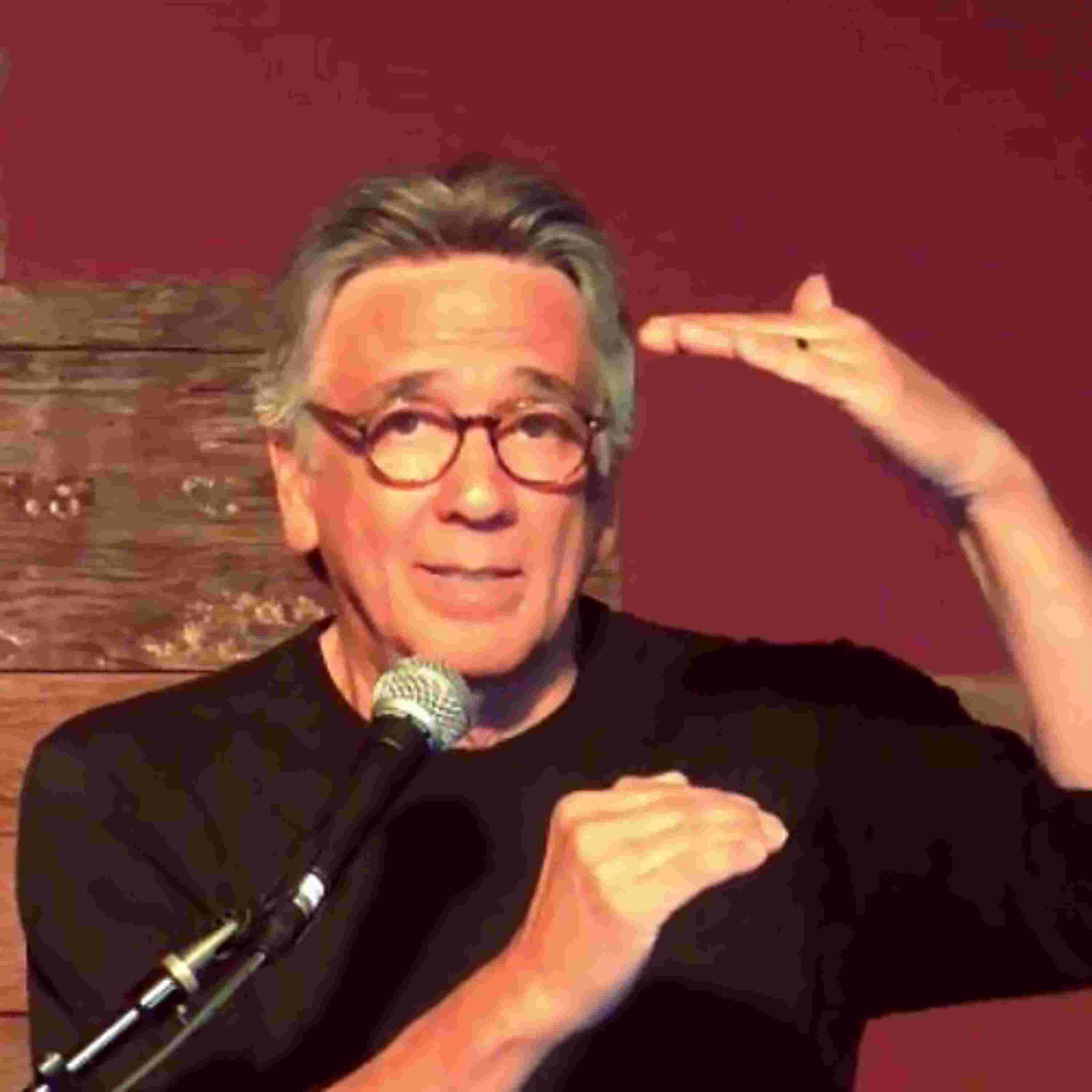
Dave Brisbin 12.28.25
Before he sails off to the Trojan war, Thetis tells her son Achilles that if he stays home, he will find peace. Will marry a wonderful woman and have children and grandchildren who will love him and remember his name. But when they are all dead, his name will be forgotten. If he goes to Troy, he will find such glory that his name will never be forgotten. But he will not come back, and his mother will never see him again.
Obviously, he went or we wouldn’t be talking about him. The world remembers those who do great things, leave a legacy of spectacularly big things. But such legacies always come at a price. Did Achilles make the right choice? Is the building of a legacy that lives beyond the generations we actually touch more important than what happens within them? Such choices are not binary, of course. If we’re consciously careful, we can have at least some elements of both.
But where do we find real meaning in life?
If all our focus is on not yet, imaginings of a great legacy, Solomon, traditional writer of Ecclesiastes has a Hebrew word for all our efforts: hevel. Vain, futile, meaningless, of no purpose or profit…chasing after the wind. After acquiring and accomplishing everything possible in a human lifetime, he writes, Meaningless! Everything is meaningless. Generations come and generations go…no one remembers the people of old, and even those yet to come will not be remembered by those who follow them. Sounds brutally depressing. Sounds like giving up, but it’s not.
It’s redirection.
Where do we find real meaning? In a legacy the world remembers even as we, the builders, are forgotten? Something more immediate? The question places us right at the crux of life. Solomon realizes that there is nothing better than for us to be glad and do good while life is in us, take our food and drink and have joy in our work. He’s saying all that matters is contained in this moment and nowhere else. Even if we work to build a lasting legacy, if we’re immersed in the joy of the work itself and those with us, we find meaning. Because in the end, the only legacy that matters is a legacy of little things.
All content for theeffect Podcasts is the property of David Brisbin and is served directly from their servers
with no modification, redirects, or rehosting. The podcast is not affiliated with or endorsed by Podjoint in any way.
Dave Brisbin 12.28.25
Before he sails off to the Trojan war, Thetis tells her son Achilles that if he stays home, he will find peace. Will marry a wonderful woman and have children and grandchildren who will love him and remember his name. But when they are all dead, his name will be forgotten. If he goes to Troy, he will find such glory that his name will never be forgotten. But he will not come back, and his mother will never see him again.
Obviously, he went or we wouldn’t be talking about him. The world remembers those who do great things, leave a legacy of spectacularly big things. But such legacies always come at a price. Did Achilles make the right choice? Is the building of a legacy that lives beyond the generations we actually touch more important than what happens within them? Such choices are not binary, of course. If we’re consciously careful, we can have at least some elements of both.
But where do we find real meaning in life?
If all our focus is on not yet, imaginings of a great legacy, Solomon, traditional writer of Ecclesiastes has a Hebrew word for all our efforts: hevel. Vain, futile, meaningless, of no purpose or profit…chasing after the wind. After acquiring and accomplishing everything possible in a human lifetime, he writes, Meaningless! Everything is meaningless. Generations come and generations go…no one remembers the people of old, and even those yet to come will not be remembered by those who follow them. Sounds brutally depressing. Sounds like giving up, but it’s not.
It’s redirection.
Where do we find real meaning? In a legacy the world remembers even as we, the builders, are forgotten? Something more immediate? The question places us right at the crux of life. Solomon realizes that there is nothing better than for us to be glad and do good while life is in us, take our food and drink and have joy in our work. He’s saying all that matters is contained in this moment and nowhere else. Even if we work to build a lasting legacy, if we’re immersed in the joy of the work itself and those with us, we find meaning. Because in the end, the only legacy that matters is a legacy of little things.
Dave Brisbin 7.27.25
Had a conversation with two devout Christians about Gaza. One believed Israel was committing genocide and saw no justification for their military action, nor for killing a human being under any circumstances. The other, heartbroken over civilian deaths, saw more nuance in Israel fighting for survival against an enemy hiding behind its civilians.
Two loving, sincere Christians using Jesus and scripture as guides came to very different conclusions.
Is there a “right” way to come to ethical decisions? There are three main families of ethical theory: consequentialism looks at the utility of an action—does it create the greatest good for greatest number? Deontology looks at moral duties, “categorical imperatives” that must be followed regardless of consequences. And virtue ethics looks at ideal human character, or a “virtuous agent” to guide ethical choices—WWJD, what would Jesus do?
Using Jesus as a virtuous agent, we still need to decide whether to focus on universal rules or the consequences we create. Was Jesus consequence or rule-based? As to scripture, which many Christians consider imperative, Jesus is not tied to literal meaning. He paraphrases, adapts passages to current situations as rabbis did then and still do. He interprets metaphorically, changes context, and only quotes passages that present God as the loving Abba he models with his life—practices many Christian scholars would not allow.
Jesus is not tied to the letter of the law, but to its purpose of preserving life and promoting God’s presence. His Sabbath violations are case in point. When he says the Sabbath was made for man, not man for the Sabbath, he’s flatly putting consequences over rules. Law and scripture serve to create the greatest good for the greatest number—never an end in themselves.
Jesus models his ethical decision-making, but even this is a guide, not a law. He brings full presence to each situation so he can best discern, guided by scripture and his Father’s love, what the greatest good requires in the moment. We can do no better. Yet we’ll often come to different conclusions.
It’s how we know we’re doing it “right.”
theeffect Podcasts
Dave Brisbin 12.28.25
Before he sails off to the Trojan war, Thetis tells her son Achilles that if he stays home, he will find peace. Will marry a wonderful woman and have children and grandchildren who will love him and remember his name. But when they are all dead, his name will be forgotten. If he goes to Troy, he will find such glory that his name will never be forgotten. But he will not come back, and his mother will never see him again.
Obviously, he went or we wouldn’t be talking about him. The world remembers those who do great things, leave a legacy of spectacularly big things. But such legacies always come at a price. Did Achilles make the right choice? Is the building of a legacy that lives beyond the generations we actually touch more important than what happens within them? Such choices are not binary, of course. If we’re consciously careful, we can have at least some elements of both.
But where do we find real meaning in life?
If all our focus is on not yet, imaginings of a great legacy, Solomon, traditional writer of Ecclesiastes has a Hebrew word for all our efforts: hevel. Vain, futile, meaningless, of no purpose or profit…chasing after the wind. After acquiring and accomplishing everything possible in a human lifetime, he writes, Meaningless! Everything is meaningless. Generations come and generations go…no one remembers the people of old, and even those yet to come will not be remembered by those who follow them. Sounds brutally depressing. Sounds like giving up, but it’s not.
It’s redirection.
Where do we find real meaning? In a legacy the world remembers even as we, the builders, are forgotten? Something more immediate? The question places us right at the crux of life. Solomon realizes that there is nothing better than for us to be glad and do good while life is in us, take our food and drink and have joy in our work. He’s saying all that matters is contained in this moment and nowhere else. Even if we work to build a lasting legacy, if we’re immersed in the joy of the work itself and those with us, we find meaning. Because in the end, the only legacy that matters is a legacy of little things.