
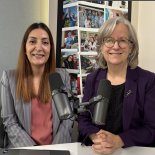
If you’re looking for a way to get more active throughout your day, exercise snacks may help get you moving. Health Disparities Researchers Karen Basen-Engquist, Ph.D., and Scherezade Mama, Dr.P.H., talk about how the short bursts of exercise can make a big difference in your overall health and fitness.
Learn more about Scherezade Mama, Dr.P.H.

Diagnosing appendix cancer can be a challenge. The disease often doesn’t have any symptoms in its earliest stages, and often, patients are initially misdiagnosed. Surgical oncologist Beth Helmink, M.D., Ph.D., and gastrointestinal medical oncologist John Paul Shen, M.D., discuss what’s causing more young adults to get this rare cancer and share the latest treatment advances.

Lymphoma is a general term for cancers that develop in the lymphatic system, which is part of the body’s immune system. There are dozens of subtypes of lymphoma, and a correct diagnosis is critical. Jason Westin, M.D., and Sairah Ahmed, M.D., discuss what patients should know when they’re first diagnosed, and possible treatments, including CAR T cell therapy.

Navigating the holiday season while you or a loved one is living with a cancer diagnosis can bring up conflicting emotions like gratitude and stress. Senior Social Work counselors Malory Lee and Traci Newsom discuss ways you can appreciate the holidays and find joy even when faced with cancer.

Leah Phillips was 43 years old when she was diagnosed with stage IV lung cancer after having a persistent cough for several months. Leah shares her treatment experience with Mara Antonoff, M.D., as they discuss why lung cancer should not be considered a smoker’s disease.

Andrew Hahn, M.D., and Pavlos Msaouel, M.D., Ph.D., discuss exciting new treatment options for renal cell carcinoma and what makes it different from other kidney cancers.
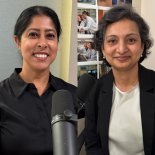
Breast cancer surgery can cause many physical and emotional changes throughout the course of treatment. Puneet Singh, M.D., and Deepti Chopra, M.B.B.S., discuss the ways surgery can impact a patient and how providers help patients navigate the changes.
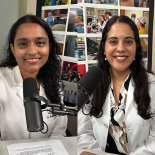
Weight loss injection drugs called GLP-1 agonists are gaining popularity for helping people lose weight. Jasmine Sukumar, M.D., and Sonali Thosani, M.D., discuss what effect these drugs can have on cancer patients and what emerging research has found.
Learn more about Sonali Thosani, M.D.

Using nicotine makes youth more vulnerable to nicotine addiction, worsening mental health problems and substance-use disorders. Jennifer Cofer, Dr.P.H., executive director of EndTobacco™, and Mark Moreno, senior vice president for Governmental Relations and Health Policy at MD Anderson Cancer Center, share tips for talking to children and teens about these dangers.

Cancer patients undergoing treatment may wonder if they could benefit from taking vitamins or dietary supplements. Meroë Morse, M.D., and Santhossi Narayanan, M.D., discuss common patient questions and some of the risks supplements pose.

Cancer patients often need help and encouragement throughout treatment and survivorship. Clinical Program Manager Lauren Adams and Social Work Counselor Cindy Parker share how you can offer impactful support and why actions are sometimes stronger than words.

Advance care planning for end of life is more than just filling out legal forms. Ryan Huey, M.D., and Melanie Cavazos break down the important conversations patients and caregivers should also consider having throughout the process.

Summer is a great time to get outdoors and enjoy seasonal activities, but cancer patients are particularly vulnerable to the sun and heat. Radiation oncologist Pamela Schlembach, M.D., and dermatologist Hung Doan, M.D., Ph.D., share hydration and sunscreen tips to help people undergoing cancer treatment stay healthy.
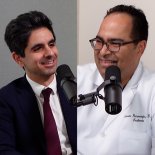
Leukemia includes many different disease types, and unlike most solid tumors, it requires unique approaches to monitor how well treatment works. Naveen Pemmaraju, M.D., and Fadi Haddad, M.D., explain how minimal residual disease, or MRD, is helping doctors monitor leukemia more precisely and personalize treatment. Learn how it’s used across leukemia types and what the future of MRD research could mean for patients.
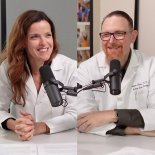
Patients with head and neck cancer often face challenging treatment side effects that can impact speaking, swallowing, taste and nutrition. These changes can affect everyday life and emotional well-being. Kate Hutcheson, Ph.D., and Clifton David Fuller, M.D., Ph.D., discuss how personalized supportive care can help preserve function and improve quality of life.

Many cancer patients may expect life to go back to “normal” once treatment ends but life after cancer can involve physical, emotional and social challenges.
Michael Roth, M.D., and Wendy Griffith discuss myths and misconceptions of survivorship and strategies to help survivors thrive.

A recent American Cancer Society study found the rate of incidence cancer incidence for women under 50 has risen above men’s. Therese Bevers, M.D., and Abenaa Brewster, M.D., share what symptoms women should look for and why regular cancer screenings, such as mammograms and Pap tests, are so important to find cancer early, when it's easiest to treat.
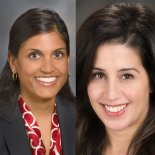
Epidermal Growth Factor Receptor (EGFR) inhibitors are effective treatments for certain cancers, such as lung and colorectal cancer. However, they frequently cause skin-related side effects that can impact patient quality of life and adherence to treatment. Anisha Patel, M.D., and Christine Parseghian, M.D., discuss why these skin side effects occur, introduce a potential new treatment option, and share practical tips to help patients manage them.

Cell therapy is an emerging treatment option for patients with certain types of blood cancers, such as lymphoma and multiple myeloma. Scott Kopetz, M.D., Ph.D., and Katy Rezvani, M.D., Ph.D., break down the different ways to engineer cells for certain disease types and discuss the advancements that may help patients get treatment sooner.

Many members of the sandwich generation struggle with caring for a parent with cancer while also raising their own children. Senior social work counselors Tatiana Fincham and Mary Dev provide advice on how to manage the many responsibilities parents and caregivers encounter, and share personal experiences.