
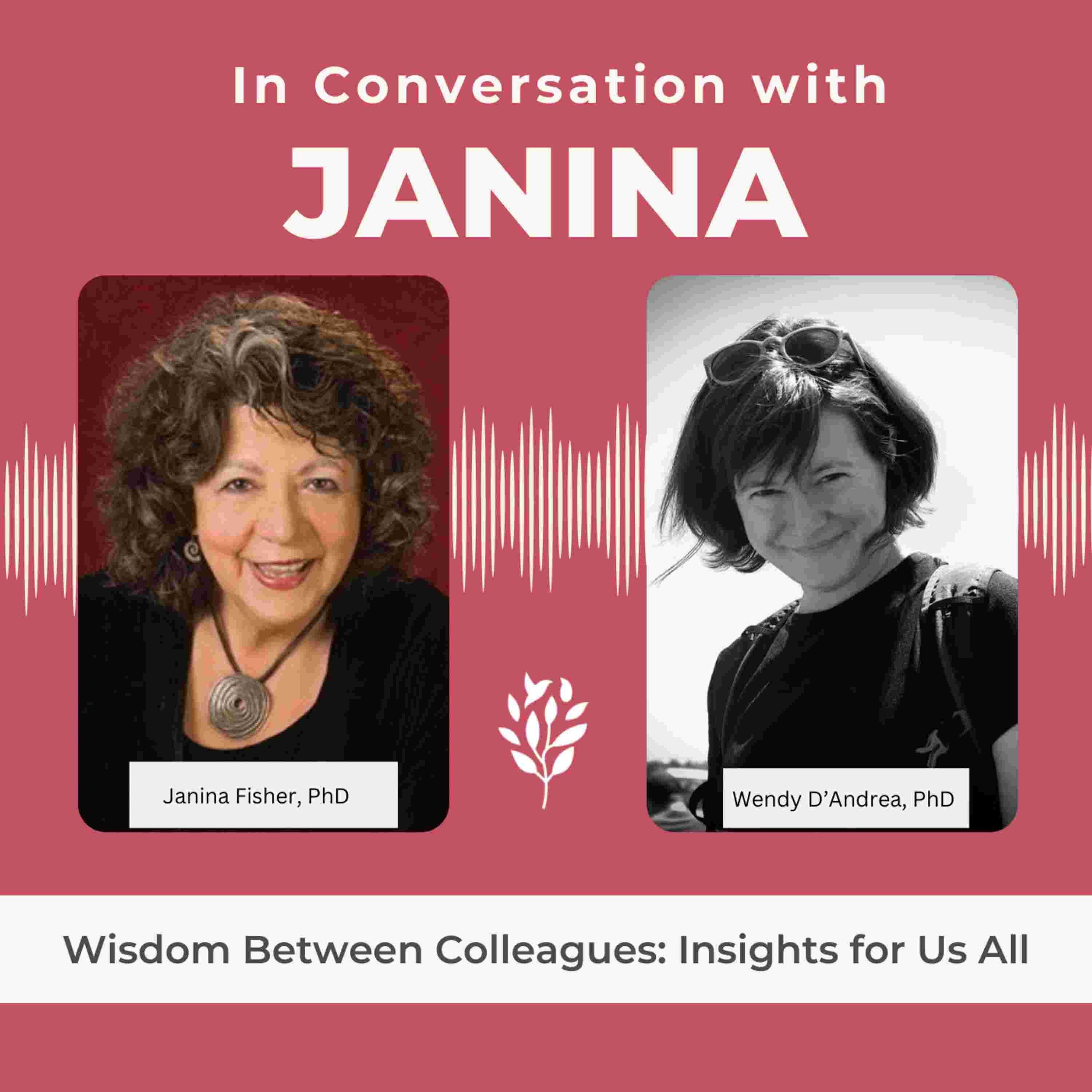
In this thoughtful and provocative episode, Janina Fisher, PhD, sits down with Wendy D’Andrea, PhD—research psychologist, clinician, and Chief Scientific Officer of the Trauma Research Foundation—to explore a timely and often misunderstood question in the world of psychotherapy:
Who gets to define what healing looks like—and who is left out of the conversation?
Wendy and Janina unpack the persistent divide between researchers and clinicians, questioning how we define "evidence," who decides what counts as success, and why many trauma survivors don't benefit from the treatments that look most effective on paper.
With humor, warmth, and critical insight, they explore:
Why clinicians are often discouraged from participating in research—and how to change that
How research literacy makes better therapists, not just better scientists
The pitfalls of prolonged exposure therapy, especially for clients with complex trauma or multiple traumatic exposures
Why “reduction in PTSD symptoms” doesn’t always mean a better life
The disconnect between what gets measured in research and what actually matters to clients (like shame, intimacy, or feeling safe enough to hug your child)
How cultural mistrust and racial bias shape access to and outcomes in trauma care
The limitations of a one-size-fits-all approach to trauma treatment—and the urgent need for relational, nuanced, and individualized care
Why creating research that’s relational, co-created, and clinically relevant is the next frontier
Wendy shares her experience as a first-generation college student-turned-researcher, navigating a system that values intellectual authority over lived experience—and how that journey shaped her commitment to making research accessible, collaborative, and human.
Together, she and Janina imagine a future where:
Clinicians are empowered to ask research questions that come from the heart
Researchers speak in language that clinicians and clients can understand
Evidence-based practice doesn’t mean ignoring the client’s voice, culture, or nervous system
Therapeutic approaches are evaluated not just by symptom reduction, but by emotional resonance, relational impact, and lived transformation
As Wendy puts it:
“Researchers need clinicians to know what’s true in their data—and clinicians need research that respects the complexity of human suffering.”
This conversation is a must-listen for therapists, supervisors, and researchers who are ready to move beyond the tired binary of “data vs. intuition”—and instead build a bridge rooted in curiosity, collaboration, and compassion.
If you’ve ever wondered why the most “evidence-based” treatments don’t always work—or how we might build a better future for trauma therapy—this episode offers a critical, hopeful starting point.
Dr. Wendy D'Andrea is a clinical psychologist with expertise in trauma, psychobiology, and healing. After completing degrees at Oberlin College and the University of Michigan, and postdoctoral specialty training in trauma treatment with Bessel van der Kolk at the Trauma Center, she joined the New School for Social Research and Lang College in 2010. Since joining the New School, she has taught classes on psychopathology, trauma, research methods, and treatment, and her lab has become a vibrant working collective producing over 50 publications with student collaboration. She is also a thought leader in the field of trauma, working as the Chief Science Officer for the Trauma Research Foundation, leading forward the integration of science and practice, and brings a strong interest in understanding processes like embodiment, interpersonal connection, and self-expression in venues such as theater, dance, sport, humanitarian work, and therapy.