Home
Categories
EXPLORE
True Crime
Comedy
Business
Society & Culture
History
Sports
Technology
About Us
Contact Us
Copyright
© 2024 PodJoint
00:00 / 00:00
Sign in

or

Don't have an account?
Sign up
Forgot password
https://is1-ssl.mzstatic.com/image/thumb/Podcasts4/v4/cd/b7/d7/cdb7d7a0-e3a3-ac25-7619-9d31f5630861/mza_7623930924450081061.jpg/600x600bb.jpg
IP Fridays - your intellectual property podcast about trademarks, patents, designs and much more
Rolf Claessen and Ken Suzan
100 episodes
2 weeks ago
intellectual property including trademarks, patents and desgins – the latest news, useful tools
Show more...
Business
Technology,
News,
Tech News
RSS
All content for IP Fridays - your intellectual property podcast about trademarks, patents, designs and much more is the property of Rolf Claessen and Ken Suzan and is served directly from their servers with no modification, redirects, or rehosting. The podcast is not affiliated with or endorsed by Podjoint in any way.
intellectual property including trademarks, patents and desgins – the latest news, useful tools
Show more...
Business
Technology,
News,
Tech News
Episodes (20/100)
IP Fridays - your intellectual property podcast about trademarks, patents, designs and much more
Valuation of Intellectual Property Rights – Damages in Infringement Cases – Interview with Brian Buss – Happy Holidays! – IP Fridays – Episode 170
2 weeks ago
29 minutes 20 seconds

IP Fridays - your intellectual property podcast about trademarks, patents, designs and much more
The Current State of the Unified Patent Court (UPC) – Interview With Prof. Aloys Hüttermann – Comparison With the US and China – Strategies for Plaintiffs and Defendants – Learnings From Key Cases – Cross – Border Litigation With the UPC – Top Mistakes of Plaintiffs and Defendants at the UPC – IP Fridays – Episode 169
1 month ago
49 minutes 55 seconds

IP Fridays - your intellectual property podcast about trademarks, patents, designs and much more
Interview With Wole Araromi About the Registration and Enforcement of Trademarks in Nigeria – the Future of the PTAB in the US – UPC Anti-Interim-License Injunction – Personal Liability on Patent Infringement Cases – Episode 168 – IP Fridays


I am Rolf Claessen and you are listening to episode 168 of our podcast IP Fridays! My co-host Ken Suzan has interviewed Wole Araromi about the registration and enforcement of trademarks in Nigeria.


But before we jump into this great interview, I have news for you:


The U.S. patent system is currently undergoing significant changes. The new USPTO Director, John Squires, is taking a hands-on approach to the inter partes review (IPR) process. As of October 20, he announced that he will personally decide on all IPR and post-grant review (PGR) cases, removing this authority from the PTAB panels. At the same time, the USPTO published a proposed rule introducing mandatory exclusion criteria for IPR petitions. These measures—accompanied by a wave of discretionary denials since early 2025—are aimed at strengthening the position of patent holders and limiting review procedures that have often favored defendants. In practice, this is expected to significantly reduce the number of new IPR filings and marks a politically driven policy shift in favor of patent owner rights.


Meanwhile, U.S. patent legislation remains in flux. Republican Congressman Thomas Massie has announced that he will reintroduce the RALIA bill (“Restoring America’s Leadership in Innovation Act”). If passed, it would bring sweeping changes: the Patent Trial and Appeal Board (PTAB), established only in 2012, would be abolished, the U.S. system would revert to a first-to-invent regime, and the automatic publication rule for patent applications would be repealed. According to Massie, the goal is to roll back what he views as harmful reforms of the past decade and provide stronger protections for inventors. However, observers doubt whether this proposal has any realistic chance of becoming law—competing bills like the Patent Eligibility Reform Act are already more advanced, and full abolition of the PTAB is seen by many as politically unfeasible.


On the international stage, a novel patent dispute over FRAND licenses made headlines. For the first time, the Unified Patent Court (UPC) and the Munich Regional Court issued an “anti-interim-license” injunction in favor of patent holder InterDigital, aiming to prevent Amazon from obtaining a compulsory license in the UK. The response from London was swift: the High Court (Mr. Justice Meade) issued an “anti-anti-suit injunction,” prohibiting InterDigital from interfering with Amazon’s license proceedings in the UK. This cross-border legal standoff over standard-essential patents (SEPs) illustrates the increasing complexity between the UPC and national courts in the global FRAND litigation landscape.


There was also a noteworthy win for patent holders in Germany. In a patent infringement case concerning refill cassettes for diaper disposal systems, the Düsseldorf Higher Regional Court upheld an injunction against a Polish imitator. The company Sonesta and its former managing director were prohibited from offering the film refill sets in Germany without clearly indicating that their use was only allowed with permission from the patent holder (Angelcare/IRC). Notably, the court confirmed the personal liability of the former managing director, as she had acted as the responsible seller on the sales platform. This ruling strengthens the rights of patent owners and highlights that even individuals can be held liable if they knowingly facilitate IP-infringing conduct in a managerial role.
Show more...
2 months ago
24 minutes 12 seconds

IP Fridays - your intellectual property podcast about trademarks, patents, designs and much more
Interview With Prof. Karsten Lemmer – German Aerospace Center DLR – Licensing, Startups and IP Strategy For a Large Research Institution in Germany – IP Fridays – Episode 167


Interview with Prof. Karsten Lemmer, Executive Board Member of the German Aerospace Center DLR responsible for ‘Innovation, Transfer and Research Infrastructure’.


ECJ strengthens enforcement of national trademarks across borders: In its ruling C-76/24, the ECJ clarified that trademark owners can also take action against trademark-infringing goods if these are located in another member state—provided that they are intended to be offered or placed on the market in the country of protection. This does not weaken the principle of territoriality, but significantly strengthens the scope of injunctive relief: it is sufficient for the goods to be located abroad, as long as the intention to market them in the country of protection can be proven. In addition, the ECJ clarified that the term “possession” in Article 10(3)(b) of the Trademark Directive does not only cover direct possession. Indirect possession is also sufficient if the person concerned actually exercises control over the goods through supervisory or management authority (e.g., in the case of Amazon). In practice, this means that trademark owners can take more effective action against cross-border supply chains and online retailers, even if they store their goods abroad or have them managed by third parties. The ruling thus significantly extends liability and closes existing gaps in online and platform trade.


Germany slips in innovation index: In WIPO’s new Global Innovation Index 2025, Germany has fallen from 9th to 11th place


and is thus no longer among the top 10 most innovative economies for the first time. Although the study attests to Germany’s strengths in traditional technology products, exports, and science, it also reveals weaknesses in digitalization and start-up culture. DPMA President Eva Schewior urges that the enormous research potential be translated much more effectively into protected innovations and new business models.


Boom in agricultural patents: According to a new technology report by the EPO, digital agricultural technologies are growing three times faster than the average for all technology fields. The report highlights that smart farming plays a key role in addressing food and climate challenges. Networked sensor technology, AI-supported precision farming, and new breeding techniques are leading to a sharp increase in patent applications in the agricultural sector.


Change at the top of the USPTO: In the US, the Senate confirmed John Squires as the new director of the US Patent and Trademark Office (USPTO) on September 18. Squires, an experienced patent attorney with a focus on AI and fintech, takes over from interim director Coke Morgan Stewart. He has announced plans to reduce the patent backlog with digital tools and push ahead with reforms in patent law—for example, through increased use of AI in examinations. His term of office comes at a critical time, as global innovation competition and new technologies (especially AI) are having a growing impact on the patent system.


Remote Work at the USPTO is on the Chopping Block: resident Trump issued an executive order on August 28, 2025, excluding the USPTO’s entire Patents business unit from federal collective bargaining protections.  The executive order would effectively lead to a termination of remote work at the USPTO. Many examiners are expected to resign.
Show more...
3 months ago
26 minutes 30 seconds

IP Fridays - your intellectual property podcast about trademarks, patents, designs and much more
Update UK Trademark Caselaw – Doctrine of Postsale Confusion – Interview With Joshua Cunnington – Lutnick Suggests 5% Patent-Value Fee – UPC Court of Appeal Does Not Endorse Referral to the CJEU – IP Fridays Podcast – Episode 166


I am Rolf Claessen and my Co-Host Ken Suzan and I are welcoming you to episode 166 of the IP Fridays Podcast. Today’s interview guest is Joshua Cunnington, who is Managing Associate at Stephenson Harwood in the UK. My Co-Host Ken Suzan talks with him about an update on Trademark Caselaw in the UK, e.g. the Doctrine of Postsale Confusion.


Before we jump into the interview, I have news for you


The U.S. Patent and Trademark Office (USPTO) has removed more than 52,000 fraudulent trademark applications and registrations from the register. On August 6, 2025, the agency sanctioned a foreign filing firm that had submitted large numbers of applications using forged signatures, fake attorney identities, and manipulated specimens of use.


Reports from the United States describe an unusual funding proposal: according to the Wall Street Journal, Commerce Secretary Lutnick is considering imposing a levy of 1% to 5% of a patent’s value on patent owners. This possible “patent-value fee” would raise additional budget funds. Details remain unclear, and the idea is already stirring controversy in the IP community.


On August 4, 2025, the USPTO’s patent division issued new guidance on the patent eligibility of AI and software inventions. The “Kim Memo” stresses that examiners should not hastily label software-related claims as abstract ideas. Instead, all claim elements should be evaluated together; where eligibility is uncertain, no Section 101 rejection should be made absent clear exclusionary grounds.


In its first costs decision, the Unified Patent Court (UPC) Court of Appeal dismissed Expert klein’s appeal and declined to refer questions to the CJEU. The judges confirmed that applications for costs must be filed no later than one month after judgment and saw no reason to seek guidance from the CJEU. It seems that the Court of Appeal generally rejects the idea that decisions of the UPC could potentially be brought before the CJEU.
Show more...
4 months ago
24 minutes 38 seconds

IP Fridays - your intellectual property podcast about trademarks, patents, designs and much more
Interview With J. Christian Wichard, Deputy Director General at the German Federal Ministry of Justice and Consumer Protection in Germany – History of the Unified Patent Court (UPC) – Important Changes in IP Law in Europe – the EU IP Reform Package – Copyright and AI – Remuneration of Creators in the Platform Economy – IP Fridays Podcast – Episode 165


I am Rolf Claessen and my co-host Ken Suzan and I are welcoming you to episode 165 of our IP Fridays podcast!


Today’s interview guest is Christian Wichard, who is the Deputy Director General of at the Federal Ministry of Justice and Consumer Protection and he has been doing that for about 14 years, with a short brek from 2009 to 2014, where he as Deputy Director General at the WIPO. He is overseeing all legislative efforts of the German government related to intellectual property and we talk about many interesting topics. He had large contributions to the becoming of the Unified Patent Court, we talk about the role of AI in IP, about new reforms in the IP world. Stay tuned for this interesting interview!


Before we jump into this interview, I have news for you:


The USPTO has launched DesignVision, the first AI-powered image search tool available to design patent examiners through the Patents End-to-End (PE2E) system. This tool uses artificial intelligence to support prior art searches in design patent examination and is part of the agency’s broader efforts to modernize workflows and reduce pendency.


In Europe, the EPO’s Enlarged Board of Appeal issued a much-anticipated decision in G 1/23 on July 2. The Board clarified that a product already on the market before the filing date of a European patent application cannot be excluded from the state of the art under Article 54(2) EPC merely because its internal structure or composition could not be analysed or reproduced. Furthermore, any technical information about that product that was publicly available before the filing date forms part of the state of the art—regardless of whether the product itself could be reverse-engineered.


Just weeks earlier, on June 18, the same Board issued another important decision in G 1/24, ruling that claims must always be interpreted in the context of the description and drawings—not only when ambiguities arise. This decision aligns EPO practice more closely with that of the Unified Patent Court and is a major step toward harmonization.


Speaking of the UPC, its case management system (CMS) transitioned to a new platform between July 3 and July 8. During the switchover, certain functionalities—like opt-out requests and representative registrations—were temporarily limited. Since July 8, all filing capabilities have resumed, supported by updated FAQs and training materials.


Finally, the EUIPO has expanded its mediation service to cover all inter partes proceedings in the areas of trademarks and designs. As of June 2, 2025, parties in opposition or invalidity proceedings can now opt into mediation free of charge, fully online, and on a voluntary basis.


Now let’s jump into the interview:


In this episode of IP Fridays, Rolf Claessen speaks with J. Christian Wichard, Deputy Director General at the German Federal Ministry of Justice and Consumer Protection. Wichard has been one of the most influential figures in shaping intellectual property law and policy in Germany and Europe over the past two decades.


He reflects on the most significant developments in European IP law during this time. First and foremost is the creation of the Unitary Patent and the Unified Patent Court (UPC), which he describes as a historic milestone for patent protection and enforcement across Europe. He explains why this new system makes litigation more accessible, enhances legal certainty, and strengthens Europe’s competitiveness.


The second major development he highlights is the EU Directive on Copyright in the Digital Single Market,
Show more...
5 months ago
46 minutes 49 seconds

IP Fridays - your intellectual property podcast about trademarks, patents, designs and much more
AI Tools For IP Lawyers – Cost Savings – Real World Examples – Human Oversight – Interview With Arthur Rothrock and Nicholas Sarokhanian – EPO Enlarged Board of Appeal Decision G1/24 Regarding Patent Claims – USPTO Discontinuing Accelerated Examination For Utility Patents – Octoberfest Decision of the European Court of Justice – IP Fridays – Episode 164


I am Rolf Claessen and my co-host Ken Suzan and I are welcoming you to episode 164 of our podcast IP Fridays!


Today’s interview guests are Arthur Rothrock and Nicholas Sarokhanian. My co-host Ken Suzan talks with them about AI tools for IP lawyers.


Arthur Rothrock https://www.linkedin.com/in/rothrocka/


Nicholas Sarokhanian https://btlaw.com/en/people/nicholas-sarokhanian


Before we jump into the interview, we have news for you!


The USPTO is discontinuing Accelerated Examination program for utility applications.


The USPTO is currently facing staff-related challenges including a hiring freeze, which seems to just have ended, return-to-office mandates, and potential attrition due to these policies. These issues seem to impact employee morale, potentially increasing the backlog of unexamined patents, and creating uncertainty about the future of the agency.


The USPTO has experienced a significant leadership vacuum following abrupt emails earlier this February encouraging early retirement of all Federal employees, and an unusual level direct outside communication and control of employees from OPM/DOGE.


The first office action pendency for patents increased from 19.9 months in 2024 to 23.4 months in May 2025.


On 19 June the CJEU opened oral argument in the “Oktoberfest” trademark dispute. Munich is defending its EU mark against the EUIPO, and the coming judgment could redefine the protectability of geographic event titles.


On 18 June the EPO’s Enlarged Board in G 1/24 confirmed that claims are the starting point of examination, yet description and drawings must always be consulted for the  interpretation of the claims, bringing EPO practice closer to UPC jurisprudence.


Meanwhile representatives of all 39 EPC member states met the EPO in Reykjavík to discuss IP-backed financing tools aimed at giving research-intensive SMEs better access to capital.


Since 11 June, the EPO has also been offering its “Deep Tech Finder” as an iOS and Android app. The application links patent data with the financial metrics of European start-ups and facilitates cooperation between mid-sized companies, investors, and universities.


In this episode of IP Fridays, co-host Ken Suzan welcomes two distinguished guests to explore one of the most dynamic and fast-moving topics in the legal field: Artificial Intelligence (AI) tools for IP lawyers.


Arthur Rothrock, co-founder and CEO of Legion, and Nicholas Sarokhanian, Chair of the Artificial Intelligence Practice at Barnes & Thornburg LLP, join the podcast to discuss how AI is transforming the way intellectual property lawyers work—today and in the near future.


Meet the Guests


Arthur Rothrock is the founder of Legion, a legal tech startup offering an AI-powered litigation support platform. It helps attorneys draft pleadings, discovery responses, motions, and other legal documents. Arthur is also the host of the Legal Entrepreneur Podcast and brings a strong background in legal innovation.


Nicholas Sarokhanian leads the AI Practice Group at Barnes & Thornburg and is based in Minneapolis. He is a recognized thought leader on generative AI, large language models (LLMs),
Show more...
6 months ago
35 minutes 35 seconds

IP Fridays - your intellectual property podcast about trademarks, patents, designs and much more
Interview with Lucy Wojcik, Chief Intellectual Property Counsel at OCADO GROUP – Cross-Border Patent Litigation – In-House Organization of IP Teams – Agile IP – IP Fridays Podcast – Episode 163


My Co-Host Ken Suzan and I are welcoming you to episode 163 of our podcast IP Fridays! Today’s interview guest is Lucy Wojcik, who is Chief Intellectual Property Counsel at OCADO GROUP PLC, and we talk about cross-border patent litigation, in-house organization of IP teams, agile IP and much more! Lucy has just been inducted into the IP hall of fame.


But before we jump into this very interesting interview, I have some news for you.


On May 22, the European Commission released its biennial report on the protection and enforcement of intellectual property rights in third countries. The report identifies countries where IP deficiencies cause significant economic harm to EU interests. China remains a top priority, followed by India and Türkiye. The accompanying Counterfeit and Piracy Watch List details trends in counterfeiting and piracy, listing problematic websites and marketplaces.


In May, the Trump administration dismissed Shira Perlmutter, the top U.S. copyright official, shortly after removing Librarian of Congress Carla Hayden. These actions followed the Copyright Office’s report expressing concerns about using copyrighted content to train AI systems. The dismissals have sparked significant backlash from the copyright community.


The UK government’s proposal to amend copyright laws to benefit AI developers has faced criticism. The plan would allow tech firms to use copyrighted content unless creators opt out, a mechanism deemed impractical by industry stakeholders like Sony Music. Critics argue that such changes could jeopardize investments and disrupt existing licensing negotiations.


In May 2025, the U.S. Patent and Trademark Office (USPTO) rejected Tesla’s attempt to trademark the term “Robotaxi” for its vehicles, citing that the term is too generic and merely descriptive. The USPTO issued a “nonfinal office action,” providing Tesla with a three-month window to respond before the application is potentially abandoned.


A separate application by Tesla to trademark “Robotaxi” for its upcoming ride-hailing service remains under examination. Additionally, Tesla’s efforts to trademark “Cybercab” have been delayed due to conflicts with existing trademarks containing the word “Cyber.”


On May 9, 2025, the WHO and the Medicines Patent Pool (MPP) announced a sublicensing deal with Nigeria’s Codix Bio to locally produce rapid diagnostic tests using SD Biosensor technology. The agreement, part of WHO’s Health Technology Access Programme, aims to improve access to affordable diagnostics in low- and middle-income countries, initially targeting HIV and adaptable for other diseases and future health emergencies.


Now, let’s jump into the interview with Lucy Wojcik!


From Consultant to Chief IP Counsel: How Lucy Wojcik Built Ocado’s IP Powerhouse


In the latest episode of IP Fridays, I had the pleasure of speaking with Lucy Wojcik, Chief IP Counsel at Ocado Group PLC, who shared her remarkable journey from external consultant to head of one of the most dynamic in-house IP teams in Europe. Recently inducted into the IP Hall of Fame and awarded “In-House IP Leader of the Year” by Managing IP, Lucy offered deep insights into how to build a scalable, resilient IP strategy inside a fast-growing tech company.


A Career Built on Curiosity and Timing


Lucy began her journey with Ocado in 2014, initially working just one day a month as an external consultant. It didn’t take long before she realized the company...
Show more...
7 months ago
46 minutes 19 seconds

IP Fridays - your intellectual property podcast about trademarks, patents, designs and much more
Bequeathing Bitcoin – What Happens to Bitcoin After Death – Interview With Debbie Hoffman and Anna Mouland – UPC Decisions About Anti-Anti-Suit Injunctions – Podcast IP Fridays – Episode 162


My co-host Ken Suzan and I are welcoming you to episode 162 of our podcast IP Fridays! Today’s interview guests are Debbie Hoffman and Anna Mouland and my co-host Ken Suzan talks with them about bequeathing bitcoin, so what happens to cryptocurrency after death?


“Bequeathing Bitcoin, Storing and Transferring Cryptocurrency Upon Death” published in the November/December 2024 issue of the American Bar Association Probate & Property Magazine


 URL: https://issuu.com/rptelaw/docs/2024-aba-rpte-v38-06-november-december-issue/s/59716998


Debbie Hoffman


https://www.linkedin.com/in/debbiekhoffman


 Anna Mouland


https://www.linkedin.com/in/annam44


https://bequest.com


Before we jump into this interview, I have news for you!


My book “Marken. Recht. Einfach.“ (which can be translated into something like trademarks in laymen’s terms) entered the bestseller charts of manager magazine in Germany for business books on rank 8! I am very proud and thankful for all the support by so many people, who made this happen!


First I want to talk about two recent decisions by the Munich Local Division of the Unified Patent Court (UPC), where the court issued Anti-Anti-Suit Injunctions (AASIs) to prevent defendants from seeking legal orders in U.S. courts that would block European patent enforcement actions. In these cases, the patent holders owned standard-essential patents (SEPs) and had initiated infringement proceedings in Germany. The defendants attempted to obtain U.S. court orders—known as Anti-Suit Injunctions (ASIs)—to halt these European proceedings. The UPC responded by issuing AASIs, thereby prohibiting the defendants from pursuing such U.S. court orders. The court justified its decisions by emphasizing the need to protect the patent holders’ rights to legal recourse under European law and the EU Charter of Fundamental Rights. It also highlighted the urgency of the matter and proceeded without a prior hearing to prevent potential counteractions in the U.S. courts. These rulings align with existing German case law and underscore the UPC’s commitment to safeguarding the integrity of European patent enforcement.


For laypersons, an Anti-Anti-Suit Injunction (AASI) is a legal measure used to counteract an Anti-Suit Injunction (ASI). An ASI is a court order that prevents a party from initiating or continuing legal proceedings in another jurisdiction. In this context, U.S. courts issued ASIs to stop European patent enforcement actions. In response, the European court issued AASIs to prevent the defendants from obtaining or enforcing those U.S. court orders, thereby ensuring that European legal proceedings could continue without interference from foreign courts.​


The president of the EPO has submitted his opinion regarding the case G 1 /24 pending before the Enlarged Board of Appeals of the European Patent Office. The President’s submission supports the view that interveners should have full party status, including the right to bring forward new arguments and requests, as long as this does not put other parties at a procedural disadvantage. This case could clarify important aspects of procedural law at the EPO, especially concerning third-party involvement in opposition and appeal proceedings.


I just found out in Reuters that Chinese automaker Geely plans to open its pool of battery safety patent...
Show more...
8 months ago
32 minutes 19 seconds

IP Fridays - your intellectual property podcast about trademarks, patents, designs and much more
Interview With António Campinos, President of the European Patent Office – Draghi Report – Unified Patent Court – Patent Quality – Challenges – IP Fridays Podcast – Episode 161


I am Rolf Claessen and my co-host Ken Suzan and I are welcoming you to episode 161 of our podcast IP Fridays!


Today’s guest is António Campinos, who is the president of the European Patent Office. We talk about the Draghi report, patent quality, the Unified Patent Court, AI, validation in non-European countries and many other topics!


But before we jump into this interview, I have news for you:


Our podcast IP Fridays has been named as one of the best intellectual property podcasts in the world by FeedSpot! You can find the link in the shownotes.


The European Patent Office has published the Patent Index 2024. The US, Germany and Japan are the strongest patent filers at the European Patent Office, followed by China, South Korea and France. The biggest three patent filers are all from Asia, namely Samsung, Huawei and LG. The strongest US filer is Qualcomm in fourth place and the biggest German filer is Siemens at 6th place.


Now for an unusual decision of a patent judge: magistrate Judge Valerie Figueredo of the US District Court for the Southern District of New York has ordered a patent litigator Bill Ramey to pay the attorney fees of the opponent Google. She said that the attorney “failed to conduct an adequate pre-suit investigation that would have uncovered information demonstrating that the patent-infringement claim lacked merit and also ‘unreasonably continued pursuing’ the claim despite notice from the defendant that the claim lacked a colorable basis,”. Google was represented by Barnes & Thornburg.


The EUIPO has published CP15 Common Communication “Comparison of goods and services: treatment of terms lacking clarity and precision and common interpretation of Canon criteria and other factors”. It enhances consistency in the comparison of goods and services across the EU. Terms lacking clarity and precision must not be excluded from the outset but should be interpreted based on their natural and literal meaning, considering the Nice Classification. Such terms cannot be interpreted in a way that benefits the trade mark owner. If identical or synonymous unclear terms appear in both the earlier and the contested mark, they are deemed identical. Additionally, a single factor—such as intended purpose, relevant public, or distribution channels—may be sufficient to establish similarity. By introducing common definitions and interpretations of key comparison criteria, CP15 promotes transparency, legal certainty, and harmonized decision-making among IP offices.


I have published a book “Marken. Recht. Einfach.” With the publisher Frankfurter Allgemeine Buch on 5th March 2025. Today I learned that I my book entered the bestselling list of manger magazine for business books at 8th place! I am very grateful for all who have helped me with this huge success!


And now let us jump into the interview with António Campinos!


In this episode of IP Fridays, Rolf Claessen interviewed António Campinos, who has been the President of the European Patent Office since July 1, 2018, and was previously the head of the European Union Intellectual Property Office (EUIPO).


The first topic centered around the Draghi Report, which Campinos described as a much-needed wake-up call for Europe.
Show more...
9 months ago
39 minutes 18 seconds

IP Fridays - your intellectual property podcast about trademarks, patents, designs and much more
Interview with James E. Malackowski, the Founder of Ocean Tomo – Patent Auctions, Managing Patent Portfolios, Blockchain in the Field of IP, the Market For Data Rights – IP Fridays – Episode 160


My co-host Ken Suzan and I are welcoming you to episode 160 of the IP Fridays podcast!


Today`s interview guest is James E. Malackowski, the founder of Ocean Tomo, in my view the first successful patent auction venue. We talk about monetization and auctioning patents, use of blockchain technology for IP and especially for licensing, the economics of data rights and much more. But before we jump into this interview, I have news for you:


The EUIPO and the EPO just released a new study ““Intellectual Property Rights and Firm Performance in the European Union.” on how intellectual property rights (IPRs) boost business performance in the EU. It looks at trade marks, designs, and patents, and shows that companies owning IPRs earn more revenue per employee and pay higher wages. Small and medium-sized enterprises benefit the most, with a 44% increase in revenue per employee compared to firms without IPRs. Yet, fewer than 10% of SMEs use registered IPRs—showing big untapped potential.


https://www.euipo.europa.eu/de/news/observatory/epo-and-euipo-study-highlights-the-impact-of-intellectual-property-rights-on-firm-performance-in-the-eu


The USPTO has unveiled a new strategy to guide the responsible development of artificial intelligence. This plan aims to clarify patent rules for AI inventions, foster public-private collaboration, and address ethical considerations like transparency and fairness. By creating clear guidelines and balanced regulations, the USPTO hopes to empower innovators and bring more AI-driven solutions to market. This strategy underscores the growing impact of AI on all industries and highlights the USPTO’s commitment to shaping the future of innovation.


https://www.uspto.gov/subscription-center/2025/uspto-announces-new-artificial-intelligence-strategy-empower-responsible


The European Patent Office (EPO) has introduced a new investor-mapping initiative to strengthen Europe’s innovation ecosystem. By identifying key investors, the project aims to bridge the gap between invention and market, helping inventors and businesses find the right funding and partners. The report introduces a new metric, the Technology Investor Score (TIS), which is the proportion of companies in an investor’s portfolio that have filed patent applications. This effort is designed to boost Europe’s competitiveness and foster greater collaboration across industries, research institutions, and venture capital.


https://www.epo.org/en/news-events/news/bridging-gap-mapping-investors-strengthen-europes-innovation-ecosystem


In this episode of IP Fridays, I speak with James E. Malackowski, an intellectual property (IP) pioneer best known for founding Ocean Tomo. James shares how Ocean Tomo introduced the world’s first large-scale public auctions for patents, trademarks, and copyrights. He also explains how these auctions helped create market-based “price discovery” for IP assets—something that had never been done so openly before.


Beyond auctions, James discusses strategies for CEOs of mid-sized tech companies to extract real value from their R&D and patents. He emphasizes the importance of planning ahead,...
Show more...
11 months ago
36 minutes 5 seconds

IP Fridays - your intellectual property podcast about trademarks, patents, designs and much more
Update on IP Laws in Argentina – Interview With Ricardo E. Amigo – the Patagonia Issue – Changes in the Opposition Procedure – Publication of the Book “Marken. Recht. Einfach.” – Happy Holidays! – Episode 159 – IP Fridays Podcast


My co-host Ken Suzan and I are welcoming you to the last edition #159 of IP Fridays in the year 2024 before the holiday season. We wish you all happy holidays and a successful year 2025!


Our interview guest Ricardo Amigo is an IP lawyer in Argentina and will give us an update of the recent changes of the trademark law including the new Patagonia issue, the new trademark opposition procedure and much more. You can find the profiles of Ricardo here:


https://bertonmoreno.com.ar/ricardo-e-amigo-en


https://www.linkedin.com/in/ricardo-e-amigo-2b97467


Before we jump into this interview, I have news for you!


First of all, my book “Marken. Recht. Einfach.” (translated into trademark law made simple) on trademarks will be published in March 2025. Many entrepreneurs and decision-makers feel overwhelmed by trademark law and make unnecessarily expensive mistakes – often out of ignorance. I am changing that with my book. I explain trademark law to the readers in an understandable way, without legalese, and show the readers how to recognize risks at an early stage and how to protect and enforce their trademarks securely. My knowledge from over 20 years of experience in this field will help the readers to make the right decisions with confidence. The link to the book is in the show notes (https://amzn.to/3D6IDKe, affiliate link).


The European Patent Office has released its updated Guidelines for Examination, set to take effect on March 1, 2025. These revisions incorporate recent legal developments, user feedback, and the latest case law to ensure greater clarity and consistency in patent examination. By refining procedures and clarifying key points, the EPO aims to improve user experience and enhance the quality of granted patents. Users are encouraged to review the changes, as the Guidelines serve as an essential reference for navigating the European patent system.


The United States Patent and Trademark Office (USPTO) has announced changes to its patent-related fees, effective January 19. These updates will impact various patent-related services, including filing, search, examination, and maintenance fees. The adjustments aim to reflect current cost recovery requirements and continue supporting the high quality of the U.S. patent system. Stakeholders should review the new fee schedule to ensure compliance and budget accordingly for upcoming filings and maintenance activities.


The European Union Intellectual Property Office (EUIPO) has released a new report on the state of online piracy and copyright infringement in Europe, revealing that while overall piracy rates have declined, challenges persist. In particular, TV content accounts for half of all digital piracy, with viewers tuning into illegal TV content five times per month. To address these issues, the report emphasizes the importance of ongoing enforcement efforts, consumer education, and the availability of legal, affordable, and high-quality content. It also highlights the need for international collaboration to protect creators’ rights and nurture a healthy digital content market.


Now let us jump into the interview with Ricardo Amigo with his update on the IP laws in Argentina!


In this episode of the IP Friday’s podcast, intellectual property expert Ricardo Amigo, a partner at the Berton Moreno IP law firm in Buenos Aires, Argentina, provided insights into significant developments and best practices i...
Show more...
1 year ago
30 minutes 52 seconds

IP Fridays - your intellectual property podcast about trademarks, patents, designs and much more
Key Insights on IP Management – Interview with Prof. Dr. Martin Bader – Black Friday Trademarks – Trump Guitars vs. Gibson Les Paul – IP Fridays – Episode 158


You can find the profile of Prof. Martin Bader here:


https://www.thi.de/en/persons/prof-dr-oec-hsg-martin-bader


My co-host Ken Suzan and I are welcoming you to episode 158 of IP Fridays. Today’s interview guest is Prof. Martin Bader. In my view, he is THE expert when it comes to IP management and in particular patent management. He is consulting some of the top patent filers in the world and I can pick his brain today.


But before we jump into the interview, I have news for you!


For years, German retailers faced legal uncertainties when using the term “Black Friday” in promotions, as it was registered as a trademark. Unauthorized use risked costly cease-and-desist letters. However, after multiple legal challenges, the German Federal Court of Justice (BGH) confirmed that “Black Friday” is no longer protected as a trademark. This decision allows retailers to freely use the term in their marketing without fear of legal repercussions.


On November 25, 2024, the German Patent and Trade Mark Office (DPMA) began participating in WIPO’s Digital Access Service (DAS) as a depositing office for patents and utility models. This allows applicants to request priority documents electronically through WIPO DAS, enabling secure and efficient sharing of these documents with participating IP offices worldwide. Applicants can request electronic priority documents for free using Form A 9164 or opt for paper copies at a fee. Upon processing, the DPMA provides a confidential access code for retrieval of the documents via DAS.


On October 31, 2024, the European Commission fined Teva Pharmaceuticals €462.6 million for abusing its dominant market position to delay competition against its multiple sclerosis drug, Copaxone. The Commission determined that Teva misused the patent system by filing multiple divisional patents to extend Copaxone’s exclusivity and engaged in a systematic campaign to spread misleading information about a competing glatiramer acetate product, thereby hindering its market entry. This decision underscores the EU’s commitment to maintaining competitive markets in the pharmaceutical sector, ensuring affordable drug prices, and fostering innovation.


The Unified Patent Court’s Düsseldorf Local Division ruled that Aarke AB’s “Carbonator Pro” infringed SodaStream Industries Ltd.’s European Patent EP 1 793 917, which pertains to a device for carbonating liquids with pressurized gas. The court interpreted the term “flask” in the patent claims broadly, encompassing Aarke’s design despite differences from SodaStream’s illustrations. Aarke’s defense, invoking the “Gillette defense”—asserting that their product mirrored prior art and thus couldn’t infringe a valid patent—was rejected, as Aarke hadn’t filed a counterclaim challenging the patent’s validity. Consequently, the court granted SodaStream a permanent injunction against Aarke’s product in seven UPC member states, reinforcing the importance of precise claim interpretation and the limitations of the Gillette defense in infringement-only proceedings.


Gibson has issued a cease-and-desist letter to 16 Creative, the company behind the newly launched Trump Guitars, alleging that the design of their electric models infringes upon Gibson’s protected Les Paul body shape. The Trump-endorsed guitars, marketed as the “only guitar officially endorsed by President Donald J. Trump,” feature designs with slogans like “Make America Great Aga...
Show more...
1 year ago
44 minutes 3 seconds

IP Fridays - your intellectual property podcast about trademarks, patents, designs and much more
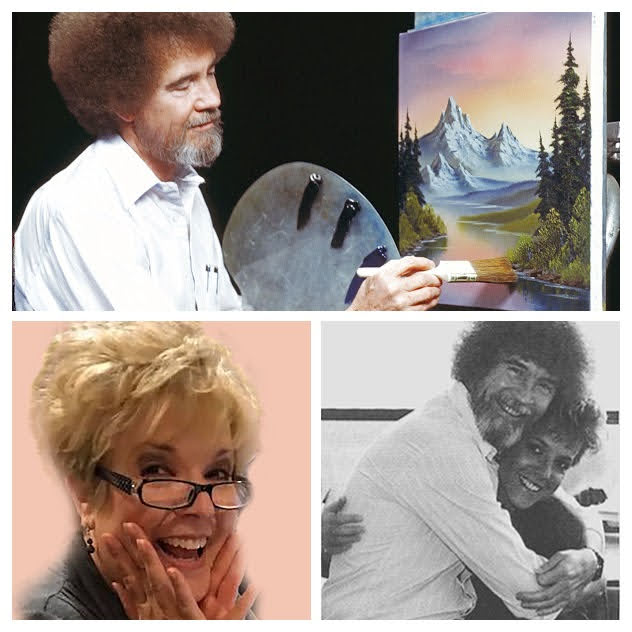
Interview With Joan Kowalski, President of Bob Ross, Inc. – Protection and Enforcement of the Rights of the Famous Painter Bob Ross . Podcast Episode 157 – IP Fridays


https://www.bobross.com


The iconic artist Bob Ross, known for his gentle demeanor and captivating landscapes, continues to inspire millions around the world. Behind the scenes, a dedicated team works tirelessly to protect his legacy and intellectual property (IP). In a recent interview on the IP Friday’s podcast, Joan Kowalski, President of Bob Ross, Inc., shed light on the challenges and strategies involved in safeguarding the valuable IP of Bob Ross.


A Family Affair


Joan’s journey with Bob Ross, Inc. began in 1988, a few years after she graduated from college. Her family’s relationship with Bob Ross dates back even further. Joan’s mother attended one of Bob’s painting classes in 1982 and was so impressed that she and Joan’s father partnered with Bob to form a company aimed at promoting his work. This partnership laid the foundation for what would become a global phenomenon.


The Unique Challenge of Protecting a Person


One of the primary challenges Joan highlighted is the difficulty of protecting the IP of a person rather than a static piece of art or literature. Bob Ross’s image, voice, catchphrases, and even his mannerisms are all integral parts of his brand.


“When your intellectual property is a person… it’s a different ballgame,” Joan explained. Many people mistakenly believe that Bob Ross is a public domain figure, freely available for use. This misunderstanding complicates efforts to control how his image and likeness are used commercially.


The Double-Edged Sword of the Internet


The internet has amplified both the reach of Bob Ross’s work and the challenges of protecting it. While online platforms have introduced Bob to new generations, they have also made it easier for unauthorized use of his image and content.


“The internet is both a gem and a curse,” Joan noted. Unauthorized merchandise, digital forgeries, and misuse of Bob’s image in ways that do not align with his values have proliferated online. To combat this, Bob Ross, Inc. employs professional monitoring services and relies on vigilant fans who report infringements.


Selective Licensing and Brand Integrity


Joan emphasized the importance of being selective with licensing agreements. Over-licensing can dilute the brand and make it harder to control IP use. Bob Ross, Inc. carefully chooses partners who align with Bob’s legacy and values.


“Be a little bit choosy about who you give a license to… It just makes it easier to protect your assets,” Joan advised.


Navigating New Technologies: NFTs and AI


Emerging technologies like Non-Fungible Tokens (NFTs) and Artificial Intelligence (AI) present new IP challenges. Joan shared that the company was cautious about entering the NFT space, granting licenses only to a select few like Funko to maintain control and monitor the market effectively.


Regarding AI, Joan expressed concern over AI-generated images and voices that mimic Bob Ross without authorization. The company is exploring ways to address these issues, often relying on the right of publicity laws to protect Bob’s likeness.


Legal Protections and the Right of Publicity


The right of publicity is a legal doctrine that protects a person’s image, name, and likeness from unauthorized commercial use.
Show more...
1 year ago
32 minutes 29 seconds

IP Fridays - your intellectual property podcast about trademarks, patents, designs and much more
Interview With Myrtha Hurtado Rivas – General Counsel Brands and Marketing Properties, Anti-Counterfeiting & Licensing at Nestlé – Brand Restrictions, AI Tools Like NES GPT, Fight Against Counterfeit Goods – IP Fridays – Episode 156


Navigating Brand Restrictions, Sustainability, AI, and Anti-Counterfeiting with Myrtha Hurtado Rivas of Nestlé


On this episode of IP Fridays, I had the pleasure of interviewing Myrtha Hurtado Rivas, the General Counsel for Brands, Marketing Properties, Licensing, and Anti-Counterfeiting at Nestlé. Our conversation delved into several pressing issues in the field of intellectual property (IP), including brand restrictions, sustainability claims, artificial intelligence (AI), and anti-counterfeiting challenges. Here are the key takeaways from our engaging discussion:


Brand Restrictions: Impact on Businesses and Consumer Choice


Myrtha began by explaining brand restrictions, which are often implemented by governments to nudge consumers toward healthier or more environmentally friendly choices. These restrictions can take various forms, such as prohibiting certain branding, implementing traffic light labeling systems (e.g., for sugar or fat content), or even banning toys associated with products, like Kinder Eggs in certain countries.


One of the biggest challenges of brand restrictions is the impact on consumer choice and business innovation. Myrtha pointed out that limitations on brand usage, including packaging and advertising, can sometimes inadvertently stifle consumer access to safer products and even hinder efforts to combat counterfeiting.


During her recent moderation of a panel on brand restrictions at the International Trademark Association (INTA) annual meeting, Myrtha emphasized that these restrictions are not only a problem for brand owners but also limit consumers’ freedom to make informed choices. Brand restrictions, when applied broadly, also pose challenges for IP professionals trying to maintain consistency across markets, especially in smaller countries where product variations could make it economically unviable to continue offering the same products.


Sustainability and Green Claims: Defining the Difference


We also discussed the increasingly important topic of sustainability claims and green claims. While these terms are often used interchangeably, there are distinctions—especially in the legal and regulatory frameworks emerging around them. In Europe, for instance, green claims are commonly discussed in the context of a new Green Claims Directive, which governs the kinds of statements companies can make about their environmental impact.


Myrtha explained that sustainability claims generally cover a broader range of factors, from how products are manufactured to how waste is managed and how packaging is produced. However, there remains a lack of clarity and uniform regulation across jurisdictions, which can lead to confusion and even legal risks for companies making these claims.


At Nestlé, sustainability claims are vetted carefully, and Myrtha’s team plays a central role in ensuring that any statements made are accurate, legally compliant, and aligned with business strategies. The collaboration between IP, marketing, and compliance teams is key in navigating this complex area.


AI in Business: From Early Adoption to Everyday Use


Nestlé has been a pioneer in using artificial intelligence (AI) in its business processes, especially within Myrtha’s legal and IP teams. Myrtha recounted how she has been using AI tools for years, starting with her time in the pharmaceutical industry, where AI was essential in clinical trials and data gathering. Today, AI tools like Copilot and Nest GPT (Nestlé’s internal AI system) are embedded in many of their day-to-day operations.
Show more...
1 year ago
37 minutes 34 seconds

IP Fridays - your intellectual property podcast about trademarks, patents, designs and much more
Virtual Patent Marking – Patent Damages – Interview with Tina Dorr and Loretta Freeman – Amazon Patent Evaluation Express (APEX) Program – IP Fridays – Episode 155


Bio of Tina Dorr


Bio of Loretta Freeman


In the latest episode of the IP Friday’s podcast, hosts Kenneth Suzan spoke with two distinguished intellectual property (IP) attorneys, Tina Dorr and Loretta Freeman, from Barnes and Thornburg LLP. The discussion provided valuable insights into patent law, focusing on the career paths of the guests, patent marking, virtual patent marking, and the implications of these practices for recovering monetary damages in infringement cases.


Career Paths to Patent Law


Both Tina and Loretta shared their unique journeys into the field of patent law, emphasizing that many patent attorneys enter the profession as a second or third career. Tina transitioned from a background in science to patent law, driven by a passion for solving business problems and helping clients achieve their goals through legal tools. Loretta, who started as a product development engineer at 3M, discovered her passion for IP while working with attorneys on patentability issues, eventually leading her to pursue a legal career in this field. Both emphasized the importance of a strong technical background for those interested in patent law, but also highlighted the diverse opportunities available in IP law, even for those without a science or engineering degree.


Patent Marking and Virtual Patent Marking


The conversation then delved into the crucial topic of patent marking, a practice that, while optional, can significantly impact a patent holder’s ability to recover damages in cases of infringement. Tina explained that proper patent marking provides constructive notice to the public that a product is patented, which can allow for the recovery of monetary damages from the date of infringement. She also discussed the legal requirements for both physical and virtual patent marking, emphasizing the importance of consistent and continuous marking to maximize potential damages.


Loretta expanded on this by discussing the complexities of virtual patent marking, particularly for companies with large patent portfolios. She highlighted the cost-effectiveness and flexibility of virtual marking but warned of the challenges in maintaining accurate and up-to-date patent information on a dedicated website. Both guests stressed the importance of coordination between legal teams, R&D, and management to ensure that patent marking is handled correctly, thereby reducing the risk of false marking and ensuring compliance with legal standards.


Monetary Damages in Patent Infringement Cases


The discussion also covered the types of monetary damages available in patent infringement cases, with Tina explaining the three main categories: reasonable royalties, lost profits, and triple (triple) damages. She noted that while calculating these damages can be complex, they can range from thousands to billions of dollars, depending on the case. The importance of proving willful infringement for obtaining triple damages was also highlighted, with Tina emphasizing the role of patent marking in demonstrating that an infringer had knowledge of the patent.


Best Practices and Pitfalls


Both Tina and Loretta offered practical advice on best practices for managing patent marking, particularly in the context of licensing and product transfers. They underscored the need for clear agreements on who is responsible for marking in licensing deals and the importance of maintaining accurate records to avoid pitfalls such as fal...
Show more...
1 year ago
33 minutes 23 seconds

IP Fridays - your intellectual property podcast about trademarks, patents, designs and much more
The STOPfakes Program of the International Trade Administration (ITA) – Interview With Michelle Sara King – Helping Businesses and Consumers to Deal With Fakes – Episode 154 – IP Fridays


STOPfakes.gov


Information pages of the German Patent and Trademark Office for SMEs


Summary and Main Takeaways


Episode Overview: This episode features an interview with Michelle Sara King, the intellectual property team lead and senior international trade specialist at the International Trade Administration in the U.S. Department of Commerce. The discussion centers on her role, the initiatives she leads, and advice for businesses on protecting intellectual property (IP) internationally.


Main Takeaways:


* Role and Responsibilities:

* Michelle leads a team focused on protecting U.S. IP rights internationally.


* She has extensive experience in IP and international trade, contributing to improved IP enforcement globally.


* Key Initiatives:

* Stop Fakes Program: Educates businesses, especially SMEs, on protecting their IP. Provides resources, training, and support.


* International Collaboration: Works with global partners to enhance IP enforcement, involving negotiations, best practice sharing, and technical assistance.


* Challenges in IP Protection:

* Evolving IP Threats: New forms of IP theft and counterfeiting emerge with technological advancements, requiring constant updates in strategies.


* Complex International Cooperation: Varying levels of IP protection across countries necessitate continuous negotiation and diplomacy.


* Advice for Businesses:

* Proactivity: Register trademarks and patents in key markets, monitor for infringements, and act when necessary.


* Education: Utilize resources like the Stop Fakes program for best practices in IP protection.


* Professional Support: Engage experienced IP professionals for guidance and support.


This episode highlights the critical work being done to protect intellectual property rights globally and provides practical advice for businesses to safeguard their IP assets.


Rolf Claessen: Good afternoon. I am Rolf Claessen, and welcome to IP Fridays. Today, our special guest is Michelle Sara King, the intellectual property team lead, senior international trade specialist, and the Stop Fakes team lead at the International Trade Administration in the United States Department of Commerce. Michelle, welcome to the podcast.


Michelle Sara King: Good afternoon. I am Michelle Sara King. I am the intellectual property team lead, the senior international trade specialist, and the Stop Fakes team lead at the International Trade Administration in the United States Department of Commerce. Happy to be here. Thanks, Rolf.


Rolf Claessen: So tell us, what is the Stop Fakes program of the US government, and where does it come from? What is the main goal? Tell us more about it.


Michelle Sara King: The Stop Fakes program was created by a presidential order in the Bush administration as an opportunity to provide outreach and education about intellectual property to businesses of all sizes as well as consumers. The name of the Stop Fakes program is a bit of a misnomer because it’s focused primarily on education, outreach,
Show more...
1 year ago
20 minutes 11 seconds

IP Fridays - your intellectual property podcast about trademarks, patents, designs and much more
Experience With US Customs (CBP) – E-Commerce and the De Minimis Rule For Counterfeit Goods – MOU With US Chamber – Interview With Angelo Mazza – IP Fridays – Episode 153


Profile of Angelo Mazza


Summary of the Most Important Points


* Introduction:

* Angelo Mazza, a partner at Gibney Anthony and Flaherty, LLP, is the guest on the IP Friday’s podcast. He specializes in brand protection and enforcement strategies and works extensively with law enforcement on intellectual property (IP) related crimes.


* Experience with US Customs and Border Protection (CBP):

* Angelo has over 30 years of experience training over 60,000 law enforcement officials, including US Customs, Border Protection, Immigration and Customs Enforcement, and the FBI. He started working with CBP in the early 1990s, training them on identifying various products and discussing enforcement-related matters.


* Evolving Threats and E-Commerce:

* The threats CBP faces have evolved significantly over time, with e-commerce being the biggest game-changer. The volume and type of cargo have increased, and CBP now deals with a much larger scale of goods, including counterfeit and illicit pharmaceuticals.


* De Minimis and Counterfeit Goods:

* The de minimis rule, which allows small-value parcels under $800 to pass duty-free, has been exploited by counterfeiters. This has led to a significant number of counterfeit goods entering the US, creating challenges for CBP in identifying and intercepting these goods.


* Customs’ Efforts and Operations:

* CBP has become more aggressive in stopping counterfeit goods and illicit pharmaceuticals, conducting operations like Operation Artemis and Operation Apollo. These efforts have led to a decrease in IP seizures as resources focus more on significant threats like fentanyl.


* Role of Rights Holders:

* Rights holders can protect themselves by recording their trademarks with CBP, providing training to customs officials, and responding quickly to inquiries about suspicious packages. Live training is preferred for its direct engagement and effectiveness.


* Success Stories:

* Angelo shared success stories where CBP’s efforts, in collaboration with HSI, led to the seizure of millions of dollars worth of counterfeit goods and the shutdown of operations exploiting the de minimis rule.


* US Chamber’s Memorandum of Understanding (MOU) with CBP:

* The US Chamber has developed an MOU with CBP, allowing brands to share worldwide seizure information, which aids in risk assessment and targeting counterfeit goods. This collaboration includes the donation of technology tools to assist customs in identifying counterfeit products.


Full Transcript


Introduction:


Our guest today on the IP Friday’s podcast is Angelo Mazza. Angelo is a partner with the law firm, Gibney Anthony and Flaherty, LLP, located in New York City. Angelo counsels clients in developing brand protection and enforcement strategies and works extensively with law enforcement on intellectual property related crimes. He has trained over 60,000 law enforcement officials, including US Customs and Border Protection, Immigration and Customs Enforcement, and the Federal Bureau of Investigation. For over 30 years, Angelo has provided training sessions for law enforcement at the federal, state,
Show more...
1 year ago
30 minutes 13 seconds

IP Fridays - your intellectual property podcast about trademarks, patents, designs and much more
Interview With João Negrão – Executive Director of the EUIPO – New Patent Activities at the EUIPO – DesignEuropa Award – EUIPO Strategic Plan – Mediation Center – Short Report From the INTA Annual Meeting in Atlanta – IP Fridays – Episode 152


In this interview with Rolf Claessen on the IP Fridays podcast, João Negrão, the executive director of the EUIPO, discussed the office’s recent developments and future plans. Negrão highlighted the conclusion of the consultation phase for the EUIPO’s 2030 Strategic Plan, emphasizing key areas such as financial sustainability, efficiency, effectiveness, and the integration of emerging technologies like artificial intelligence. He noted the challenges posed by political and economic volatility and the expansion of EUIPO’s competencies, including geographical indications.


Negrão addressed the potential new role of the EUIPO in handling non-binding essentiality checks for standard essential patents (SEPs), should the proposed regulation be approved. He assured that the EUIPO would adapt to these new competencies using a project management approach. The interview also covered the EUIPO’s new mediation center for IP disputes, launched in November 2023. Negrão explained that while mediation and conciliation have been offered by the Boards of Appeal since 2011, the goal is to expand these services to first-instance proceedings to provide cost-effective and timely alternatives to traditional dispute resolution.


Celebrating the EUIPO’s 30th anniversary, Negrão reflected on its growth from a small office to an organization with 1,200 staff members, protecting almost five million trademarks and designs. He cited significant achievements, including the establishment of the Observatory on IP Infringements. The conversation touched on the DesignEuropa Awards, now held annually, which recognize excellence in design across various categories, including industry, small and emerging companies, lifetime achievement, and young designers. These awards aim to promote the design system and celebrate outstanding work. You can apply here:


https://www.euipo.europa.eu/en/designs/designeuropa-awards/how-to-apply


Negrão discussed the EUIPO’s new competence in geographical indications for craft and industrial products, aimed at protecting local products, promoting quality recognition, and supporting local producers and regions in Europe. He also highlighted the EUIPO’s expanding international cooperation with countries like Ukraine, Moldova, and Georgia, aiming to harmonize IP systems globally and support European businesses by ensuring robust, predictable IP systems in these regions.


Finally, Negrão outlined his personal goals for the EUIPO, emphasizing his desire to use his extensive experience to contribute to the office’s further development. He aims to focus on strategic planning, cooperation with national and international IP offices, and addressing issues such as IP infringements and the underrepresentation of women in the IP system. Overall, the interview underscored the EUIPO’s efforts to improve the IP system, embrace new competencies and technologies, and support stakeholders through effective implementation and international cooperation.


Key Takeaways:


* EUIPO’s Strategic Plan:

* The consultation phase for the 2030 Strategic Plan closed recently.


* Key focus areas include financial sustainability, efficiency, effectiveness, and leveraging emerging technologies like artificial intelligence.


* The EUIPO aims to address challenges such as political and economic volatility and expanding competencies, including geographical indications.


Show more...
1 year ago

IP Fridays - your intellectual property podcast about trademarks, patents, designs and much more
Register For the 10th Anniversary Celebration of IP Fridays!


Meet us for the 10th Anniversary in Atlanta in the 20th May 2024 at 6 pm! We only give away 20 tickets so it will be a very exclusive event! Reserve your ticket here!


https://ipfridays.com/meetup
Show more...
1 year ago

IP Fridays - your intellectual property podcast about trademarks, patents, designs and much more
intellectual property including trademarks, patents and desgins – the latest news, useful tools