
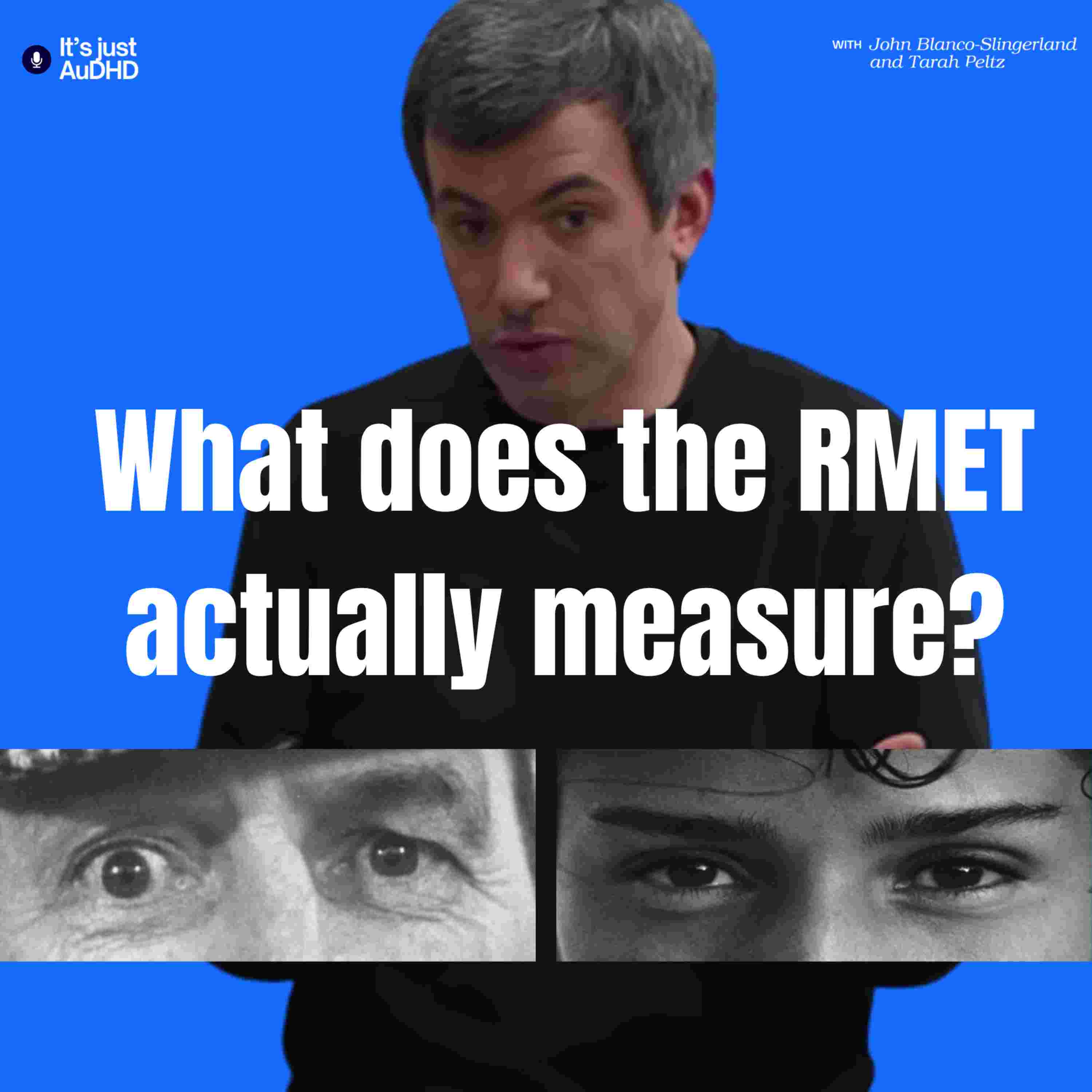
Can you diagnose autism by looking at pictures of eyes?
That's the theory behind the Reading the Mind in the Eyes Test (RMET), which was recently featured in Season 2 of 'The Rehearsal'. But this autism assessment has a wild history, and its origins are convoluted enough to make Nathan Fielder blush.
Today, we're breaking down the story of how the RMET was developed and whether the results are clinically relevant. We also explore the broader implications of Theory of Mind assessments that researchers love to give to autistic people.
This episode has random magazine clippings, animated triangle families, bad doodles, and more. Tune in to see how all these pieces of the puzzle fit together!
References:
00:00 Introduction
00:09 The RMET and Autism Representation
02:53 Origins and Validity of the RMET
04:07 Theory of Mind and Autism
05:10 Administering Theory of Mind Tests
13:01 Cultural and Subjective Influences on Theory of Mind
14:41 Testing Theory of Mind with Animated Triangles
23:03 Diverse Desires and Hidden Feelings
28:59 False Beliefs and Hidden Feelings Tests
34:03 Critique of Autism Research
34:53 Validity of Autism Tests
37:22 Language Dexterity as a Theory of Mind predictor
39:16 Issues with Autism Testing
42:16 The RMET: Origins and Issues
48:50 Criticism of Simon Baron-Cohen's Work
01:04:19 Alternative Approaches to Autism Testing
01:06:50 Personal Experiences and Reflections
01:09:00 Discussing the Clinical Evaluation Process
01:09:11 Reflecting on the Exhausting Nature of Tests
01:09:27 Upcoming Episode on Eating Disorders and Neurodivergence
01:09:27 Personal Reflections on Test Performance
01:10:25 Questioning the Validity of the Test
01:10:40 Conclusion and Future Plans