Most leaders don’t fail because they lack clarity. They fail because their life is not built to support who they are trying to become.
In this final episode of the Design Yourself series, I focus on the piece most leaders overlook when trying to change their leadership or their life: structure. You can have deep self-awareness and a clear leadership identity, but if your calendar, systems, and environment are misaligned, old patterns will resurface under pressure.
2026 will not test your intentions. It will test your structure.
Why Willpower Breaks Down Under Pressure
Many leaders rely on discipline and motivation to create change. The problem is that leadership rarely happens under ideal conditions. Stress, uncertainty, emotional load, and constant disruption are part of the job.
Research from Stanford University shows that environmental and structural cues drive nearly 45 percent of daily behavior, far more than conscious intention. Under pressure, leaders don’t revert to goals. They revert to structure.
Your leadership is perfectly designed for the results you are currently getting.
The Invisible Leadership Load
Decision overload, emotional labor, unresolved tension, and constant context switching create an invisible leadership load that pushes leaders back into urgency and control.
The problem is not the leader. It is the load.
Architecting your 2026 means identifying what you are carrying that you were never meant to hold alone and redesigning your life so leadership does not require constant force.
The Three Areas That Matter Most
This episode focuses on three essential design domains.
Energy design
How your day drains or restores you matters more than productivity. Leaders must protect recovery, thinking time, and white space in order to lead effectively.
Decision design
Reducing decision fatigue requires clear ownership, strong filters tied to values and strategy, and pushing decisions down instead of pulling everything up.
Relationship design
Leadership is relational. Access boundaries, feedback flow, and proximity shape how you lead and how others experience you.
Your Calendar Tells the Truth
Your calendar is not a scheduling tool. It is a leadership tool.
If your calendar does not reflect your priorities, neither will your leadership. If it doesn’t change in 2026, neither will your results.
Key Takeaways
• Willpower fades, structure holds
• Stress reveals the quality of your design
• Energy, decisions, and relationships must be intentional
• One structural shift can change everything
Mic Drop Moments
• You don’t need more discipline. You need better design.
• Stress doesn’t test your intentions. It exposes your structure.
• Build the structure, and the behavior will follow.
This episode completes the Design Yourself series by showing how to build a life and leadership that actually support who you are becoming.
Listen or watch the full episode of Reflect Forward on your favorite podcast platform or on YouTube.
Connect with Kerry
Visit my website, kerrysiggins.com, to explore my book, The Ownership Mindset, and get more leadership resources. Let’s connect on LinkedIn, Instagram, or TikTok!
Find Reflect Forward on YouTube: https://www.youtube.com/@kerrysiggins-reflectforward
Find out more about my book here: https://kerrysiggins.com/the-ownership-mindset/
Connect with me on LinkedIn: https://www.linkedin.com/in/kerry-siggins/
All content for Reflect Forward is the property of Kerry Siggins and is served directly from their servers
with no modification, redirects, or rehosting. The podcast is not affiliated with or endorsed by Podjoint in any way.
Most leaders don’t fail because they lack clarity. They fail because their life is not built to support who they are trying to become.
In this final episode of the Design Yourself series, I focus on the piece most leaders overlook when trying to change their leadership or their life: structure. You can have deep self-awareness and a clear leadership identity, but if your calendar, systems, and environment are misaligned, old patterns will resurface under pressure.
2026 will not test your intentions. It will test your structure.
Why Willpower Breaks Down Under Pressure
Many leaders rely on discipline and motivation to create change. The problem is that leadership rarely happens under ideal conditions. Stress, uncertainty, emotional load, and constant disruption are part of the job.
Research from Stanford University shows that environmental and structural cues drive nearly 45 percent of daily behavior, far more than conscious intention. Under pressure, leaders don’t revert to goals. They revert to structure.
Your leadership is perfectly designed for the results you are currently getting.
The Invisible Leadership Load
Decision overload, emotional labor, unresolved tension, and constant context switching create an invisible leadership load that pushes leaders back into urgency and control.
The problem is not the leader. It is the load.
Architecting your 2026 means identifying what you are carrying that you were never meant to hold alone and redesigning your life so leadership does not require constant force.
The Three Areas That Matter Most
This episode focuses on three essential design domains.
Energy design
How your day drains or restores you matters more than productivity. Leaders must protect recovery, thinking time, and white space in order to lead effectively.
Decision design
Reducing decision fatigue requires clear ownership, strong filters tied to values and strategy, and pushing decisions down instead of pulling everything up.
Relationship design
Leadership is relational. Access boundaries, feedback flow, and proximity shape how you lead and how others experience you.
Your Calendar Tells the Truth
Your calendar is not a scheduling tool. It is a leadership tool.
If your calendar does not reflect your priorities, neither will your leadership. If it doesn’t change in 2026, neither will your results.
Key Takeaways
• Willpower fades, structure holds
• Stress reveals the quality of your design
• Energy, decisions, and relationships must be intentional
• One structural shift can change everything
Mic Drop Moments
• You don’t need more discipline. You need better design.
• Stress doesn’t test your intentions. It exposes your structure.
• Build the structure, and the behavior will follow.
This episode completes the Design Yourself series by showing how to build a life and leadership that actually support who you are becoming.
Listen or watch the full episode of Reflect Forward on your favorite podcast platform or on YouTube.
Connect with Kerry
Visit my website, kerrysiggins.com, to explore my book, The Ownership Mindset, and get more leadership resources. Let’s connect on LinkedIn, Instagram, or TikTok!
Find Reflect Forward on YouTube: https://www.youtube.com/@kerrysiggins-reflectforward
Find out more about my book here: https://kerrysiggins.com/the-ownership-mindset/
Connect with me on LinkedIn: https://www.linkedin.com/in/kerry-siggins/
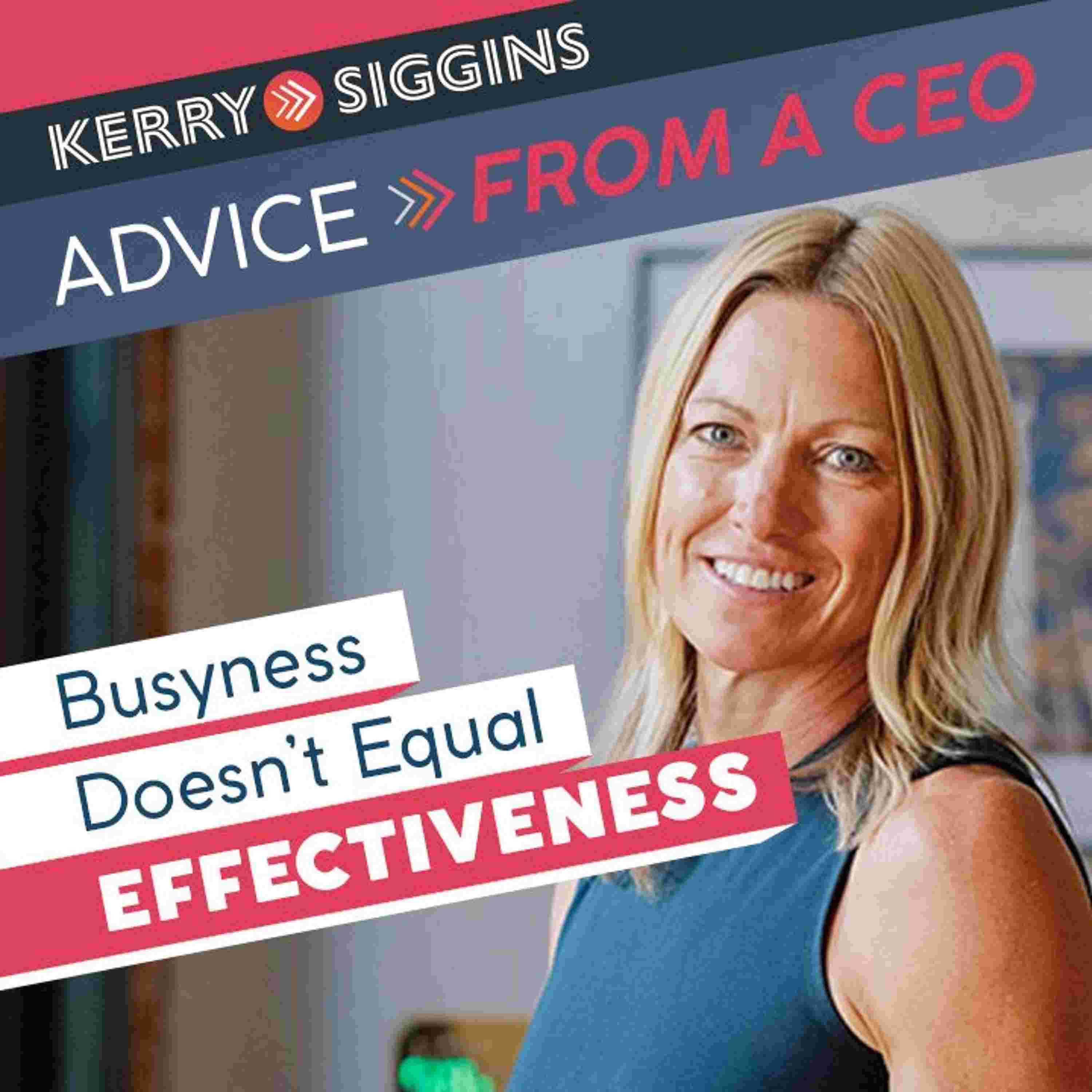
Busyness doesn’t equal effectiveness. In fact, the busier you are, the less effective you often become. In this episode of Reflect Forward, I tackle one of the biggest leadership lies: that a full calendar equals impact. It doesn’t. Busyness creates reactive leadership. Why? Because there’s no time for strategy, innovation, or even pausing to ask, “Is this the right move?”
Years ago, while running StoneAge, chairing a new economic development alliance, and preparing to become a mom, I hit the wall. Completely overwhelmed, I called my mom in tears. Her advice was simple: “Focus on what matters most and say no to everything else.” That moment changed how I approached leadership and life.
Since then, I’ve learned that busyness feeds our egos, masks fear and provides false validation. We think if we’re busy, we’re important. But true leadership comes from clarity, presence, and creating space for ourselves and our teams.
What We Explore in This Episode
• The trap of busyness: Why leaders confuse activity with achievement
• The real costs: Burnout, stress, and reactive decision-making
• Escaping the trap: How to prioritize, delegate, say no, and protect white space
• Leading by example: Why your team mirrors your busyness (and how to model intentionality instead)
• Life beyond work: How less busyness creates more joy, energy, and presence
Key Takeaways
1. Audit your calendar
Eliminate anything that doesn’t align with your top priorities. Decline meetings you don’t need to attend.
2. Say no, unapologetically
No is a complete sentence. Every no creates space for a bigger yes.
3. Delegate and empower
Frame the why, set outcomes, then let your team lead. Growth follows when you step back.
4. Schedule white space
Thinking time isn’t a luxury—it’s a leadership requirement. Protect it on your calendar.
5. Model intentionality for your team
Normalize focus time, give space after big pushes, and encourage your people to decline low-value meetings.
Mic Drop Moments
• “If you’re too busy to lead, you’re not leading.”
• “Never mistake activity for achievement.” – John Wooden
• “No is a complete sentence. Use it.”
• “Busy cultures are built by busy leaders—calm cultures are built by intentional leaders.”
• “Every no makes room for a bigger yes.”
Busyness is not a badge of honor. It’s a trap that keeps us reactive and robs us of effectiveness. The best leaders create space—for clarity, for creativity, and for growth.
If this episode resonated with you, please share it with someone who needs this reminder. And don’t forget to like, subscribe, and leave a review helps me spread the message of intentional leadership and the ownership mindset even further.
Visit my website, kerrysiggins.com, to explore my book, The Ownership Mindset, and get more leadership resources. Let’s connect on LinkedIn, Instagram, or TikTok!
Find Reflect Forward on YouTube: https://www.youtube.com/@kerrysiggins-reflectforward
Find out more about my book here: https://kerrysiggins.com/the-ownership-mindset/
Connect with me on LinkedIn: https://www.linkedin.com/in/kerry-siggins/
Reflect Forward
Most leaders don’t fail because they lack clarity. They fail because their life is not built to support who they are trying to become.
In this final episode of the Design Yourself series, I focus on the piece most leaders overlook when trying to change their leadership or their life: structure. You can have deep self-awareness and a clear leadership identity, but if your calendar, systems, and environment are misaligned, old patterns will resurface under pressure.
2026 will not test your intentions. It will test your structure.
Why Willpower Breaks Down Under Pressure
Many leaders rely on discipline and motivation to create change. The problem is that leadership rarely happens under ideal conditions. Stress, uncertainty, emotional load, and constant disruption are part of the job.
Research from Stanford University shows that environmental and structural cues drive nearly 45 percent of daily behavior, far more than conscious intention. Under pressure, leaders don’t revert to goals. They revert to structure.
Your leadership is perfectly designed for the results you are currently getting.
The Invisible Leadership Load
Decision overload, emotional labor, unresolved tension, and constant context switching create an invisible leadership load that pushes leaders back into urgency and control.
The problem is not the leader. It is the load.
Architecting your 2026 means identifying what you are carrying that you were never meant to hold alone and redesigning your life so leadership does not require constant force.
The Three Areas That Matter Most
This episode focuses on three essential design domains.
Energy design
How your day drains or restores you matters more than productivity. Leaders must protect recovery, thinking time, and white space in order to lead effectively.
Decision design
Reducing decision fatigue requires clear ownership, strong filters tied to values and strategy, and pushing decisions down instead of pulling everything up.
Relationship design
Leadership is relational. Access boundaries, feedback flow, and proximity shape how you lead and how others experience you.
Your Calendar Tells the Truth
Your calendar is not a scheduling tool. It is a leadership tool.
If your calendar does not reflect your priorities, neither will your leadership. If it doesn’t change in 2026, neither will your results.
Key Takeaways
• Willpower fades, structure holds
• Stress reveals the quality of your design
• Energy, decisions, and relationships must be intentional
• One structural shift can change everything
Mic Drop Moments
• You don’t need more discipline. You need better design.
• Stress doesn’t test your intentions. It exposes your structure.
• Build the structure, and the behavior will follow.
This episode completes the Design Yourself series by showing how to build a life and leadership that actually support who you are becoming.
Listen or watch the full episode of Reflect Forward on your favorite podcast platform or on YouTube.
Connect with Kerry
Visit my website, kerrysiggins.com, to explore my book, The Ownership Mindset, and get more leadership resources. Let’s connect on LinkedIn, Instagram, or TikTok!
Find Reflect Forward on YouTube: https://www.youtube.com/@kerrysiggins-reflectforward
Find out more about my book here: https://kerrysiggins.com/the-ownership-mindset/
Connect with me on LinkedIn: https://www.linkedin.com/in/kerry-siggins/