Most leaders don’t fail because they lack clarity. They fail because their life is not built to support who they are trying to become.
In this final episode of the Design Yourself series, I focus on the piece most leaders overlook when trying to change their leadership or their life: structure. You can have deep self-awareness and a clear leadership identity, but if your calendar, systems, and environment are misaligned, old patterns will resurface under pressure.
2026 will not test your intentions. It will test your structure.
Why Willpower Breaks Down Under Pressure
Many leaders rely on discipline and motivation to create change. The problem is that leadership rarely happens under ideal conditions. Stress, uncertainty, emotional load, and constant disruption are part of the job.
Research from Stanford University shows that environmental and structural cues drive nearly 45 percent of daily behavior, far more than conscious intention. Under pressure, leaders don’t revert to goals. They revert to structure.
Your leadership is perfectly designed for the results you are currently getting.
The Invisible Leadership Load
Decision overload, emotional labor, unresolved tension, and constant context switching create an invisible leadership load that pushes leaders back into urgency and control.
The problem is not the leader. It is the load.
Architecting your 2026 means identifying what you are carrying that you were never meant to hold alone and redesigning your life so leadership does not require constant force.
The Three Areas That Matter Most
This episode focuses on three essential design domains.
Energy design
How your day drains or restores you matters more than productivity. Leaders must protect recovery, thinking time, and white space in order to lead effectively.
Decision design
Reducing decision fatigue requires clear ownership, strong filters tied to values and strategy, and pushing decisions down instead of pulling everything up.
Relationship design
Leadership is relational. Access boundaries, feedback flow, and proximity shape how you lead and how others experience you.
Your Calendar Tells the Truth
Your calendar is not a scheduling tool. It is a leadership tool.
If your calendar does not reflect your priorities, neither will your leadership. If it doesn’t change in 2026, neither will your results.
Key Takeaways
• Willpower fades, structure holds
• Stress reveals the quality of your design
• Energy, decisions, and relationships must be intentional
• One structural shift can change everything
Mic Drop Moments
• You don’t need more discipline. You need better design.
• Stress doesn’t test your intentions. It exposes your structure.
• Build the structure, and the behavior will follow.
This episode completes the Design Yourself series by showing how to build a life and leadership that actually support who you are becoming.
Listen or watch the full episode of Reflect Forward on your favorite podcast platform or on YouTube.
Connect with Kerry
Visit my website, kerrysiggins.com, to explore my book, The Ownership Mindset, and get more leadership resources. Let’s connect on LinkedIn, Instagram, or TikTok!
Find Reflect Forward on YouTube: https://www.youtube.com/@kerrysiggins-reflectforward
Find out more about my book here: https://kerrysiggins.com/the-ownership-mindset/
Connect with me on LinkedIn: https://www.linkedin.com/in/kerry-siggins/
All content for Reflect Forward is the property of Kerry Siggins and is served directly from their servers
with no modification, redirects, or rehosting. The podcast is not affiliated with or endorsed by Podjoint in any way.
Most leaders don’t fail because they lack clarity. They fail because their life is not built to support who they are trying to become.
In this final episode of the Design Yourself series, I focus on the piece most leaders overlook when trying to change their leadership or their life: structure. You can have deep self-awareness and a clear leadership identity, but if your calendar, systems, and environment are misaligned, old patterns will resurface under pressure.
2026 will not test your intentions. It will test your structure.
Why Willpower Breaks Down Under Pressure
Many leaders rely on discipline and motivation to create change. The problem is that leadership rarely happens under ideal conditions. Stress, uncertainty, emotional load, and constant disruption are part of the job.
Research from Stanford University shows that environmental and structural cues drive nearly 45 percent of daily behavior, far more than conscious intention. Under pressure, leaders don’t revert to goals. They revert to structure.
Your leadership is perfectly designed for the results you are currently getting.
The Invisible Leadership Load
Decision overload, emotional labor, unresolved tension, and constant context switching create an invisible leadership load that pushes leaders back into urgency and control.
The problem is not the leader. It is the load.
Architecting your 2026 means identifying what you are carrying that you were never meant to hold alone and redesigning your life so leadership does not require constant force.
The Three Areas That Matter Most
This episode focuses on three essential design domains.
Energy design
How your day drains or restores you matters more than productivity. Leaders must protect recovery, thinking time, and white space in order to lead effectively.
Decision design
Reducing decision fatigue requires clear ownership, strong filters tied to values and strategy, and pushing decisions down instead of pulling everything up.
Relationship design
Leadership is relational. Access boundaries, feedback flow, and proximity shape how you lead and how others experience you.
Your Calendar Tells the Truth
Your calendar is not a scheduling tool. It is a leadership tool.
If your calendar does not reflect your priorities, neither will your leadership. If it doesn’t change in 2026, neither will your results.
Key Takeaways
• Willpower fades, structure holds
• Stress reveals the quality of your design
• Energy, decisions, and relationships must be intentional
• One structural shift can change everything
Mic Drop Moments
• You don’t need more discipline. You need better design.
• Stress doesn’t test your intentions. It exposes your structure.
• Build the structure, and the behavior will follow.
This episode completes the Design Yourself series by showing how to build a life and leadership that actually support who you are becoming.
Listen or watch the full episode of Reflect Forward on your favorite podcast platform or on YouTube.
Connect with Kerry
Visit my website, kerrysiggins.com, to explore my book, The Ownership Mindset, and get more leadership resources. Let’s connect on LinkedIn, Instagram, or TikTok!
Find Reflect Forward on YouTube: https://www.youtube.com/@kerrysiggins-reflectforward
Find out more about my book here: https://kerrysiggins.com/the-ownership-mindset/
Connect with me on LinkedIn: https://www.linkedin.com/in/kerry-siggins/
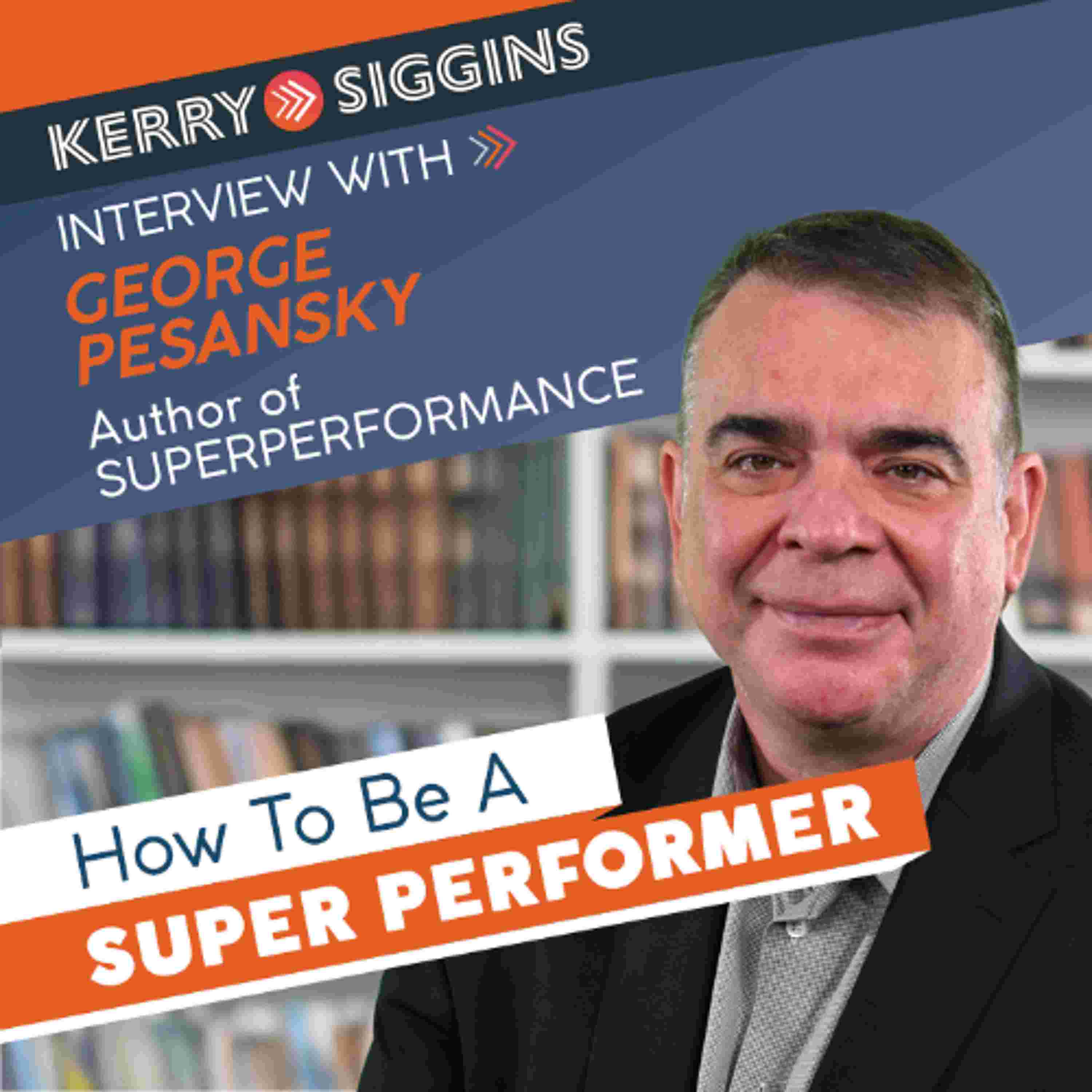
How to be a super performer is a question every ambitious leader wrestles with. We chase higher goals, push our teams, and try to sustain momentum, but often overlook the real drivers of lasting success. True performance is not about doing more. It is about uncovering the root causes of success and creating the conditions where people can thrive.
In this episode of Reflect Forward, George Pesansky joins me to flip the script on performance. With over 30 years of experience in operational excellence, George has helped companies worldwide transform through lean manufacturing, Six Sigma, and continuous improvement. His new book Super Performance distills the lessons he has learned, and in this conversation, he shares how to apply them to your leadership, your teams, and even your personal growth.
We dig into why the “Prison of Expectations” quietly kills commitment, how to stretch your most productive “Golden Hour,” and why resilience and self-awareness are non-negotiables for anyone who wants to lead well. We also explore what sustainable momentum really looks like and how leaders can empower others without bottlenecking progress.
George’s insights are practical, powerful, and rooted in humility. This conversation will challenge your perspective on leadership and help you design systems for sustainable success without burning out yourself or your team.
Key Takeaways
1. Find the root causes of your success. Do not just analyze problems. Dissect your wins and double down on what works.
2. Protect and extend your Golden Hour. Name the time and conditions when you are most effective and build more of it into your day.
3. Escape the Prison of Expectations. Pressure without psychological safety kills commitment. Replace it with clarity and curiosity.
4. Lead with curiosity, not control. Step out of the boardroom, go to where the work happens, and ask questions to learn.
5. Momentum is addition and subtraction. True progress comes when your gains outpace the losses created by turnover, inefficiencies, and neglect.
Mic Drop Moments
• “If you try to be the hero of every story, you will burn out and bottleneck your company.”
• “The Golden Hour is not luck. It is a designed environment you can repeat and stretch.”
• “Pressure without safety creates the Prison of Expectations where people stop committing.”
• “Real leadership is when the day-to-day runs without you because the why and the what are clear.”
• “Do the Five Whys on your wins. Success leaves clues.”
George’s book Super Performance is available now wherever books are sold. To learn more about him and his work, visit georgepesansky.com and myblendedlearning.com.
If this episode resonated with you, please share it with someone who could benefit. And don’t forget to like, subscribe, and leave a review helps me spread the message of intentional leadership and the ownership mindset even further.
Connect with Kerry
Visit my website, kerrysiggins.com, to explore my book, The Ownership Mindset, and get more leadership resources. Let’s connect on LinkedIn, Instagram, or TikTok!
Find Reflect Forward on YouTube: https://www.youtube.com/@kerrysiggins-reflectforward
Find out more about my book here: https://kerrysiggins.com/the-ownership-mindset/
Connect with me on LinkedIn: https://www.linkedin.com/in/kerry-siggins/
Reflect Forward
Most leaders don’t fail because they lack clarity. They fail because their life is not built to support who they are trying to become.
In this final episode of the Design Yourself series, I focus on the piece most leaders overlook when trying to change their leadership or their life: structure. You can have deep self-awareness and a clear leadership identity, but if your calendar, systems, and environment are misaligned, old patterns will resurface under pressure.
2026 will not test your intentions. It will test your structure.
Why Willpower Breaks Down Under Pressure
Many leaders rely on discipline and motivation to create change. The problem is that leadership rarely happens under ideal conditions. Stress, uncertainty, emotional load, and constant disruption are part of the job.
Research from Stanford University shows that environmental and structural cues drive nearly 45 percent of daily behavior, far more than conscious intention. Under pressure, leaders don’t revert to goals. They revert to structure.
Your leadership is perfectly designed for the results you are currently getting.
The Invisible Leadership Load
Decision overload, emotional labor, unresolved tension, and constant context switching create an invisible leadership load that pushes leaders back into urgency and control.
The problem is not the leader. It is the load.
Architecting your 2026 means identifying what you are carrying that you were never meant to hold alone and redesigning your life so leadership does not require constant force.
The Three Areas That Matter Most
This episode focuses on three essential design domains.
Energy design
How your day drains or restores you matters more than productivity. Leaders must protect recovery, thinking time, and white space in order to lead effectively.
Decision design
Reducing decision fatigue requires clear ownership, strong filters tied to values and strategy, and pushing decisions down instead of pulling everything up.
Relationship design
Leadership is relational. Access boundaries, feedback flow, and proximity shape how you lead and how others experience you.
Your Calendar Tells the Truth
Your calendar is not a scheduling tool. It is a leadership tool.
If your calendar does not reflect your priorities, neither will your leadership. If it doesn’t change in 2026, neither will your results.
Key Takeaways
• Willpower fades, structure holds
• Stress reveals the quality of your design
• Energy, decisions, and relationships must be intentional
• One structural shift can change everything
Mic Drop Moments
• You don’t need more discipline. You need better design.
• Stress doesn’t test your intentions. It exposes your structure.
• Build the structure, and the behavior will follow.
This episode completes the Design Yourself series by showing how to build a life and leadership that actually support who you are becoming.
Listen or watch the full episode of Reflect Forward on your favorite podcast platform or on YouTube.
Connect with Kerry
Visit my website, kerrysiggins.com, to explore my book, The Ownership Mindset, and get more leadership resources. Let’s connect on LinkedIn, Instagram, or TikTok!
Find Reflect Forward on YouTube: https://www.youtube.com/@kerrysiggins-reflectforward
Find out more about my book here: https://kerrysiggins.com/the-ownership-mindset/
Connect with me on LinkedIn: https://www.linkedin.com/in/kerry-siggins/