Choose the leader you are becoming, or default to the leader you have been. That is the real decision in front of you as you head into a new year.
Most leaders believe change starts with better goals. New priorities. New plans. But if you keep showing up with the same identity, the same emotional patterns, and the same nervous system responses, you will recreate the same year with different tasks.
This episode is about breaking that cycle.
Episode overview
This is Episode 2 of my three-part Design Yourself series on creating the life and leadership you want in 2026. In Episode 1, we focused on self-awareness and uncovering the default stories running your leadership. In this episode, we move from awareness to choice.
Because you cannot design a different year if you show up as the same version of yourself.
In this conversation, I break down why goals do not create lasting change and why identity does. We explore how identity is formed, how it drives behavior under pressure, and why many high-performing leaders stay stuck by clinging to versions of themselves that once worked but no longer fit.
I also share personal stories about releasing old identities and what shifted when I consciously chose who I wanted to become, not someday, but now.
Research highlight
According to research from the University of Scranton, ninety-two percent of people fail to achieve their goals. One major reason is that they focus on outcomes instead of the identity and systems required to sustain change.
Key takeaways
• You cannot design a different year if you show up as the same version of yourself.
• Identity is not fixed. It is practiced.
• Your identity drives your behavior, not the other way around.
• Leadership friction is often an identity problem, not a performance problem.
• You are designing the experience of you every day.
Mic drop moments
• Choose the leader you are becoming, or default to the leader you have been.
• Goals do not create change. Identity does.
• If you do not upgrade your identity, your life will keep bumping up against the same edges.
• You are not designing a to-do list for 2026. You are designing the experience of you.
If you haven’t listened to Episode 1 yet, start there. In Episode 3, we’ll talk about how to design a 2026 structure that supports the leader you are becoming, because you don’t need a better plan. You need a better practice.
If this episode resonated, share it with someone who’s ready to stop repeating the same year with different tasks, and subscribe to Reflect Forward wherever you listen.
Connect with Kerry
Visit my website, kerrysiggins.com, to explore my book, The Ownership Mindset, and get more leadership resources. Let’s connect on LinkedIn, Instagram, or TikTok!
Find Reflect Forward on YouTube: https://www.youtube.com/@kerrysiggins-reflectforward
Find out more about my book here: https://kerrysiggins.com/the-ownership-mindset/
Connect with me on LinkedIn: https://www.linkedin.com/in/kerry-siggins/
All content for Reflect Forward is the property of Kerry Siggins and is served directly from their servers
with no modification, redirects, or rehosting. The podcast is not affiliated with or endorsed by Podjoint in any way.
Choose the leader you are becoming, or default to the leader you have been. That is the real decision in front of you as you head into a new year.
Most leaders believe change starts with better goals. New priorities. New plans. But if you keep showing up with the same identity, the same emotional patterns, and the same nervous system responses, you will recreate the same year with different tasks.
This episode is about breaking that cycle.
Episode overview
This is Episode 2 of my three-part Design Yourself series on creating the life and leadership you want in 2026. In Episode 1, we focused on self-awareness and uncovering the default stories running your leadership. In this episode, we move from awareness to choice.
Because you cannot design a different year if you show up as the same version of yourself.
In this conversation, I break down why goals do not create lasting change and why identity does. We explore how identity is formed, how it drives behavior under pressure, and why many high-performing leaders stay stuck by clinging to versions of themselves that once worked but no longer fit.
I also share personal stories about releasing old identities and what shifted when I consciously chose who I wanted to become, not someday, but now.
Research highlight
According to research from the University of Scranton, ninety-two percent of people fail to achieve their goals. One major reason is that they focus on outcomes instead of the identity and systems required to sustain change.
Key takeaways
• You cannot design a different year if you show up as the same version of yourself.
• Identity is not fixed. It is practiced.
• Your identity drives your behavior, not the other way around.
• Leadership friction is often an identity problem, not a performance problem.
• You are designing the experience of you every day.
Mic drop moments
• Choose the leader you are becoming, or default to the leader you have been.
• Goals do not create change. Identity does.
• If you do not upgrade your identity, your life will keep bumping up against the same edges.
• You are not designing a to-do list for 2026. You are designing the experience of you.
If you haven’t listened to Episode 1 yet, start there. In Episode 3, we’ll talk about how to design a 2026 structure that supports the leader you are becoming, because you don’t need a better plan. You need a better practice.
If this episode resonated, share it with someone who’s ready to stop repeating the same year with different tasks, and subscribe to Reflect Forward wherever you listen.
Connect with Kerry
Visit my website, kerrysiggins.com, to explore my book, The Ownership Mindset, and get more leadership resources. Let’s connect on LinkedIn, Instagram, or TikTok!
Find Reflect Forward on YouTube: https://www.youtube.com/@kerrysiggins-reflectforward
Find out more about my book here: https://kerrysiggins.com/the-ownership-mindset/
Connect with me on LinkedIn: https://www.linkedin.com/in/kerry-siggins/
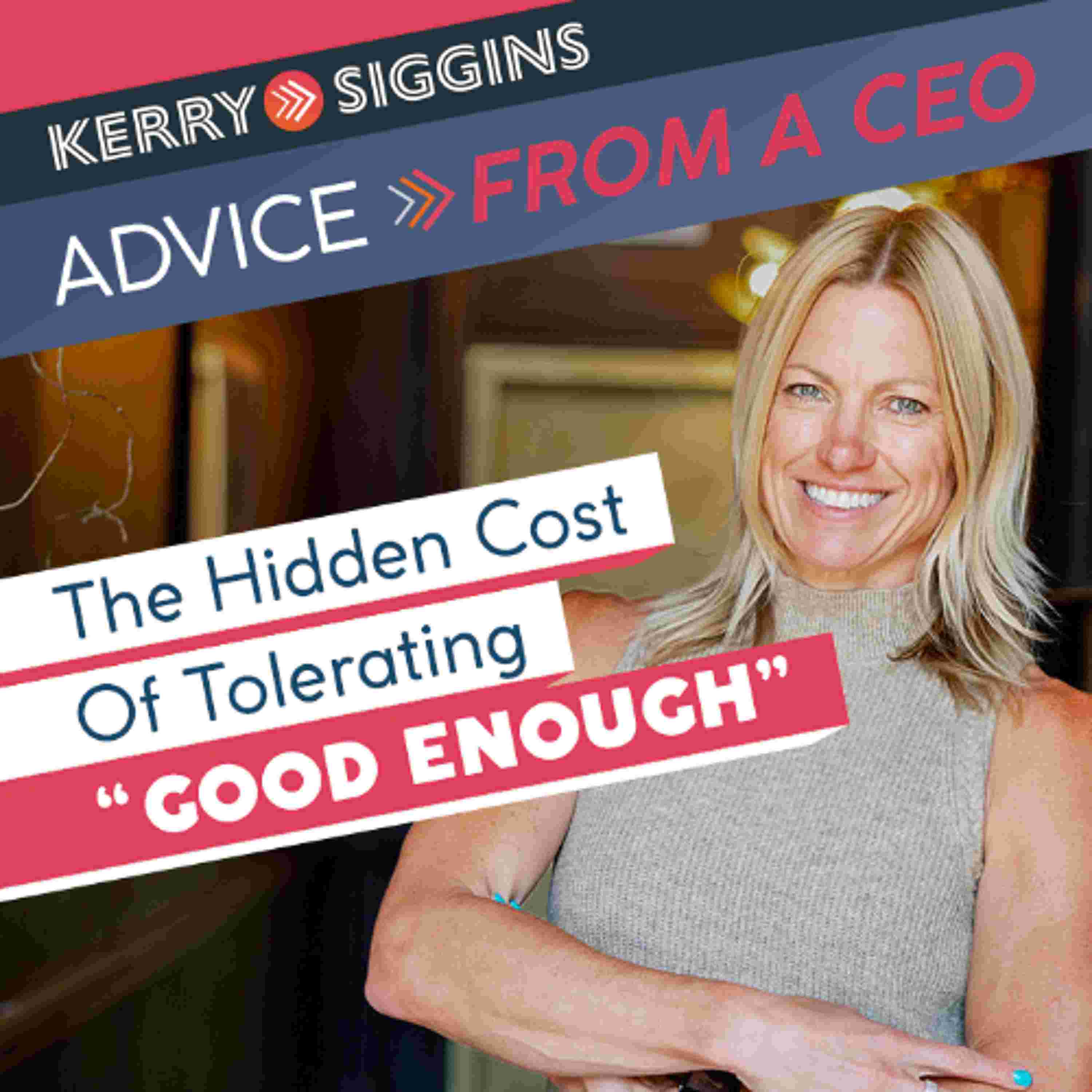
Complacency is the slow death of leadership. When we tolerate “good enough,” we quietly set the ceiling for our team’s potential—and our own.
When you say “good enough” is acceptable, you erode excellence. You send the message that mediocrity is tolerated, and that message ripples across culture, morale, and results. People disengage. Teams plateau. Opportunities slip away.
As Jim Collins reminds us: “Good is the enemy of great.” And Gallup’s research backs it up: only about 2 in 10 employees strongly agree that their performance is managed in a way that motivates them to do outstanding work. That’s what happens when leaders accept mediocrity instead of inspiring excellence.
The good news is that raising the bar doesn’t mean driving people to exhaustion. Excellence isn’t about perfection; it’s about clarity, ownership, and progress. As Brené Brown says, “Clear is kind. Unclear is unkind.” When leaders clearly define expectations, celebrate growth, and model accountability, teams rise to meet higher standards.
And it starts with us. We can’t expect our people to reject complacency if we’re coasting ourselves. Abraham Lincoln put it simply: “Whatever you are, be a good one.” Holding ourselves accountable to higher standards inspires trust, builds credibility, and makes excellence contagious.
In this episode of Reflect Forward, I introduce a tool I call the Ownership Audit, a quarterly practice designed to identify and eliminate complacency within yourself, your team, and your organization. I’ll walk you through how to use it to ask the hard questions, check for alignment with your mission and values, and take courageous action when “good enough” has crept in. Because the truth is, mediocrity doesn’t just cost culture, it costs money. McKinsey research shows that companies with high-performance cultures are 3.7 times more likely to be top financial performers.
Steve Jobs once said, “Be a yardstick of quality. Some people aren’t used to an environment where excellence is expected.” As leaders, we must become that yardstick. We must model what it looks like to expect and deliver excellence, not perfection, but the commitment to always do better.
Mic Drop Moments
• “Complacency is the slow death of leadership.”
• “When leaders tolerate ‘good enough,’ they set the ceiling for their team’s potential.”
• “Mediocrity doesn’t just cost culture; it costs money.”
• “Excellence isn’t perfection; it’s clarity and ownership.”
• “If you tolerate average, you’ll never unlock extraordinary.”
Key Takeaways
1. Tolerating “good enough” erodes both culture and results.
2. Complacency spreads like a virus; leaders set the bar.
3. Raising standards is about clarity and compassion, not perfection.
4. The Ownership Audit helps leaders spot and eliminate mediocrity.
5. Holding yourself accountable to higher standards inspires trust, energizes your team, and keeps complacency from creeping in.
Timestamps
• 00:00 – Why “good enough” is dangerous
• 02:05 – The StoneAge story: breaking the dealer model
• 08:42 – The psychology of “good enough”
• 12:30 – The ripple effect of complacency
• 16:10 – Raising standards without burnout
• 21:18 – Holding yourself accountable
• 27:45 – The Ownership Audit framework
• 35:10 – Closing thoughts and call to action
Connect with Kerry
Don’t forget to subscribe to Reflect Forward on your favorite podcast platform or YouTube. Visit my website, kerrysiggins.com, to explore my book, The Ownership Mindset, and get more leadership resources. Let’s connect on LinkedIn, Instagram, or TikTok!
Find Reflect Forward on YouTube: https://www.youtube.com/@kerrysiggins-reflectforward
Find out more about my book here: https://kerrysiggins.com/the-ownership-mindset/
Connect with me on LinkedIn: https://www.linkedin.com/in/kerry-siggins/
Reflect Forward
Choose the leader you are becoming, or default to the leader you have been. That is the real decision in front of you as you head into a new year.
Most leaders believe change starts with better goals. New priorities. New plans. But if you keep showing up with the same identity, the same emotional patterns, and the same nervous system responses, you will recreate the same year with different tasks.
This episode is about breaking that cycle.
Episode overview
This is Episode 2 of my three-part Design Yourself series on creating the life and leadership you want in 2026. In Episode 1, we focused on self-awareness and uncovering the default stories running your leadership. In this episode, we move from awareness to choice.
Because you cannot design a different year if you show up as the same version of yourself.
In this conversation, I break down why goals do not create lasting change and why identity does. We explore how identity is formed, how it drives behavior under pressure, and why many high-performing leaders stay stuck by clinging to versions of themselves that once worked but no longer fit.
I also share personal stories about releasing old identities and what shifted when I consciously chose who I wanted to become, not someday, but now.
Research highlight
According to research from the University of Scranton, ninety-two percent of people fail to achieve their goals. One major reason is that they focus on outcomes instead of the identity and systems required to sustain change.
Key takeaways
• You cannot design a different year if you show up as the same version of yourself.
• Identity is not fixed. It is practiced.
• Your identity drives your behavior, not the other way around.
• Leadership friction is often an identity problem, not a performance problem.
• You are designing the experience of you every day.
Mic drop moments
• Choose the leader you are becoming, or default to the leader you have been.
• Goals do not create change. Identity does.
• If you do not upgrade your identity, your life will keep bumping up against the same edges.
• You are not designing a to-do list for 2026. You are designing the experience of you.
If you haven’t listened to Episode 1 yet, start there. In Episode 3, we’ll talk about how to design a 2026 structure that supports the leader you are becoming, because you don’t need a better plan. You need a better practice.
If this episode resonated, share it with someone who’s ready to stop repeating the same year with different tasks, and subscribe to Reflect Forward wherever you listen.
Connect with Kerry
Visit my website, kerrysiggins.com, to explore my book, The Ownership Mindset, and get more leadership resources. Let’s connect on LinkedIn, Instagram, or TikTok!
Find Reflect Forward on YouTube: https://www.youtube.com/@kerrysiggins-reflectforward
Find out more about my book here: https://kerrysiggins.com/the-ownership-mindset/
Connect with me on LinkedIn: https://www.linkedin.com/in/kerry-siggins/